About Alectryon oleifolius (Desf.) S.T.Reynolds
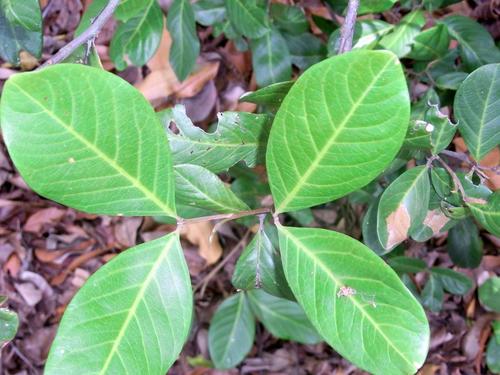
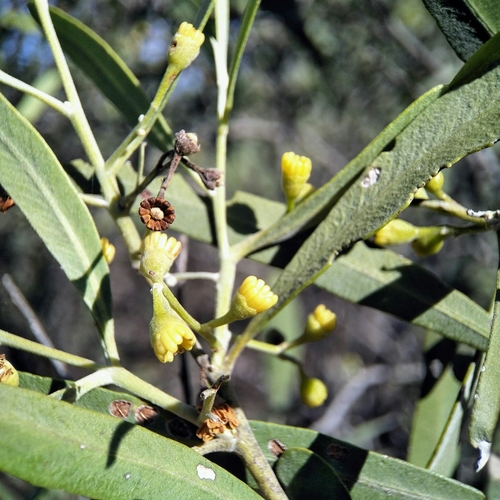
Alectryon oleifolius (Desf.) S.T.Reynolds grows as a large shrub to medium-sized tree reaching up to 9 m (30 ft) in height, and has drooping branches. Its trunk bears deeply furrowed grey to brown bark. The stiff, long, narrow leaves are greyish green, and measure between 3.5 and 14 cm long and 0.6 and 1.2 mm wide. This species occurs across all inland Australian states. In New South Wales, it is found throughout the drier parts of the state's interior and western regions, and grows most commonly on sandy soils with limestone in association with belah (Casuarina cristata). Alectryon oleifolius sheds its leaves, most often during the summer months. While it is palatable to livestock and was formerly lopped for drought fodder, it is toxic to livestock (particularly ruminants), because it contains cyanogenic glycosides that convert to hydrogen cyanide during digestion. Poisoning is far more likely to occur when stock are starving and when they consume new growth; at other times, the foliage has been eaten with no ill effects. Some populations of Alectryon oleifolius reproduce by suckering, forming small stands of clonal plants.