About Alcis jubata (Thunberg, 1788)
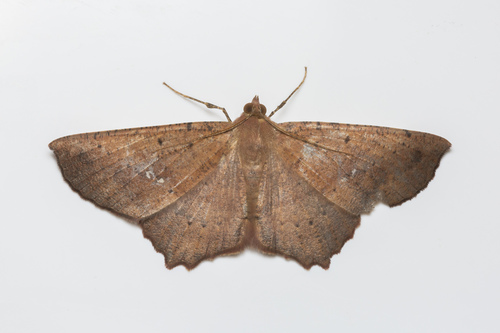
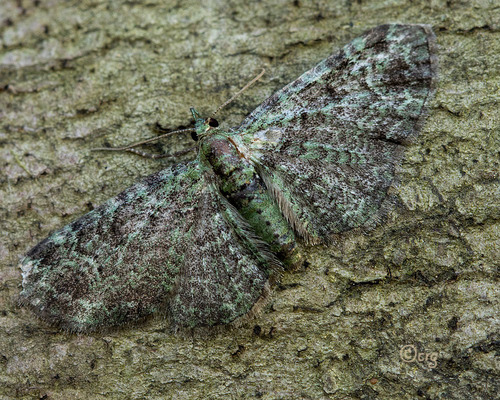
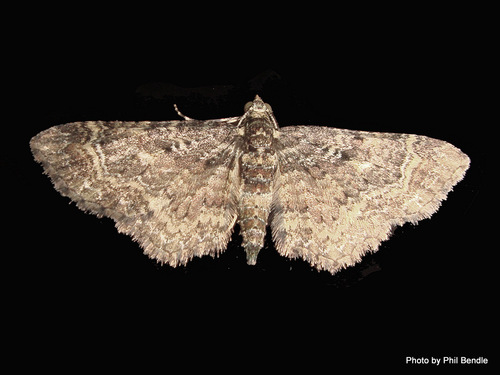
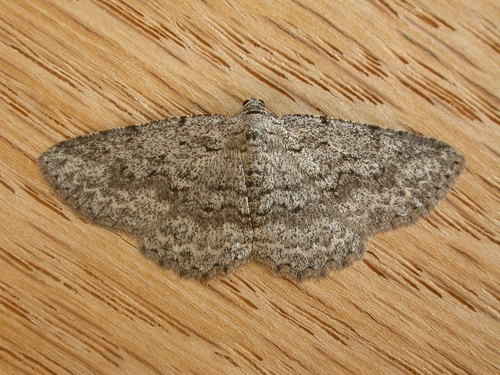
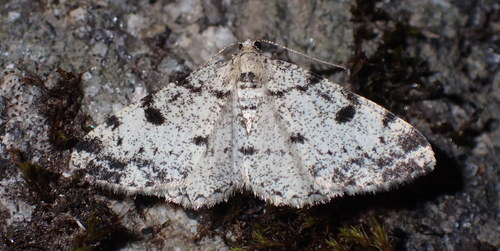
Alcis jubata, commonly known as the dotted carpet, is a moth species belonging to the family Geometridae. It was first described by Carl Peter Thunberg in 1788. This species is distributed across central Europe, Scandinavia, and northern Italy, with its range extending across the Palearctic region to the Altai Mountains, Sayan Mountains, Transbaikalia, Mongolia, the Amur region, and Primorye. The subspecies A. j. melanonota Prout, 1930 occurs in Sakhalin, the Kuril Islands, and Japan. The wingspan of this moth ranges from 28 to 33 mm. The ground color of the forewings of both males and females ranges from whitish to whitish grey or green-grey. The inner and outer crosslines are wavy, and are often broader in intermittent sections. The central line is only marked by blackish dots, and is partially indicated by a very faint line. A black discal spot and a black patch on the costa at the front end of the outer crossline are very clearly visible. Most less sharply defined markings appear in the apical region of the postdiscal area. Occasionally, the subterminal line is identifiable at least on the front half of the wing. A marginal line is usually visible on both the forewings and hindwings. The hindwings have a clear line and a discal fleck. Both the forewings and hindwings are dusted with dark pigment, which can make some specimens appear very dark. Adults produce one generation per year, and are active in flight from the end of July through August. The larvae feed on lichens, including Usnea barbata. This species overwinters in the larval stage.