About Alchornea latifolia Sw.
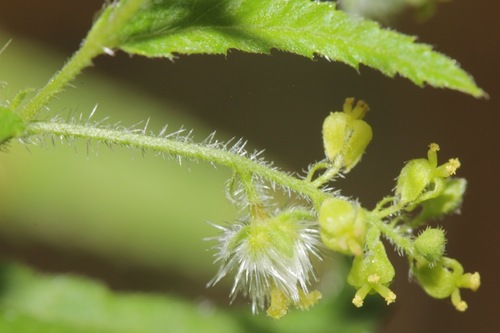
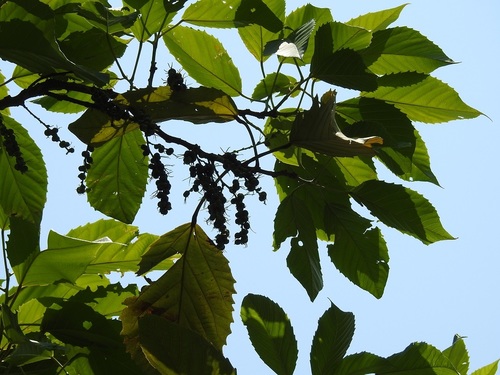
Alchornea latifolia Sw. is a small evergreen tree that grows to around 20 metres (66 feet) tall, and occasionally develops a buttressed trunk. Its leaves have thick stalks, and are shaped ovate to elliptic with a rounded base and a short pointed apex. Three veins radiate out from the base of each leaf; leaves measure 12 to 25 centimetres (5 to 10 inches) long and 6 to 18 centimetres (2 to 7 inches) wide. Leaf margins have a small number of short, blunt teeth, and the underside of the leaf blade is downy. Male flowering spikes are slender, and grow up to 20 centimetres (8 inches) long. Individual male flowers are stalkless, with two sepals and eight stamens. Female flowering spikes are a similar length to male spikes, and sometimes branch. Individual female flowers have four ovate sepals, an ovary divided into two or three parts, and styles up to 2 centimetres (0.8 inches) long. The fruits are reddish capsules about 7 millimetres (0.3 inches) in diameter. Alchornea latifolia is native to Central America, South America, and the West Indies. Its range extends from southern Mexico to Panama, Cuba, the Windward Islands, and across South America to Brazil, Bolivia, Peru, Ecuador, Colombia, and Venezuela. This species prefers evenly distributed moderate rainfall through most of the year, and grows from sea level up to an altitude of around 1,600 metres (5,200 feet). This tree produces many seeds and is a pioneer species, sprouting readily when gaps form in forest canopies. It is sometimes planted to provide shade in coffee plantations. Its branches are used for firewood, and its timber is used for joinery, furniture, posts, crates, boxes, toys, plywood, and chipboard.