About Albuca bracteata (Thunb.) J.C.Manning & Goldblatt
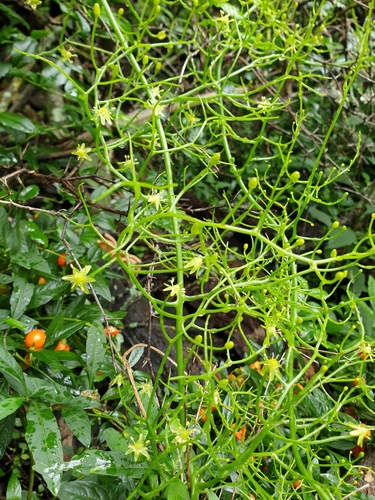
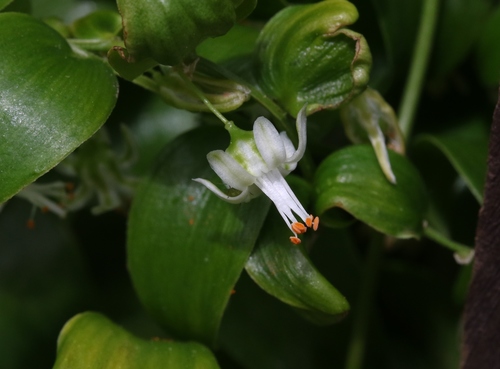
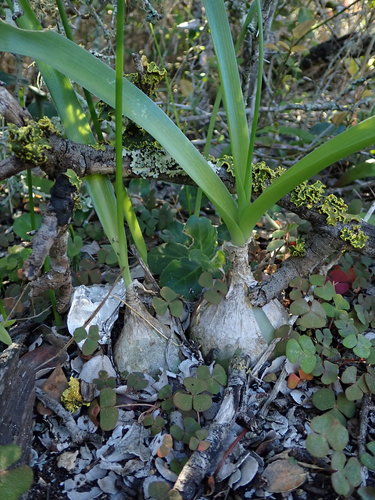
Albuca bracteata (Thunb.) J.C.Manning & Goldblatt grows from a bulky, mostly above-ground bulb. Its leaves are strap-shaped and lanceolate, reaching 60 cm (2 ft) long and 2.5 cm (1 in) wide. The plant’s roots are white and succulent. It produces many small, fragrant white flowers, each 0.5 cm across with a green midvein, arranged on racemes that grow 70–90 cm tall. Flowering typically occurs from spring to early winter, which falls between May and August in the northern hemisphere. Each stalk holds 50 to 100 flowers, and a single plant can produce up to 300 flowers at once. Its fruit capsules measure 10 mm long and 6 mm in diameter, while its oblong seeds are 4 mm by 1.5 mm. Albuca bracteata is a cryptophyte; its foliage dies back during drought periods.
This species is native to South Africa, specifically the Cape Provinces and KwaZulu-Natal. It also grows in tropical east Africa, where its origin (native or introduced) is unconfirmed. It can be found growing in forests, forest margins, closed woodland, and sheltered slopes, at altitudes between 0 and 300 m above sea level. As of 2012, its native populations are stable and its conservation status is "least concern".
Contact with the plant’s sap can cause contact dermatitis, and most parts of the plant are considered toxic to humans. The bulb is a favoured food source for Chacma baboons.
Albuca bracteata is primarily cultivated as a houseplant. It is hardy to USDA zones 9a through 10b, is frost tender, and its ornamental value comes from the formation of small bulblets. Its common name "pregnant onion" comes from these small adventitious bulblets, which grow from the scales of the original bulb and are likened to "babies". It requires light, well-drained soil and bright light, though intense heat and direct light can scorch its tissues. Consistent watering is required for seed germination and seedling survival. Mature plants grow well when allowed to dry out slightly between waterings, but underwatering will trigger early dormancy. During winter, the plant can be allowed to go dormant, and its bulbs can be stored at cooler temperatures.