About Alangium salviifolium (L.f.) Wangerin
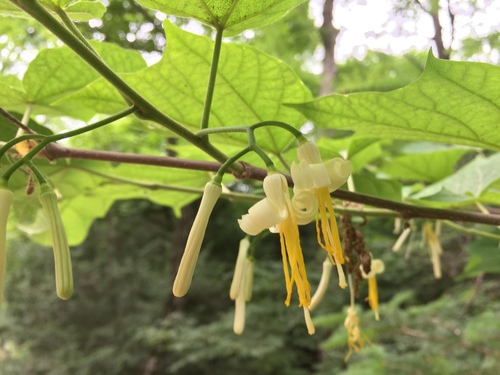
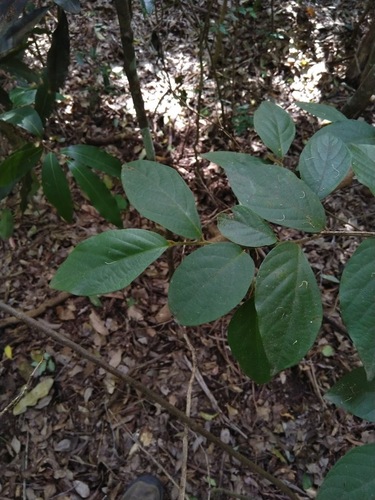
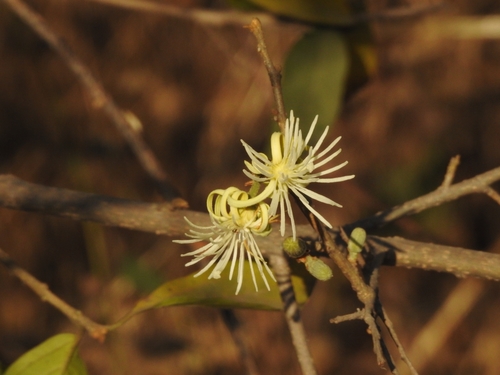
Sage-leaved alangium, scientifically known as Alangium salviifolium (L.f.) Wangerin, is a small, bushy tree with a short trunk that produces a dense canopy. It produces fragrant white flowers that grow from green buds. Flower petals typically curl backwards, exposing multiple stamens and a linear stigma that sticks out distinctly. Its fruits are spherical, berry-shaped, and red in color, with a prominent, distinctly visible white calyx remnant. The leaves of this tree are simple, alternate, and oblong-lanceolate. Stunted branches have sharp ends that resemble thorns. In India, this tree is most often found near sandy riverine tracts and road cuttings. It flowers between February and April, and bears fruit between March and May, just before the start of the rainy season. It sheds all of its leaves while flowering, and new leaves begin to grow when the tree starts fruiting. It is considered a holy tree, and temples have been built near it. This species is native to the Indian subcontinent, the Comoro Islands, and eastern tropical Africa. Within the Indian subcontinent, it is found in Andhra Pradesh, Bihar, Chhattisgarh, Goa, Gujarat, Karnataka, Kerala, Madhya Pradesh, Maharashtra, Odisha, Rajasthan, Tamil Nadu, Tripura, Uttar Pradesh, Uttarakhand, and West Bengal. It also occurs in Bangladesh, Sri Lanka, Nepal, West Himalaya, the Comoro Islands, Kenya, and Tanzania. Its flowers are pollinated by birds and bees. Main pollinators include the pale-billed flowerpecker (Dicaeum erythrorhynchos), purple-rumped sunbird (Leptocoma zeylonica), purple sunbird (Cinnyris asiaticus), and two large carpenter bee species, Xylocopa latipes and Xylocopa pubescens. Birds that feed on its fruits are the common myna (Acridotheres tristis), babblers (Turdoides sp), and rose-ringed parakeets (Psittacula krameri). It is the host plant for larvae of Daphnis minima, a rare hawkmoth found in the Western Ghats. In Ayurveda, the roots and fruits of this tree are used to treat rheumatism and haemorrhoids. Externally, it is used to treat bites from rabbits, rats, and dogs. Root-bark from the tree is also used in traditional medicine to treat skin problems, and as an antidote for snake bites. Root-bark is also used to expel flatworms (Platyhelminthes) and other internal parasites from the body, and it is used as an emetic and purgative as well. The wood is hard and close-grained, allowing for good finishing. It is used to make ornamental items, pestles, and rollers, and works well as fuel wood. In Kenya, its stems with sharp ends are used as spears. In India, its twigs are used as toothbrushes. It is also considered good for making musical instruments and furniture.