About Akebia quinata (Houtt.) Decne.
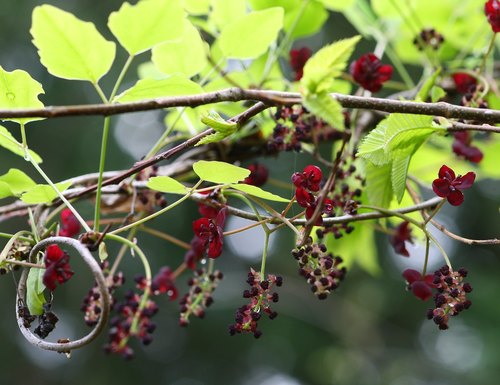
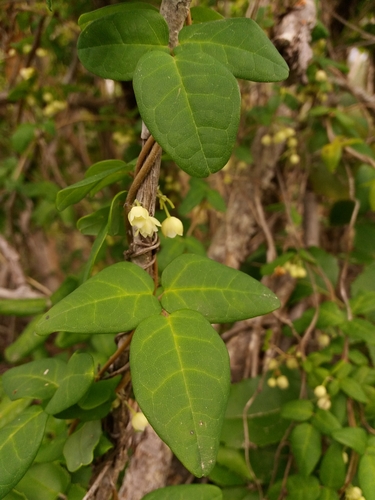
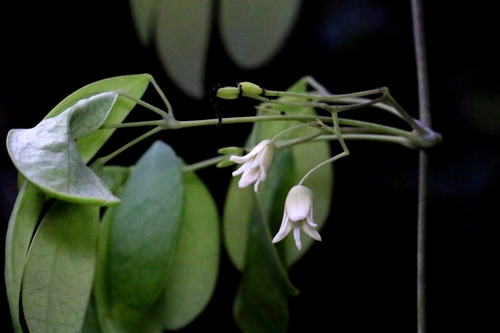
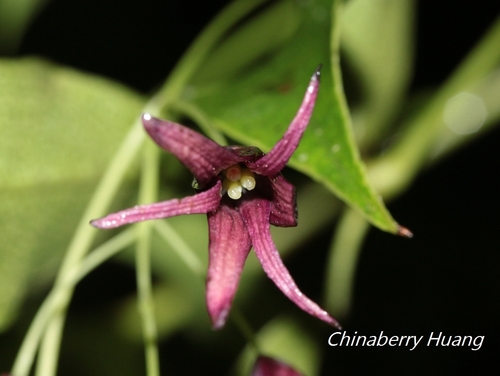
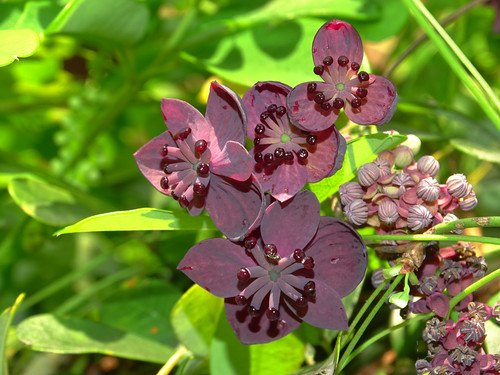
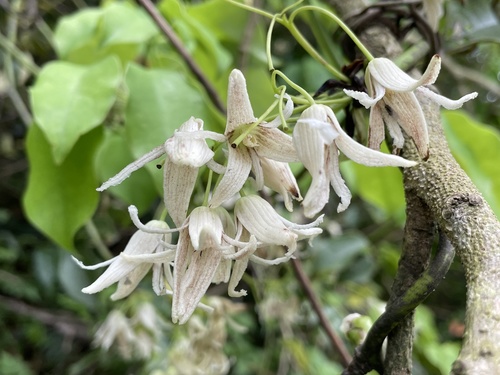
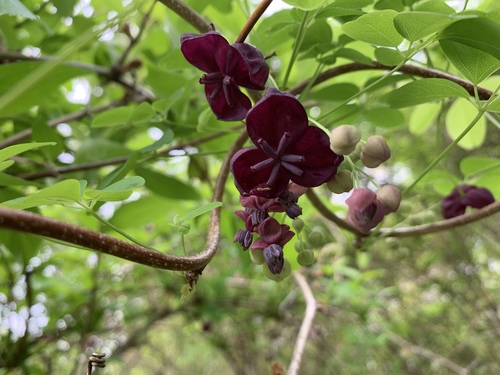
Akebia quinata is a climbing evergreen vine that reaches a height of 10 meters (30 feet) or more. It produces palmately compound leaves with five elliptic or obovate leaflets that are notched at the tip. Its woody stems are greyish-brown and marked with lenticels. Flowers are arranged in clustered racemes, have a chocolate scent, and bear three or four sepals. The fruits are sausage-shaped pods that contain edible pulp; the gelatinous placentation holds seeds surrounded by sweet-flavored white pulp. Akebia quinata is native to China, Japan (all major islands except Hokkaido), and the Korean peninsula, and is cultivated across the world. The map referenced includes records of both wild and cultivated plants. In vitro studies on rodents have shown that consumption of Akebia quinata lowers blood cholesterol levels. Akebia quinata can regulate chemicals in the kidneys, liver, and cardiovascular system, which classifies it as a health food when consumed regularly. Its stems contain approximately 30% potassium salts, which gives the plant a diuretic action. In traditional Chinese medicine, the fruit of Akebia quinata is used to treat urinary tract infections, low milk supply during lactation, and rheumatoid arthritis. For cultivation, Akebia quinata prefers well-drained sandy soil and regular watering, though it is also drought resistant. In some regions, it is considered an invasive species that should not be planted. This species is rated hardy across the entire United Kingdom and Europe, tolerating temperatures as low as −15 to −20 °C. In the United States, it is suited for hardiness zones 4–9. Akebia quinata, like all Akebia species, cannot produce fruit unless pollinated by a genetically distinct individual. Pollen from male flowers of the same plant or from a clone of that plant cannot fertilize its female flowers. Two distinct varieties, or two plants grown from separate seeds, are required for Akebia quinata to produce its characteristic sausage-shaped fruits.