About Agrotis segetum (Denis & Schiffermüller), 1775
Scientific name: Agrotis segetum (Denis & Schiffermüller), 1775
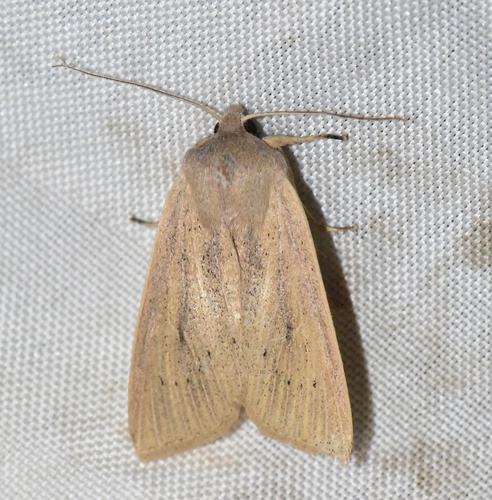
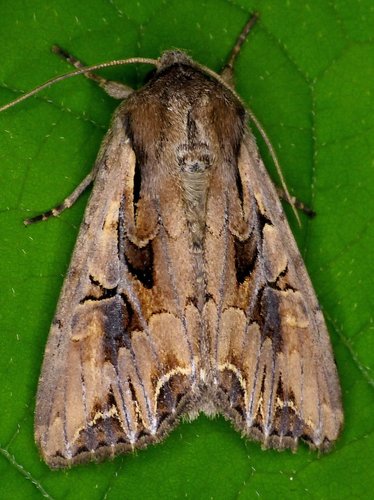
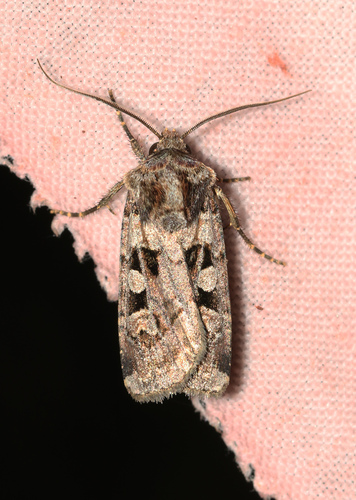
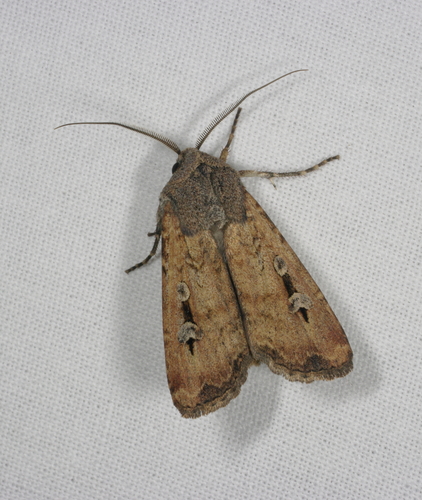
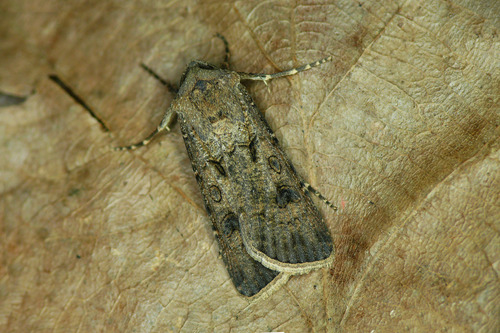
Description This is a very variable species, with fore-wings ranging in color from pale buff to almost black. Paler forms of this moth have three dark-bordered stigmata on each fore-wing. Males have bipectinated antennae, which are comb-like on both sides, with branches of moderate length. The key feature that distinguishes Agrotis segetum from other Agrotis species is the color shade of its hind-wings: hind-wings are pure white in males and pearly grey in females. The wingspan measures 32–42 mm.
English schoolteacher Edward Meyrick, who is especially notable for his study of microlepidoptera, described the species as follows: Wingspan 33–41 mm. Antennae of males are bipectinated. Fore-wings are brownish, sometimes with a reddish tinge, with darker fuscous strigulae mixed with black scales, and are sometimes wholly suffused with darker color. Sub-basal, first, and second lines are edged with dark fuscous; the second line is sometimes only marked by dots. Spots are outlined with black, with the orbicular and reniform spots centered with fuscous. The subterminal line is either faint or sprinkled with white, and is followed by darker suffusion. Hind-wings are white, with a brownish termen. The larva is pale grey or greyish ochreous, sometimes with a pinkish tinge. Dorsal, subdorsal, and spiracular lines are usually marked by dark edges; the head is sometimes grey, pale with two brown marks. The plate on the second segment is more or less brown.
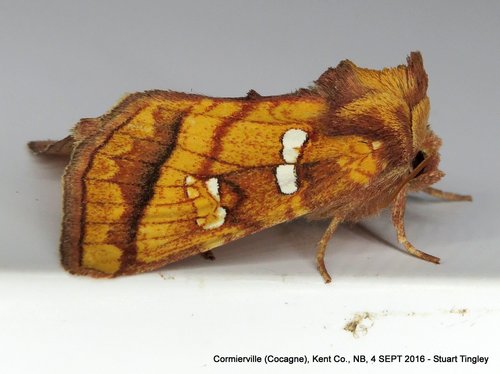
Agrotis segetum is difficult to certainly distinguish from its close relatives. For further information, see Townsend et al. Related species compared include Agrotis clavis (Hufnagel, 1766) and Agrotis exclamationis (Linnaeus, 1758).
Distribution It is possible that this species has been spread by international trade in nursery stock.