About Agrotis clavis Hufnagel, 1766
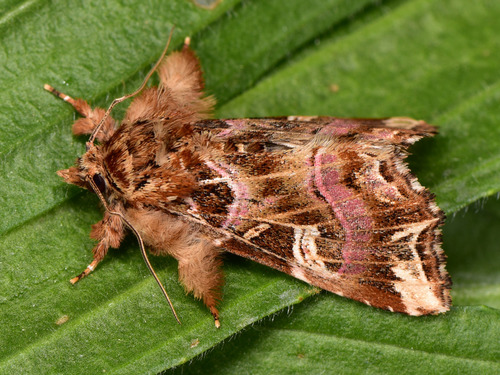
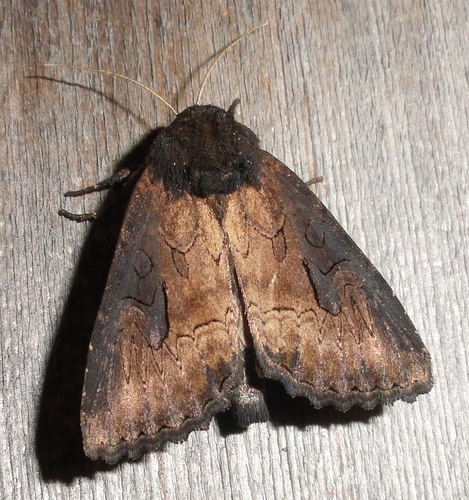
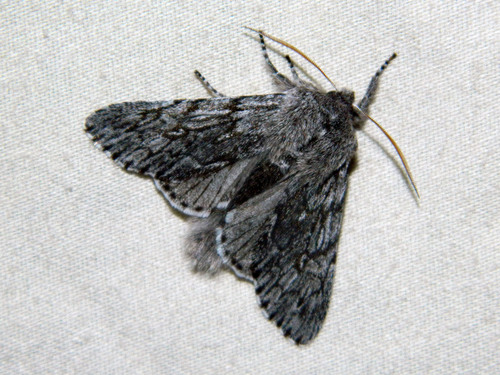
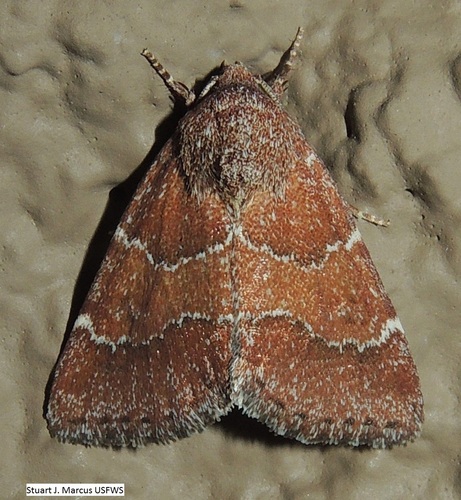
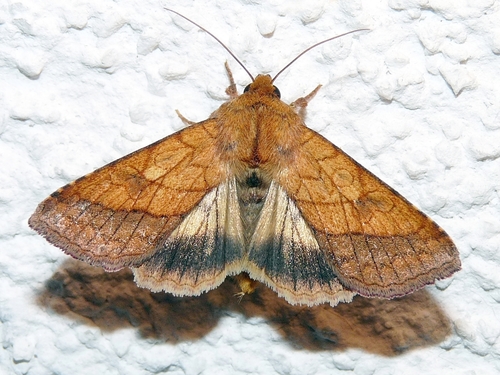
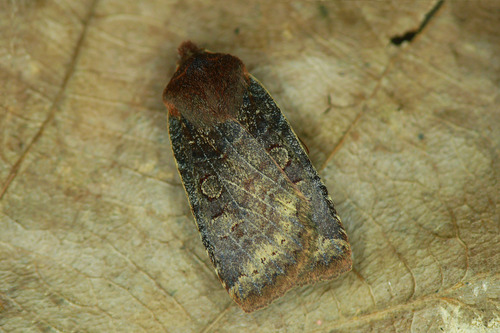
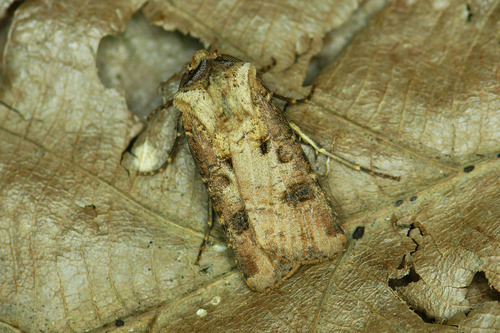
The heart and club, with the scientific name Agrotis clavis, is a moth species belonging to the family Noctuidae. It can be found across the entire Palearctic realm. Its common name comes from the perceived shapes of the prominent dark stigmata on its typically pale forewings. All stigmata on this species have a rounded shape, which differs from the elongated claviform stigmata of the far more common heart and dart moth. The hindwings of Agrotis clavis are grey, and are usually much darker than the hindwings of both the heart and dart and the turnip moth. These differences between species are not consistent, however. Agrotis clavis is highly variable in both color and markings, so atypical or worn specimens often cannot be identified without examining their genitalia. See Townsend et al. for additional reference. The wingspan of this moth ranges from 35 to 40 mm. Its primary habitat is calcareous grassland. In the British Isles, the moth flies at night during June and July; this flight period may vary in other parts of the species' range depending on local weather conditions. It is attracted to both light and sugar sources. In its final instar, the larva of Agrotis clavis is dark brown with a pattern of black dots. It feeds on a wide variety of herbaceous plants. Young larvae feed on the leaves of their host plants, while older larvae move on to feed on the plant roots. This species overwinters as a fully grown larva inside a cavity in the soil, and pupates in the following spring.