About Agrostis canina L.
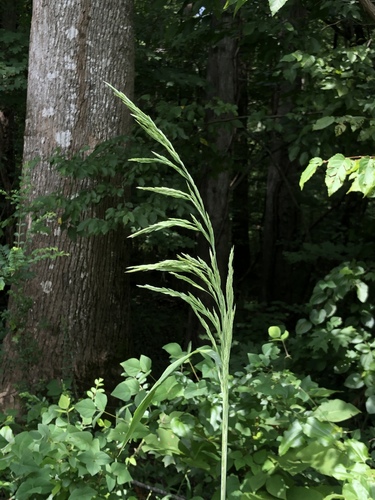
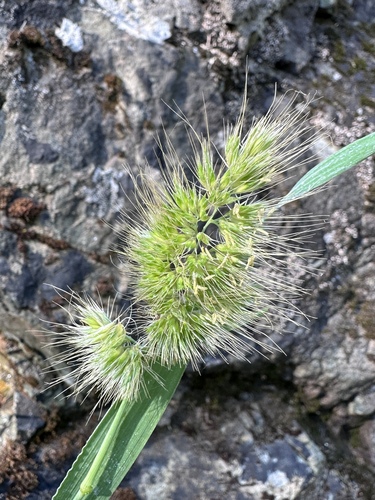
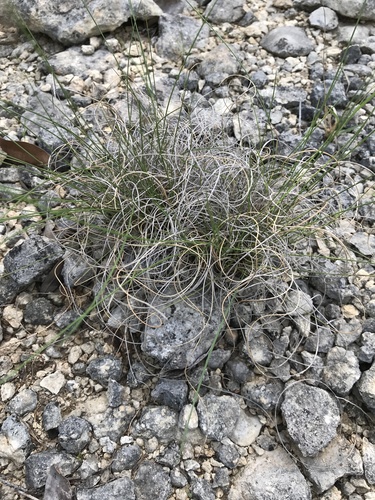
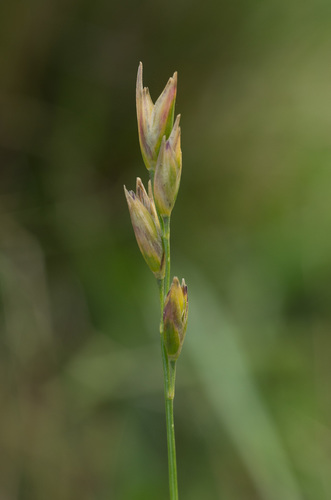
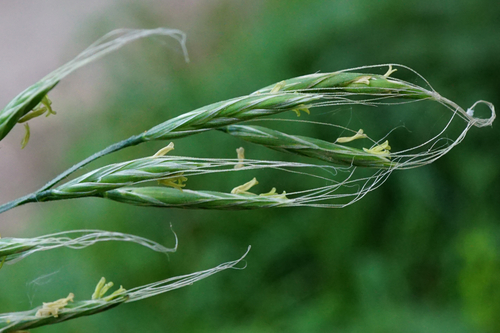
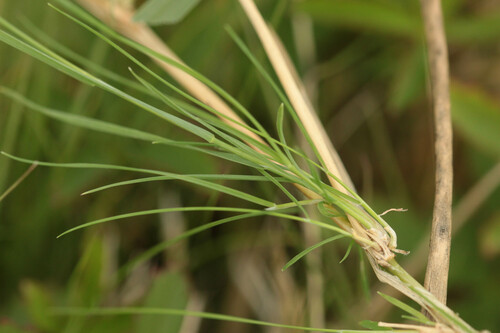
Agrostis canina L. is a perennial grass that produces stolons but no rhizomes, and its culms can reach up to 75 centimetres (30 in) in height. This species is frequently confused with Agrostis vinealis, which was formerly classified as a subspecies or variety of A. canina. A. vinealis grows in more upland habitats and has rhizomes instead of the stolons seen in A. canina. The leaf blades of A. canina are 2–15 cm (0.8–5.9 in) long and 1–3 mm (0.04–0.12 in) wide, and it has an acute or acuminate ligule that grows up to 4 mm (0.16 in) long. A. canina flowers from May to July. Its inflorescence is a panicle measuring 3–16 cm (1.2–6.3 in) in length and up to 7 cm (2.8 in) in width, with rough branches. Each spikelet is 1.9–2.5 mm (0.07–0.10 in) long, and the lemma is 1.6 mm (0.063 in) long, with an awn attached around its middle. The natural range of Agrostis canina covers most of Europe and temperate regions of Asia, and the species grows from sea level up to the alpine zone. It has also been introduced to eastern North America, Hawaiʻi, Algeria, and the Kerguelen Islands. Agrostis canina is sensitive to drought, but it is common in damp locations including ditches and lake margins. Its short, green growth habit has made it popular as a lawn grass.