About Agrostemma githago L.
Plant Morphology
Growth Habit
Agrostemma githago L. is an erect, hairy annual plant that grows up to 100 cm (39 in) tall, with few branches.
Leaf Characteristics
Its leaves are pale green, opposite, narrowly lanceolate, held nearly erect against the stem, and measure 45–145 mm (1.8–5.7 in) long.
Flower Structure
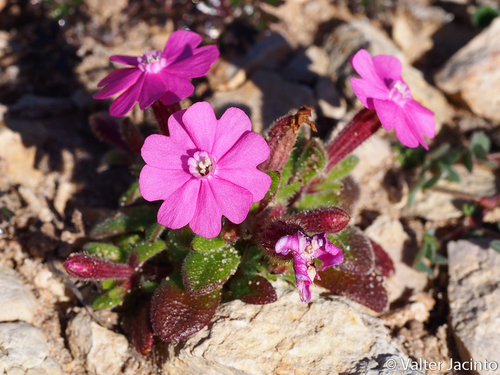
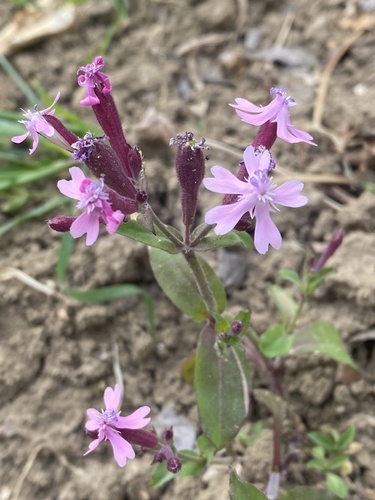
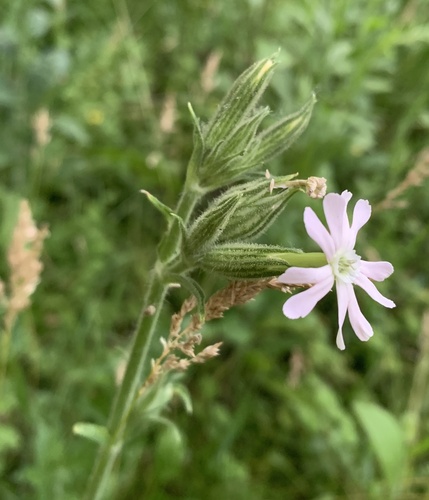
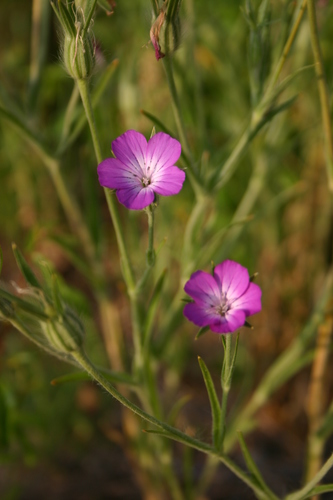
Flowers are typically borne singly at the tips of stems and branches, are scentless, and range from 25–50 mm (1.0–2.0 in) up to 5 cm (2.0 in) in diameter. Flower color is slender deep pink to purple; each petal carries two or three discontinuous black lines. The five narrow pointed sepals form a rigid, ten-ribbed tube at their base, and end in teeth that are much longer than the petals. The plant has ten stamens.
Flowering Period
Flowers are produced in summer: May to September in the northern hemisphere, and November to March in the southern hemisphere.
Fruit Characteristics
After flowering, it produces a many-seeded capsule containing seeds.
Habitat Preferences
This species grows in fields, roadsides, railway lines, waste places, and other disturbed areas.
Distribution and Status
Global Introduction
As an alien species, Agrostemma githago L. is now present across many temperate regions of the world, likely introduced via imported European wheat.
Introduced Range Records
It has been recorded throughout most of the United States, parts of Canada, and parts of Australia and New Zealand.
European Decline
In some parts of Europe, intensive mechanized farming has put this species at risk, making it uncommon or locally restricted.
Decline Drivers
This decline is partially due to shifting agricultural patterns: most wheat is now sown in autumn as winter wheat, and harvested before corn cockle can flower or set seed. The primary cause of decline, however, is improved cleaning of cereal seed.
United Kingdom Record
In the United Kingdom, the species was thought to be completely extirpated until 2014, when a single specimen was found growing in Sunderland by a National Trust assistant ranger.
Historical Context and Pathogens
19th Century Prevalence
In the 19th century, Agrostemma githago L. was recorded as a very common weed of European wheat fields; its seeds were accidentally included with harvested wheat seed and resown the following season.
Historical Seed Contamination
It is very likely that until the 20th century, most wheat contained some corn cockle seed.
Fungal Pathogen Susceptibility
This species is susceptible to downy mildew, which is caused by the oomycete Peronospora agrostemmatis.
Toxicity and Research
Toxic Components
All parts of Agrostemma githago L. are poisonous, containing githagin (a ribosome-inactivating protein) and saponins.
Traditional Use
Despite the risk of fatal poisoning, it has been used in folk medicine.
Studied Biological Activities
Recent research has identified a range of biological activities in common corncockle, including cytotoxic effects on cancer cells, protective properties against oxidative stress, inhibition of Leishmania major culture growth, suppression of protein synthesis, as well as antiviral, anti-angiogenic, and cholesterol-lowering activities.