About Agropyron cristatum (L.) Gaertn.
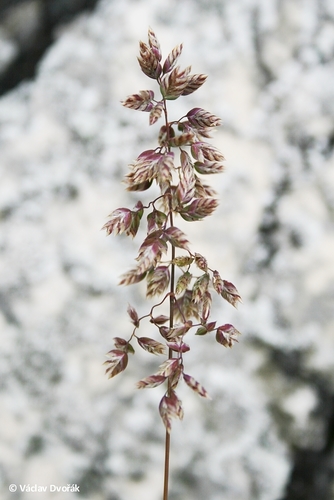
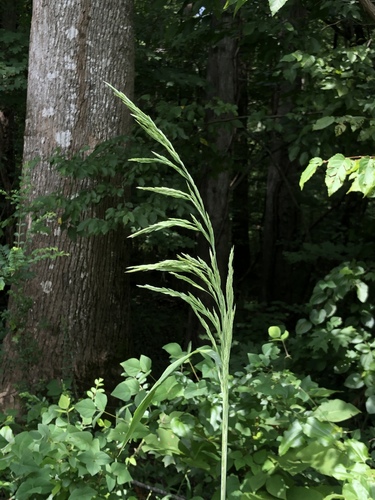
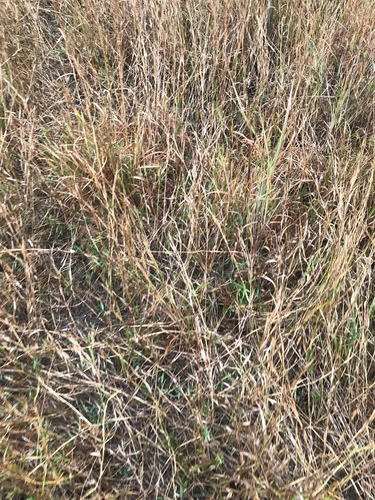
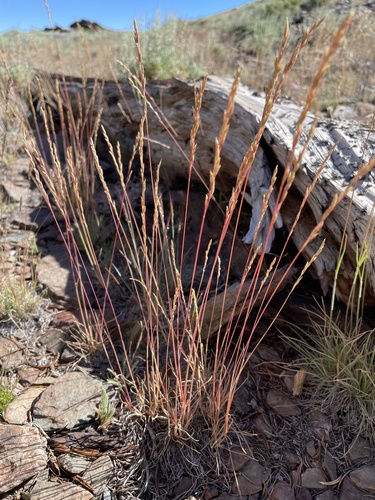
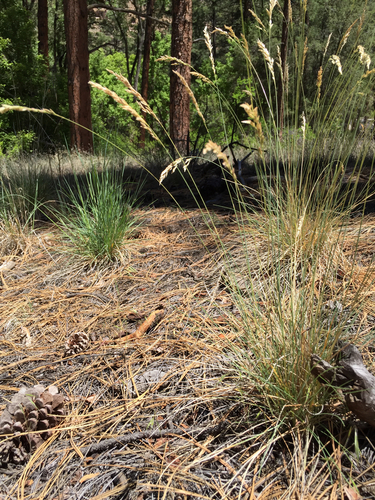
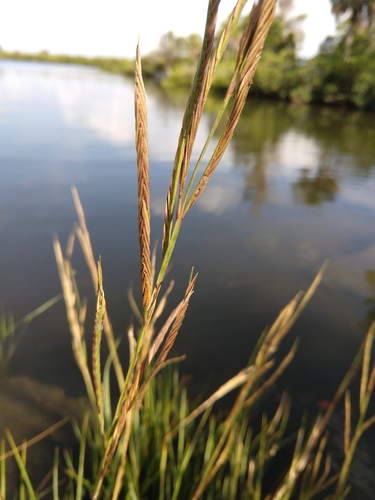
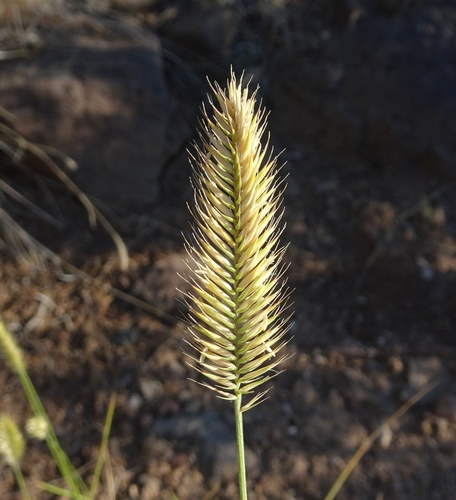
Agropyron cristatum (L.) Gaertn. is a densely tufted grass. At maturity, its culms reach 30 to 50 cm high. Its sheaths are scabrous, with the lowest sheaths sometimes being pubescent. Its leaf blades grow up to 8 mm wide, and are scabrous to pubescent on their upper surface. Its spikes are flat, 2–7 cm long, and hold densely crowded 3–5-flowered spikelets that measure 8–15 mm long and grow in a spreading to ascending arrangement. Its glumes are 4–6 mm long and awn-tipped, while its lemmas are 6–8 mm long and either awnless or awn-tipped.
This species is known among grasses and wheats for its relatively high granivory. Granivory describes the interaction between animals and seeds, and high granivory here means animals feed on the plant's seeds as a primary or even exclusive food source. While widespread seed consumption raises concerns about the plant's ability to reproduce successfully, this trait also confirms that Agropyron cristatum is an important food source for granivorous animals.
Agropyron cristatum is best adapted to dry rangeland conditions, where it occurs most frequently. It prefers annual precipitation between 23 and 38 cm, but can tolerate higher moisture levels on favorable sites. This tolerance allows it to extend its range into tundra and taiga environments, and to grow at elevations up to 2000 m above sea level in the southern portions of its suitable range. It prefers well-drained, deep, loamy soils of medium to moderately coarse texture, including Chernozemic, Solonetzic, Regosolic, Brunisolic and Luvisolic soil types. It can tolerate salinity levels from 5 to 15 mS/cm and favors moderately alkaline conditions, with low to medium fertility requirements. It cannot survive prolonged flooding. It is the most shade-tolerant of all crested wheatgrasses, though it grows best in open conditions.
The species is extremely drought tolerant. It achieves this tolerance by beginning growth very early in the growing season, then becoming dormant after setting seed until fall, when it produces new vegetative growth if sufficient moisture is available.
A recent study found that invasive populations of Agropyron cristatum have spread across the northern United States and southern Canada. These invasive populations were found to have higher granivory than the species found in native grasslands, and they maintain their dominant position even when native grassland species are reintroduced. The study found that the species' increased granivory does not contribute to its competitive success. It also noted that after two years, the difference in granivory between Agropyron cristatum and native species lessens, and animals show no clear preference for Agropyron cristatum seeds over native wheat seeds. The factors behind the species' relatively high granivory remain poorly understood. Additional studies have not yet confirmed that high relative granivory is a unique inherent trait of Agropyron cristatum, and it may be caused by environmental conditions rather than the plant's genome. A promising candidate for contributing to higher granivory is a specific genetic difference found on chromosome 6 in plants with higher granivory.
Agropyron cristatum is very tolerant of grazing. However, new stands in dry conditions should be protected from grazing for at least two years, because its seedlings develop slowly. The species can be damaged by several fungi, including leaf rust, stripe rust, and snow mold, as well as some arthropods, most notably black grass bugs of the genus Labops, when grown in pure stands. Its growth habit makes it an ideal grass for large-scale land reclamation. While well-suited for drought-prone environments, it can also act as ground cover in areas that experience higher rainfall, with its root system stabilizing topsoil and reducing environmental erosion.
Agropyron cristatum has been bred into many cultivars selected for traits ranging from improved forage yield and drought tolerance to turf types with more pronounced rhizomatous growth. It is and has long been widely used for both agricultural purposes and industrial land reclamation. Plants with the chromosome 6P translocation from Agropyron cristatum produce wheat with greater grain weight and longer spike length than plants without this mutation. Compared to many of its close wheat relatives, Agropyron cristatum has a higher tiller number, higher floret number, and greater resistance to various pathogens including wheat rusts, powdery mildew, and barley yellow dwarf virus. It has been used in cross-breeding with other grass and wheat species to transfer greater disease resistance and improve traits useful for food production. This cross-breeding involves transferring the 6P chromosome translocation to the target species.
Chromosome 6P of Agropyron cristatum also plays an important role in regulating fertile tiller number, and carries both positive and negative regulators of tiller number located specifically on the 6PS and 6PL chromosome arms. Genes on chromosome 6P control high floret counts and high kernel counts per spike. Genes from Agropyron cristatum can be used to introduce leaf rust resistance into other wheat species. Three backcrosses between Agropyron cristatum and Aegilops tauschii produce multiple stable, fertile lines of Aegilops tauschii that have gained leaf rust resistance. Multi-spike cultivars of Agropyron cristatum are more agronomically stable and achieve higher yields than large-spike type cultivars.
This grass is easy to establish from seed, with high germination rates and high seedling vigour, and establishes more rapidly than many other grasses. Under non-irrigated conditions in low precipitation areas, crested wheatgrasses are consistently some of the highest yielding and most persistent domestic forage grasses, if not the most. Compared to other crested wheatgrasses, Agropyron cristatum has a lower yield but is slightly more palatable.
Agropyron cristatum is extremely tough across a wide range of environmental conditions, and can be grown in cold temperatures, severe drought, and areas with relatively high salinity. It also has resistance to barley yellow dwarf virus, wheat streak mosaic virus, and leaf rust, and has high protein content. It is a highly competitive and persistent plant in drier areas, with a moderate ability to spread by seed. For this reason, its use in and adjacent to remaining natural grassland communities outside of its native Eurasian distribution has been criticized as a contributor to natural grassland biodiversity loss, though this topic is still under active study. One noted concern is that the emergence of its seedlings does not decrease following herbicide treatment.