About Agrochola helvola Linnaeus, 1758
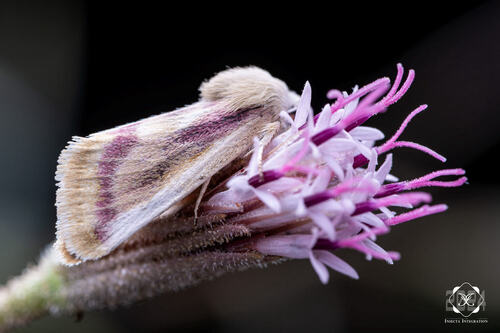
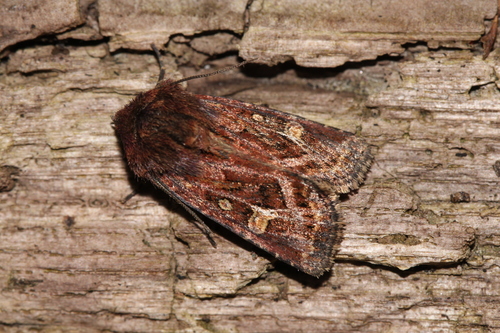
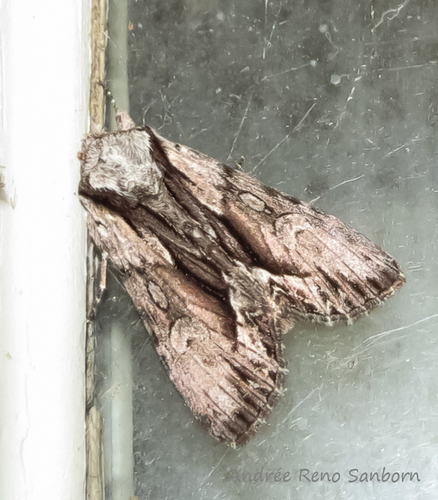
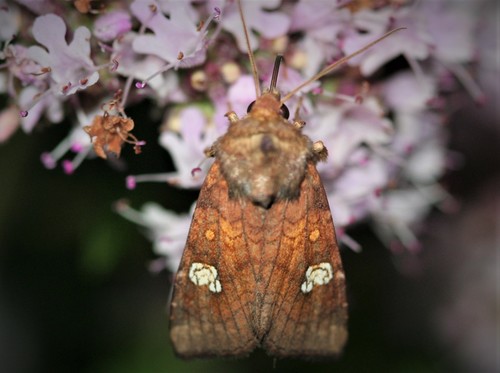
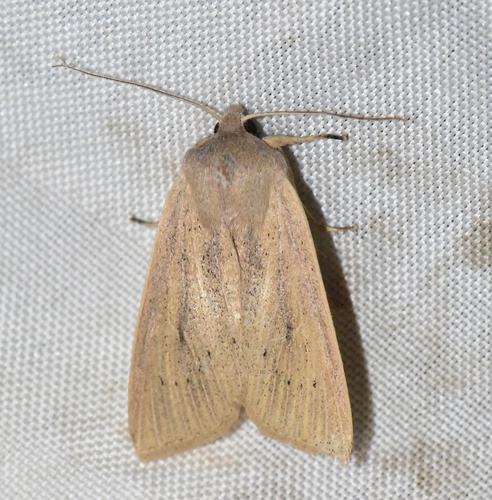
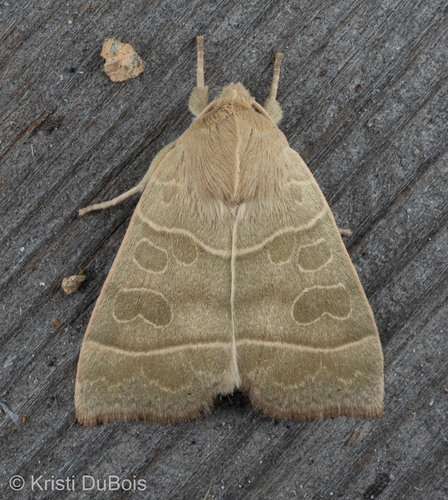
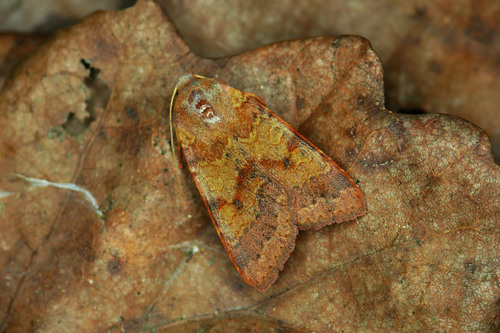
Agrochola helvola, commonly known as the flounced chestnut, is a moth species belonging to the family Noctuidae. It was first formally described by Carl Linnaeus in 1758, in the 10th edition of his landmark work Systema Naturae. This species occurs across most of Europe; its range extends north to Scotland and Fennoscandia, reaching as far north as the Arctic Circle, and south to Spain and Sicily (it is not found on Sardinia). East of Europe, it is found through Greece to the Middle East, Armenia, Asia Minor, western Turkestan, and central Asia as far east as central Siberia. The wingspan of adult moths ranges from 34 to 45 mm. Forewings are either dull or bright red. The inner, outer, and submarginal lines are brownish, formed of lunules between the veins, with the lunules of the inner line being more continuous. A distinct brownish angulated median shade is present. The stigmata are usually very indistinct, matching the ground colour or slightly darker, and outlined with paler annuli. Hindwings are grey, with the costal and terminal areas and the fringe generally ochreous or rufous. The basal area located before the inner line, and the space between the outer and submarginal lines are darker, forming more or less prominent bands. Typical A. helvola are dull reddish individuals with these bands well-developed, while bright red individuals are classified as form rufina L. Form catenata Esp. has no dark filling in the space between the outer and submarginal lines, which makes the dark lunules forming these lines more conspicuous. Aberration ochrea Tutt consists of individuals with greenish grey or ochreous ground colour and fully developed bands. Individuals with a yellowish ground colour and purplish-brown bands are classified as punica Bkh. In some individuals, the lines and bands are often obscured and semiobsolete. These less-marked forms are grouped by ground colour: dull reddish ground colour forms are unicolor, bright reddish ground colour forms are called rufa Tutt, and greenish ochreous ground colour forms are called extincta Spul. The subspecies or form sibirica Stgr. from Central Asia has pale yellow forewings. Form cinnamomea Fuchs has extensive grey suffusion, with a darker brown area beyond the outer line. Specimens collected from Amasia are generally much paler than European individuals, usually appearing dull brownish or ochreous-grey with indistinct or obsolete markings; only a small number of specimens, mostly females, are reddish. Notably, the hindwings of Amasian specimens are much whiter, with grey and rufous suffusion that is typically slighter and covers a smaller area. The egg is initially reddish yellow. Before hatching, it changes to a reddish-light brown colour, develops white spots, and retains a yellow base. Caterpillars are yellow-brown or red-brown. They have thin white dorsal and dorsolateral lines, wide sharply defined white lateral stripes, and small whitish point-like warts. The pupa bears two fine bristles on its cremaster. Agrochola helvola occupies a broad range of habitats, including xerothermic grasslands, mesophilic edges, fens, stream margins, and other unimproved habitats. Adults fly from September to October, with the exact timing varying by location. The larvae feed on the leaves of a variety of plants; recorded host food plants include Salix, Quercus, Corylus, Prunus spinosa, Rubus fruticosus, Rubus idaeus, and Vaccinium myrtillus.