About Agriphila selasella Hübner
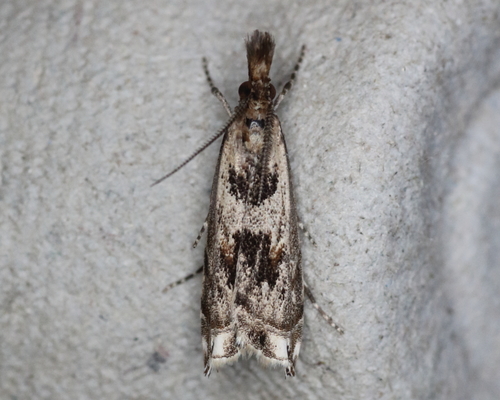
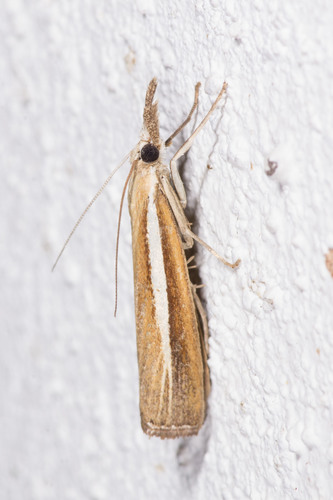
Agriphila selasella is a species of moth in the family Crambidae. It was described by Jacob Hübner in 1813. This moth is found in Europe, and extends eastward across the Palearctic region. Its wingspan reaches approximately 26 mm. The face of the moth is slightly prominent. Forewings are whitish-ochreous or ochreous, mixed with light fuscous, and sometimes heavily suffused with this colour; a moderately thick, clearly defined white median streak runs from the base to between three-quarters and five-sixths of the wing length, ending in two or three fine whitish streaks along the veins; indistinct blackish terminal dots sometimes appear on the forewings; the cilia are shining fuscous. Hindwings are grey. The larva is brown, and paler along the sides; it has large, dark brown spots, a black head, and a black-brown plate on its second segment. The adult moth flies from July to August, with timing varying by location. The larvae feed on various grasses, including Puccinellia maritima and Festuca ovina.