About Agriopis marginaria (Fabricius)
The dotted border, scientifically Agriopis marginaria, is a moth in the family Geometridae. It was first formally described by Johan Christian Fabricius in 1776. This species is found across most of Europe, excluding the far northern regions, as well as in the Near East.
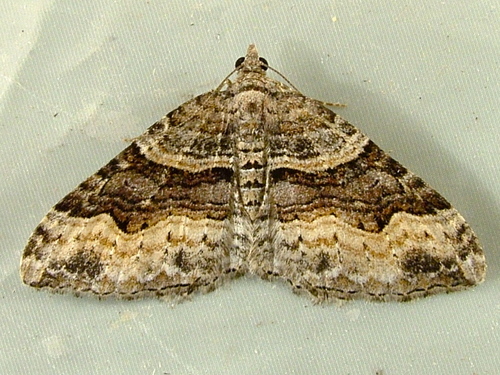
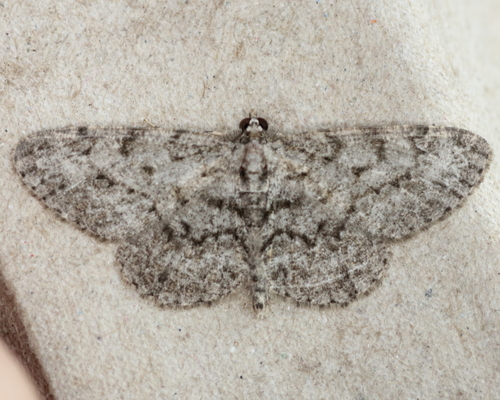
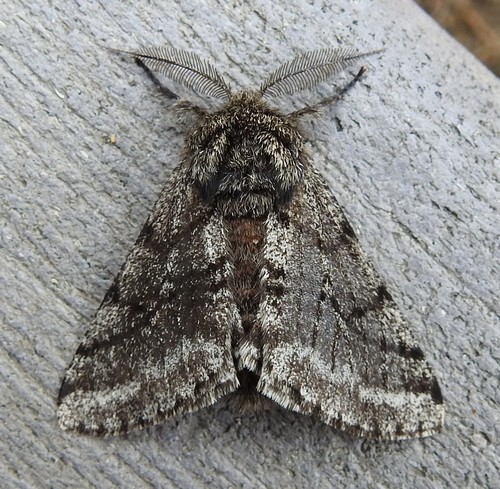
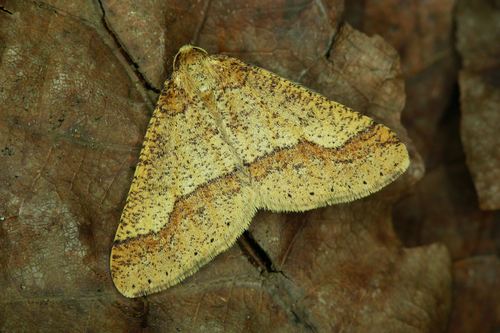
Females of this species only have vestigial wings, and are completely flightless. They are most often found resting on the trunks and branches of their larval food plants. Males have orange-brown forewings, which are less orange than those of Agriopis aurantiaria. The forewings feature a paler yellowish band and a row of dots along the termen, which gives the species its common name. Males' hindwings are whitish with faint fascia, and melanic forms are frequently observed. The wingspan of adult Agriopis marginaria ranges from 36 to 42 mm.
Adults are active from February to April in the British Isles; this flight season may vary in other parts of the species' range. Males will sometimes come to light, but are not strongly attracted to it. Eggs are ovate and greenish, and develop a reddish color on the upper side as they mature. Larvae are highly variable, most often greenish-brown with dark cross-shaped markings along the back. They feed on a wide range of trees and shrubs. The species overwinters in the pupal stage.
Recorded larval food plants include Alnus (alder), Betula (birch), Corylus (hazel), Crataegus (hawthorn), Fagus (beech), Malus (apple), Prunus, Quercus (oak), Salix (willow), and Ulmus (elm).