About Aglaoctenus castaneus (Mello-Leitão, 1942)
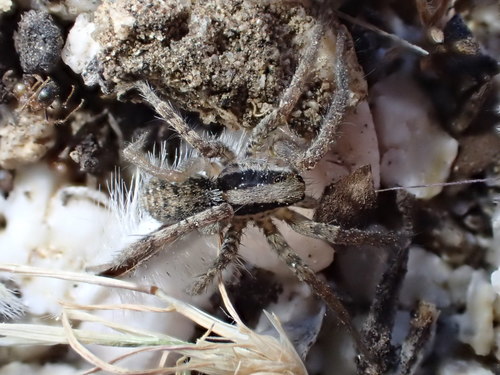
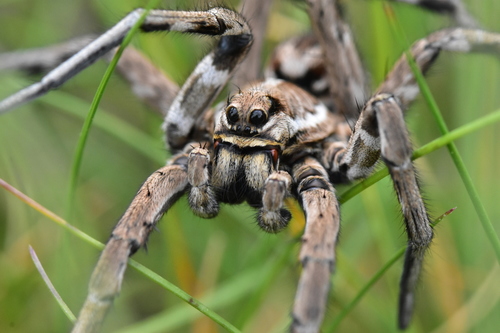
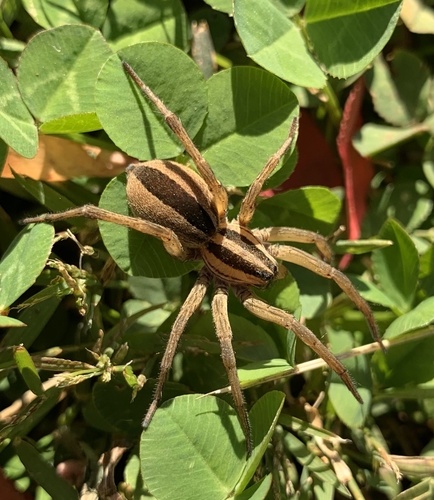
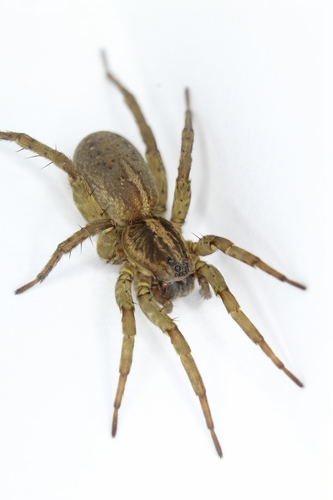
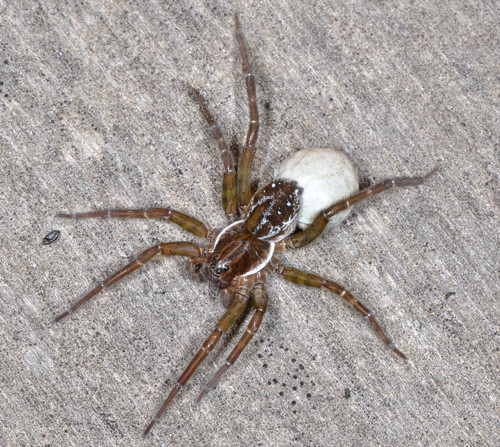
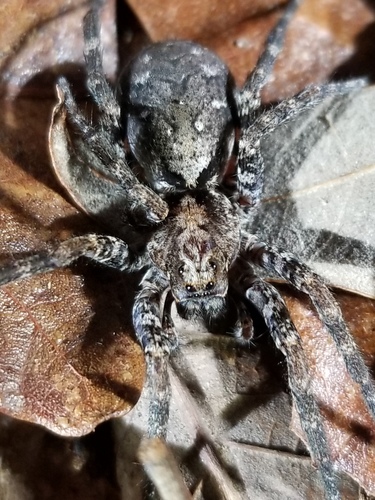
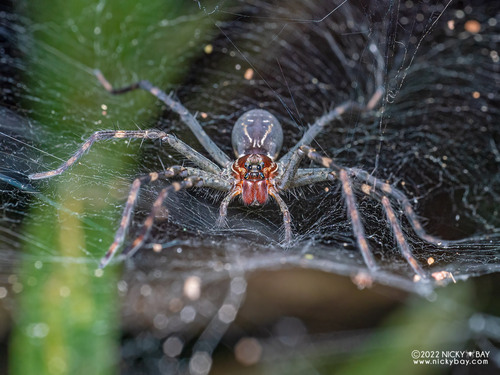
Males of Aglaoctenus castaneus have a total length ranging from 11.9 to 20.1 mm, while females are larger, with total lengths ranging from 14.2 to 24.0 mm. Males can be distinguished from the related species A. lagotis by their wider median apophysis, a more conspicuous base of the cymbium in the male palp, and leg-carapace ratios between 2.2 and 2.9. The male carapace is orange, with a red cephalic region and a distinct orange median Y-shaped band. The abdomen is dark gray with a red anterior dorsal spot. Females have a brown carapace with a dark brown cephalic area that is red along its lateral edges, and a grayish abdomen marked with a dark folium pattern. The female epigyne is characterized by a T-shaped septum that is shorter longitudinally and wider transversally than that of A. lagotis, and has a more pronounced convex projection in the center. Coloration of the species varies considerably across its range, from red to dark, almost black. Specimens from the Amazon are usually darker, and males from this region have a more conspicuous red abdominal spot than specimens from other localities. Aglaoctenus castaneus has been formally recorded from Ecuador, northern Peru, and northern, northeastern, and southeastern Brazil. Additional records suggest the species may also occur in Argentina. This species is found mainly in humid forests. Webs have been observed on palm species including Attalea sp. and Astrocaryum aculeatiissimum in forest reserves of southeastern Brazil. On Ilha do Cardoso, southeastern Brazil, webs were found on bromeliads (Vriesea sp.) in restinga vegetation areas. Juveniles have been observed with webs in leaf litter in central Amazonian forests.