About Agave maculata Regel
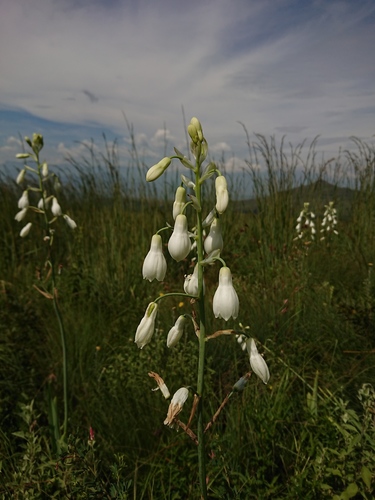
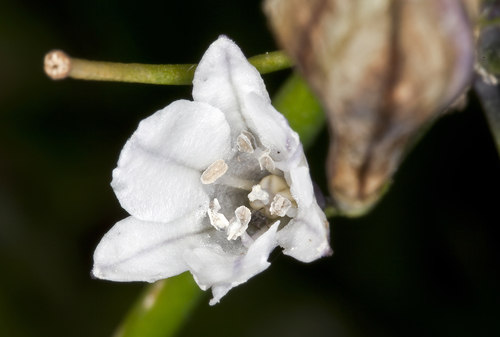
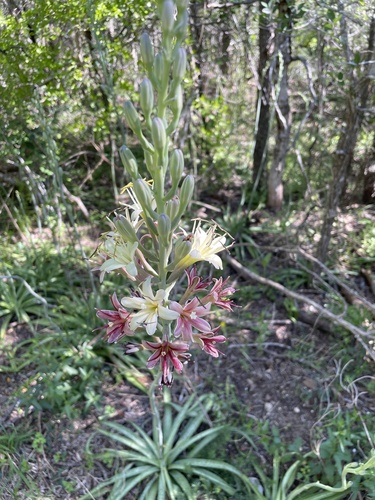
Agave maculata Regel, commonly called the Texas tuberose, is an acaulescent plant, meaning it has an extremely short stem. It produces fleshy silvery-green leaves covered with purple spots. In low light conditions, these leaves may lie flat against the ground. During droughts, the leaves can wither, leaving little to no visible plant tissue above ground. After sufficient precipitation, the plant produces an inflorescence that reaches 60 cm (24 in) tall, which appears between April and September. Small mammals including javelina, deer, and feral pigs feed on the plant's new inflorescences, which can stop the plant from flowering that season. These animals also feed on the Texas tuberose's leaves, especially during droughts, which weakens and ultimately kills the plant. Individual flowers open and change color over their 3–4 day lifespan, shifting from white to pink to dark red. As the inferior ovaries mature into seedpods, their color changes from green to purple to black. Ecologically, the Texas tuberose is the primary host plant for caterpillars of the rare manfreda giant-skipper, also called the aloe skipper (Stallingsia maculosus, also referenced as Stallingsia smithi). A decline in the population of Agave maculata could threaten the survival of this butterfly species.