About Agave lechuguilla Torr.
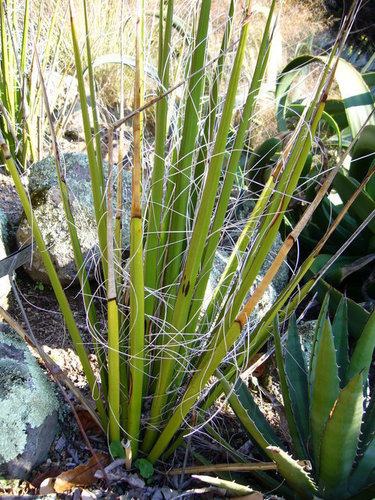
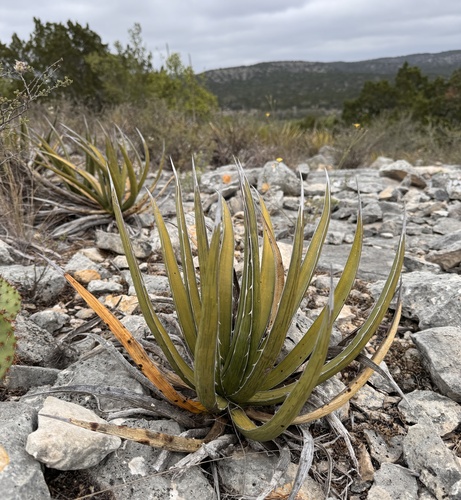
Agave lechuguilla Torr. most often reproduces via underground offshoots, forming large colonies. It can flower at any time once it reaches between three and 21 years of age, producing a leafless flower stalk that grows up to 3.7 metres (12 feet) tall. Funnel-shaped flower clusters in purple, red, and yellow grow at the top of the stalk. The plant dies after flowering, which occurs between May and July. Its leaves are long, tough, and rigid, ending in very sharp, hard points that can easily penetrate clothing and even leather. This trait gives the species its common colloquial name "shin-daggers".
This species is an indicator species endemic to the Chihuahuan Desert, where it is only found. It typically grows on calcareous soils.
In some areas, Agave lechuguilla makes up a large portion of the diet of collared peccary (also called javelina). Its flowers provide nutrients for insects, bats, and some birds. However, the plant is toxic to cattle and sheep.
Water stored in this species' flowering stalks is rich in salts and minerals, and is sold as a sport drink in Mexico. Native Mexicans have used fiber from the plant's leaves, which is commonly called ixtle. Native Americans historically used the plant's roots as soap.