About Agapeta zoegana (Linnaeus, 1767)
Agapeta zoegana is a species of moth with the common names the sulphur knapweed moth and the yellow-winged knapweed root moth. It is used as a biological pest control agent against noxious knapweeds, especially spotted knapweed (Centaurea maculosa) and diffuse knapweed (Centaurea diffusa).
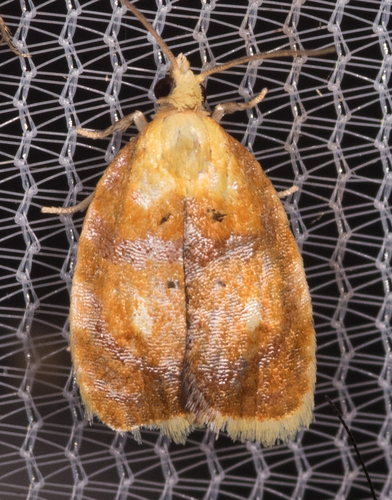
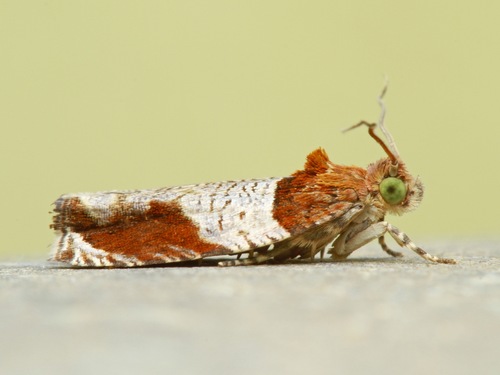
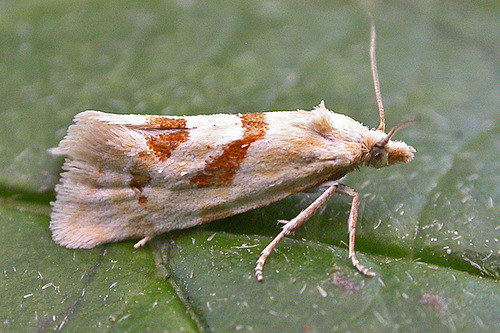
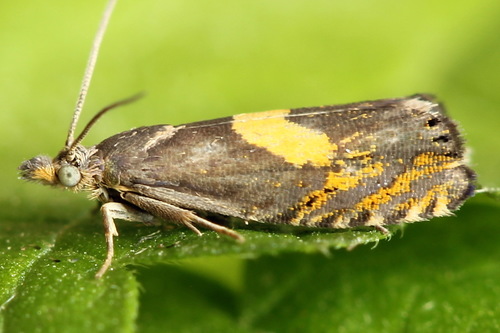
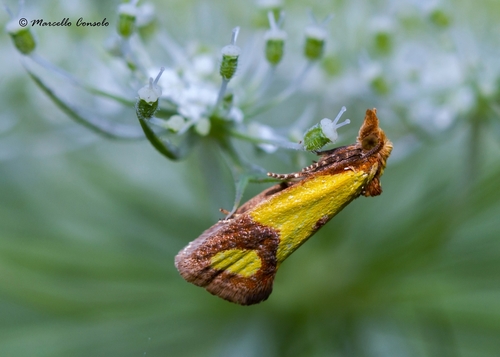
Adults of this moth are bright yellow with brown areas on the wings, and reach approximately 11 millimeters in length. Meyrick gave the following description of the species: the forewing has a moderately arched costa; it is colored bright yellow or yellowish-ferruginous; the costal edge, a small subdorsal spot before the middle, and a large terminal blotch with an angulated edge that contains a spot of the ground color are colored ferruginous-fuscous. The hindwings are dark grey. Julius von Kennel provides a complete full description of the species.
Adult moths live for only a few days. During their short lifespan, females lay eggs on plant stems and leaves. The larvae are root miners: after hatching, they move to the host plant's root, and tunnel through the root cortex as they feed. This feeding activity causes moderate damage to the knapweed plant.
This moth is native to Eurasia. It was first introduced to the western and west-central United States starting in the 1980s, and is now permanently established in knapweed populations in the region. It reduces the spread of knapweed in areas where mechanical and chemical control methods are not practical. It only feeds and lives on spotted and diffuse knapweed, and has never been recorded causing damage to other plant species. Adults fly between May and August, starting from dusk, and they are attracted to light.