About Agapanthia villosoviridescens (Degeer, 1775)
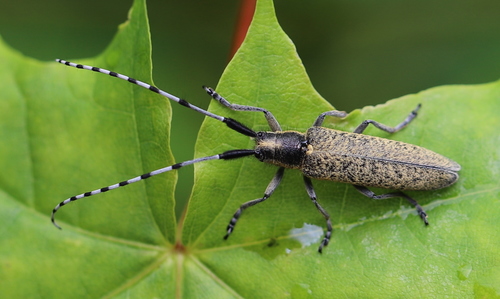
Agapanthia villosoviridescens (Degeer, 1775) gets its name from its golden-black coloration, which features a golden bloom covering its elytra and thorax. Adult beetles of this species reach a body length between 10 and 22 millimetres, or 0.39 to 0.87 inches. This species is active in flight from May to August within its habitat. For larval development, this beetle is highly polyphagous, using a wide variety of host plants. Confirmed potential hosts include Aconitum, Angelica, Anthriscus, Artemisia, Aster, Carduus, Cirsium, Chaerophyllum, Eupatorium, Foeniculum, Gentiana, Helleborus, Heracleum, Peucedanum, Salvia, Senecio, Urtica, and Veratrum album. Larvae develop inside the stalks of their host plants. As they grow, they move downward through the stalk. When ready to pupate, they cut off the stalk and build pupal cells near ground level. Adult beetles emerge through a newly cut exit hole on the side of the host stalk.