About Afrocarpus falcatus (Thunb.) C.N.Page
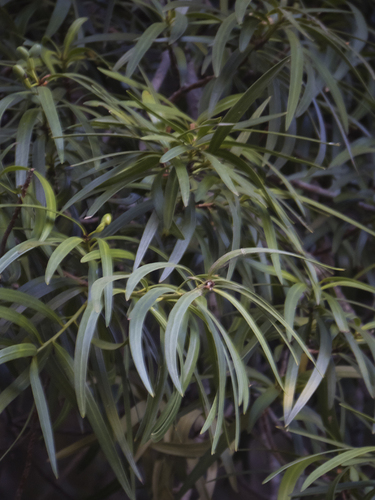
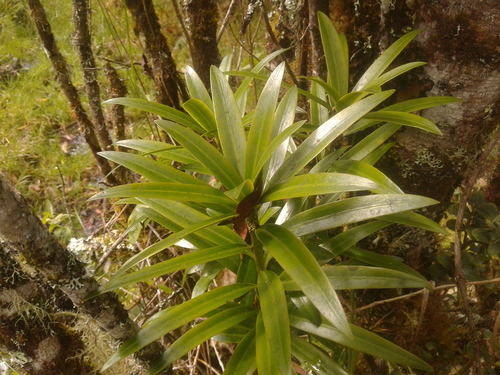
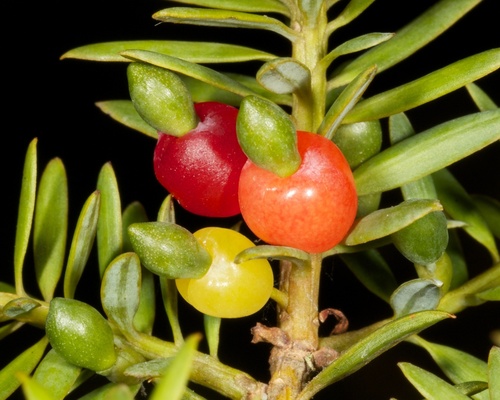
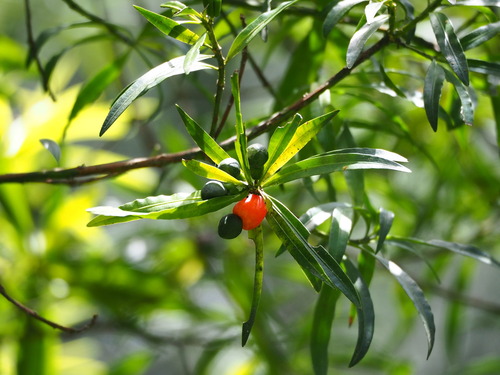
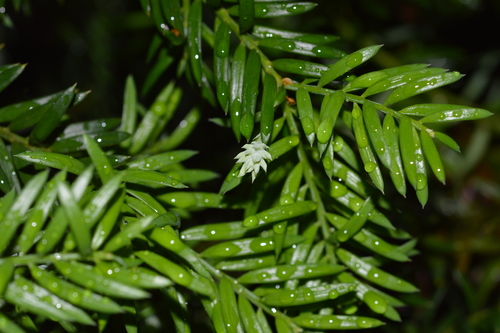
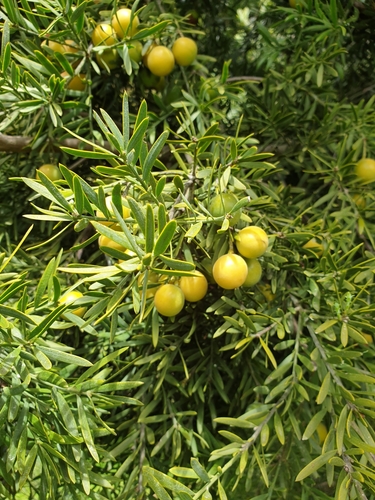
Afrocarpus falcatus (Thunb.) C.N.Page is an evergreen conifer. It most often grows to around 45 metres (148 ft) tall, though some individuals have been recorded reaching 60 m (200 ft). In higher elevation habitats and exposed coastal areas, it rarely grows taller than 25 m (82 ft). Mature trunks reach 2 to 3 m (6 ft 7 in to 9 ft 10 in) in diameter, and range in color from gray-brown to reddish. Bark on young stems is smooth and ridged, while bark on older trunks becomes progressively flaky with age. Leaves grow in a spiral arrangement along branches. They are small and narrow, reaching up to 4.5 cm (1.8 in) long and around 6 mm (1⁄4 in) wide. Leaf color ranges from green to yellowish; leaves are hairless, leathery, and have a somewhat waxy texture. This species is dioecious, meaning male and female reproductive structures grow on separate individual plants. Male cones form in leaf axils, are brown with spiraling scales, and measure 5 to 15 mm (0.20 to 0.59 in) long by 3 mm (1⁄8 in) wide. Female cones have a single scale that holds one seed, which is about 1 to 2 cm (0.39 to 0.79 in) long. The seed is gray-green, drupe-like, with a woody inner coat covered by a fleshy, resinous outer skin. Some of the largest known individuals grow in South Africa's Knysna-Amatole montane forests, where some specimens are over 1,000 years old. The wood of this species, commonly called podo or yellowwood, has a wide range of uses. It is valued for construction, including shipbuilding, house construction, floor boards, and parquet blocks. It is also processed into plywood and used to make many finished goods such as furniture, boxes, vats, toys, farm implements, musical instruments, and railroad ties. It has been used as firewood, and many examples of antique South African yellowwood woodworking are made from this species' wood. The bark contains 3-4% tannin and is used for tanning leather. While the wood is useful, it is not very durable: it is susceptible to blue stain fungus, powderpost beetles, longhorn beetles, and termites. The seed is edible, though it has a resinous quality. Both bark and seeds have been used in traditional African medicine. The tree is cultivated for ornamental purposes, as a windbreak, for erosion control, and has been used as a Christmas tree.