About Aesculus indica (Colebr. ex Cambess.) Hook.
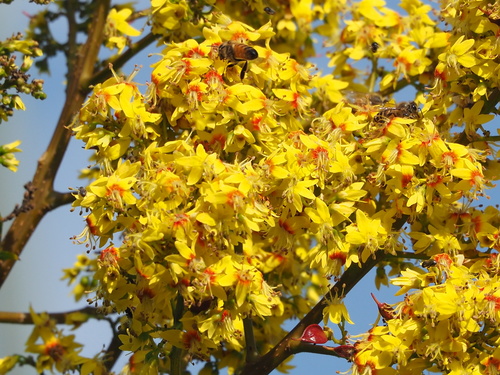
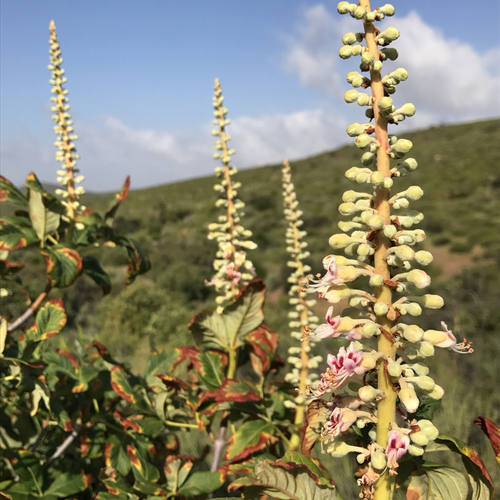
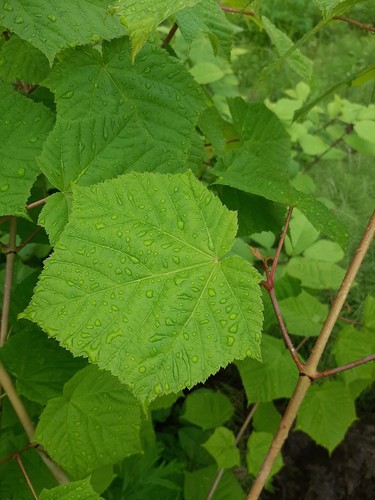
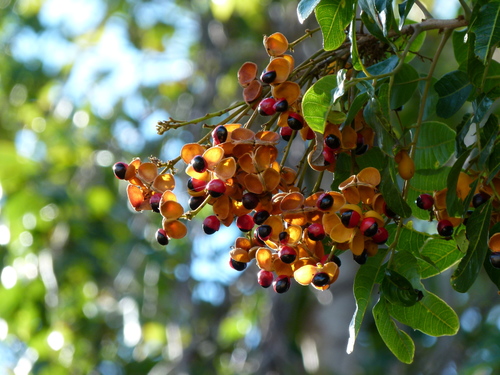
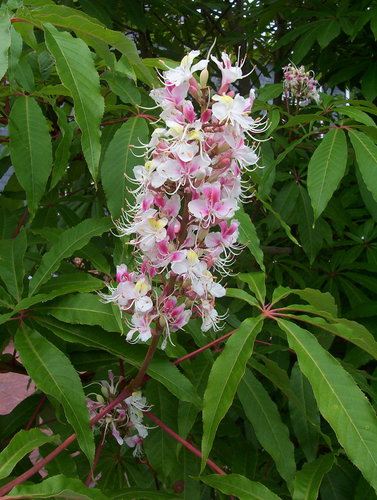
Aesculus indica (Colebr. ex Cambess.) Hook. is a tree that reaches a height of 9–12 m (30–40 ft) and has a canopy spread of approximately 11–15 m (35–50 ft). This species can tolerate temperatures as low as −18 °C (0 °F) and grows well in USDA hardiness zones 7–9. Flowering occurs from June to July, though it also produces an abundance of white hermaphrodite blossoms from May to June that are pollinated by bees. Its leaves measure 10–20 cm (3.9–7.9 in) long by 2–6 cm (0.79–2.36 in) wide, and are valued for ornamental use. Mature trees develop a naturally rounded canopy shape, and its seeds ripen in October. The species is commonly found growing along the Himalayan Lowlands, ranging from Kashmir to Western Nepal, at elevations between 900 and 3,000 metres. It was introduced to the British Isles in the mid-19th century, and has since become popular for planting in many parks and estates across the region. It can also be found growing in many areas of the United States. Commercial collection of this tree’s seeds for flour production has had a negative impact on the species’ natural native distribution. In parts of Northern India, Aesculus indica leaves are used as cattle fodder. Its seeds are dried and ground into a bitter flour called tattawakher. The bitterness comes from naturally occurring saponins, which are removed by thoroughly washing the ground flour during preparation. The processed flour is often mixed with wheat flour to make chapatis, used to prepare the Indian sweet halwa, and sometimes made into a porridge or gruel called dalia that is eaten during fasting periods. In traditional Indian medicine, the species is used to treat a variety of skin diseases and rheumatism, and it acts as an astringent, acrid, and narcotic. It is also used to relieve headache pain. Its large leaves and showy flowers make it a suitable species for growing as a large-sized bonsai. In the United Kingdom, the cultivar 'Sydney Pearce' has been awarded the Royal Horticultural Society's Award of Garden Merit.