About Aeropedellus clavatus (Thomas, 1873)
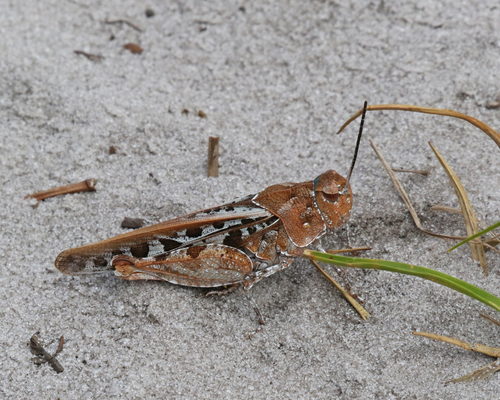
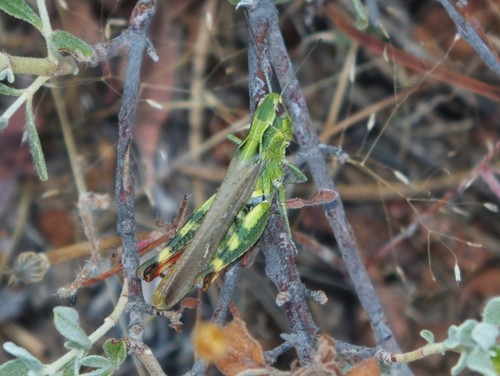
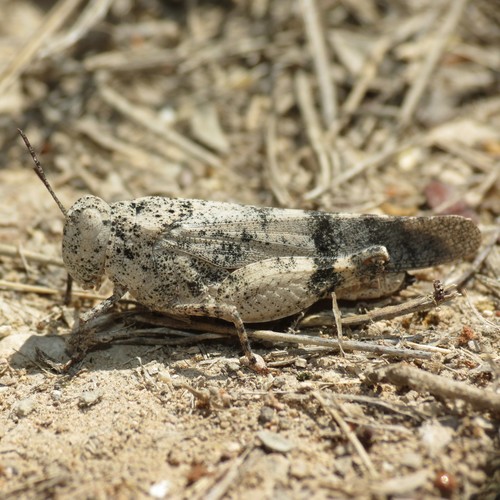
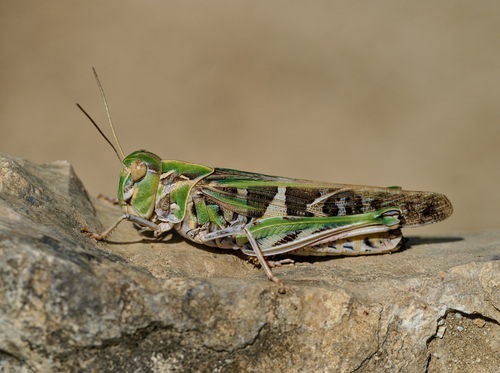
Aeropedellus clavatus, commonly known as the club-horned grasshopper, is a species of slant-faced grasshopper in the family Acrididae. It is native to North America, with a range extending from western Canada to the southwestern United States. This grasshopper hatches in very early spring, earlier than most other grasshopper species in its range. Its full distribution spans from the grasslands of western Canada and the northern United States to the mountains of Arizona and New Mexico. It is most commonly found in northern mixed-grass prairies, mountain meadows, and forested foothills, and it is the most common and most widely distributed grassland grasshopper species in the Canadian prairies. Adult female club-horned grasshoppers lay egg pods containing 5 to 8 eggs in soil among the roots of grasses or sedges. After being laid, the eggs undergo rapid embryonic development until they reach a stage ready to hatch, then enter diapause to overwinter. There is one generation per year in plains habitats. In alpine habitats, eggs stay in diapause for two or three winters before hatching. Eggs hatch within a three to four week period in very early spring. After hatching, nymphs develop quickly through all instar stages, reaching adulthood in approximately 30 to 42 days. Compared to later-hatching grasshopper species, club-horned grasshoppers gain better access to edible plants, but benefit from less predator protection due to smaller population numbers. Their diet consists primarily of grasses, sedges, their seeds, and their glumes. When available, Kentucky bluegrass (Poa pratensis) is their preferred food plant.