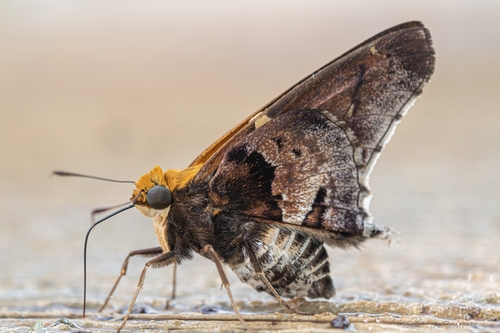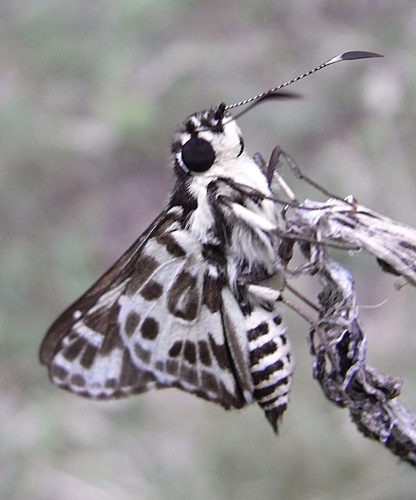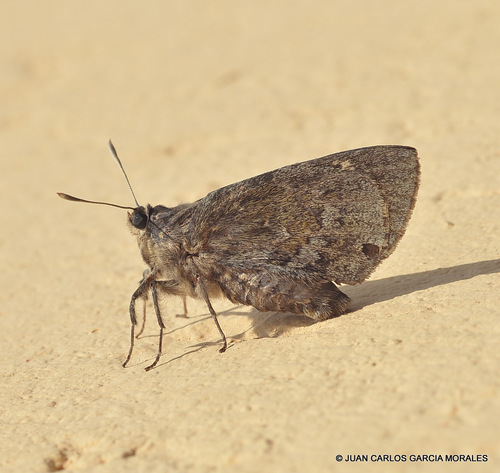
About Aegiale hesperiaris (Walker, 1855)
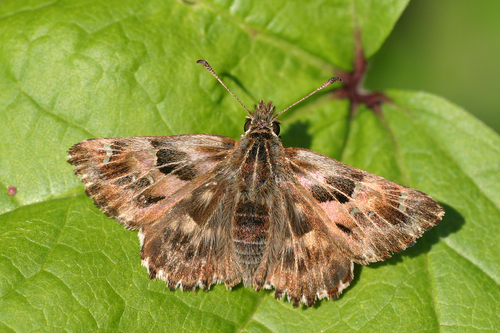
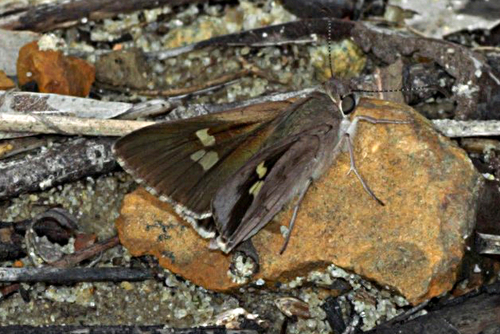
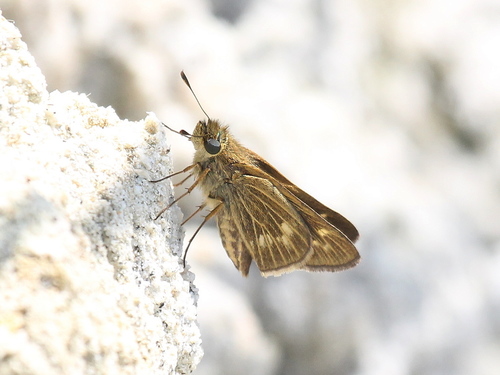
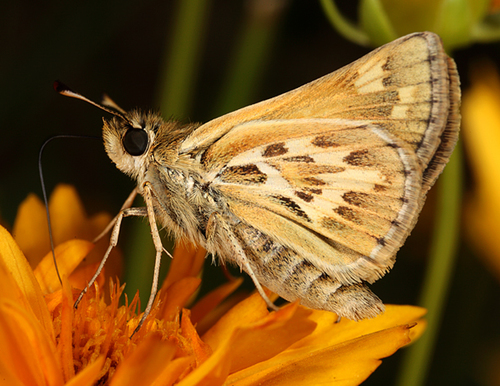
Aegiale hesperiaris, commonly known as the tequila giant skipper, is a species of butterfly in the subfamily Hesperiinae. It is the only species in the monotypic genus Aegiale. The caterpillar of this species is one of two varieties of the edible "maguey worms" that infest maguey and Agave tequilana plants. The white maguey worm, called meocuiles, are the caterpillars of this butterfly. It is typically found in regions of central Mexico, living on the leaves of plants in the family Agavaceae, including Agave tequilana and Agave americana (maguey). Contrary to a common erroneous report, it is not found on cacti. Adult butterflies lay their eggs at the heart of agave leaves. After hatching, the larvae eat the flesh of agave stems and roots, and sometimes completely bore out the entire agave plant. A. hesperiaris grows best in semi-arid and temperate zones where agave plants grow. As a specialist herbivore, its larvae feed exclusively on agave leaves, influencing both the plant's health and the surrounding ecosystem (Molina-Vega et al., 2021). While A. hesperiaris larvae look similar to the larvae of the agave snout weevil (Scyphophorus acupunctatus) and the moth Comadia redtenbacheri, they differ in behavior and culinary value (Finch & Zarazaga, 2007). The life cycle of the tequila giant skipper is closely tied to Agave salmiana. In autumn, adult females lay clusters of up to 14 eggs on agave leaves. The eggs hatch between 15 and 40 days after being laid, and the larvae bore into the leaves to feed, going through several developmental stages. Larvae are most abundant between May and July. After this period, they pupate inside the host plant before emerging as adult butterflies. This specific life cycle restricts when the species can be harvested and complicates sustainable cultivation, because mass-rearing practices for the species are not yet well-established (Molina-Vega et al., 2021).