About Aechmea magdalenae (André) André ex Baker
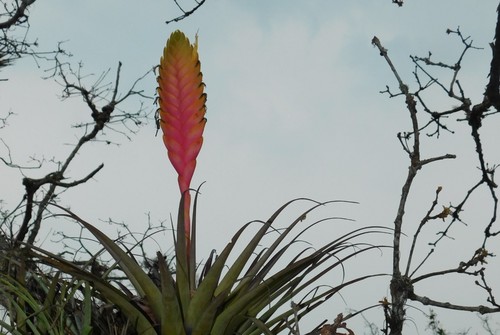
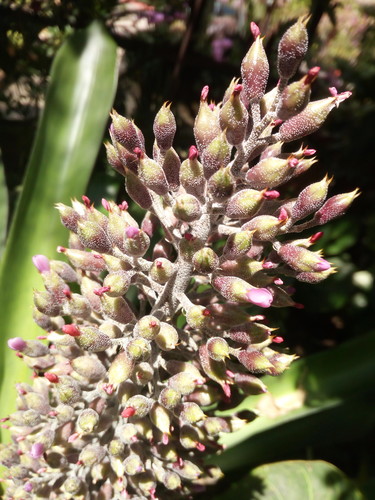
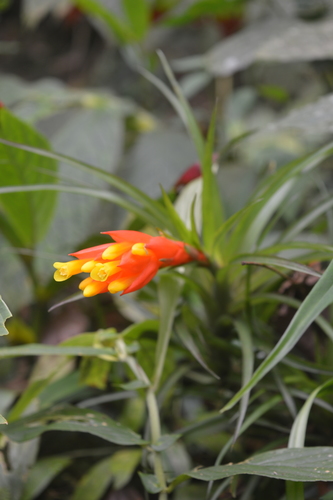
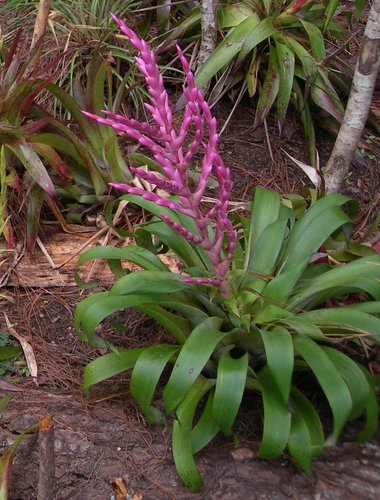
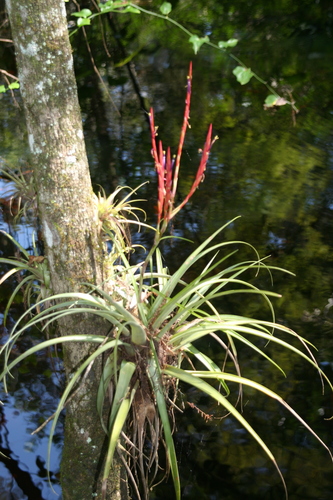
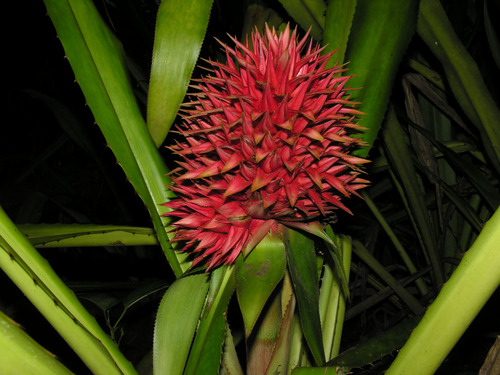
Aechmea magdalenae is a flowering plant in the Bromeliaceae family, also commonly called ixtle. This species is native to southern Mexico, Central America, Colombia, and Ecuador. Its specific epithet magdalenae derives from the location of its original discovery, the Rio Magdalenae Valley of Colombia. The plant produces long green leaves marked with sharp spines, and the whole plant can reach around 2.5 meters in height. In its natural habitat, it grows in moist, swampy woodland areas. It produces red flowers, which develop into edible fruits after blooming. Aechmea magdalenae uses crassulacean acid metabolism: it absorbs carbon dioxide at night, stores the compound, and uses it to make carbohydrates during the day. This adaptation lets the plant keep its stomata closed during the day, which reduces water loss. It is cultivated in southern Mexico for its silky fibers. It is also harvested from wild populations both for these fibers and for its edible fruit. Across many regions of Central America and northern South America, leaf sap from this species is applied to wounds to prevent infection. This traditional practice is effective, because the plant has been found to contain acetic acid, a strongly antibacterial compound.