About Adenophora triphylla (Thunb.) A.DC.
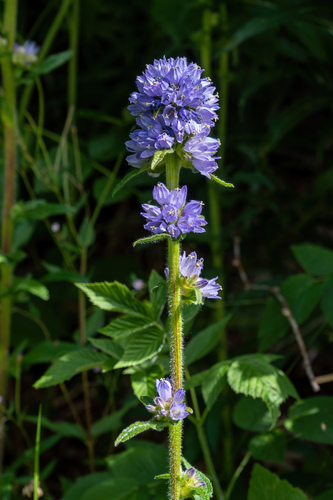
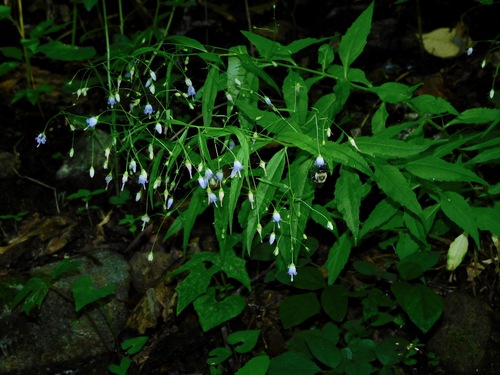
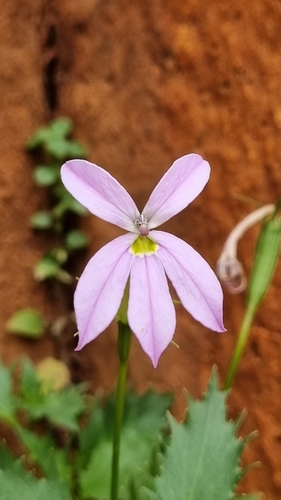
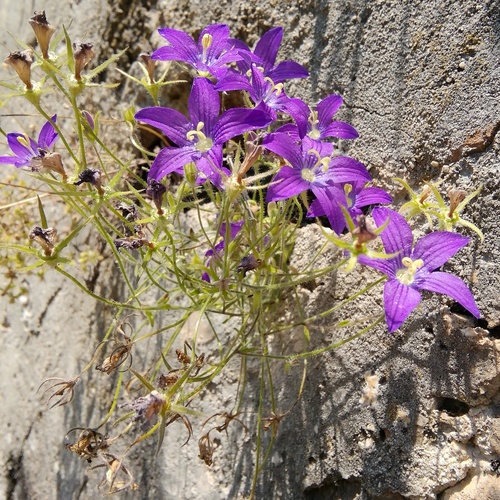
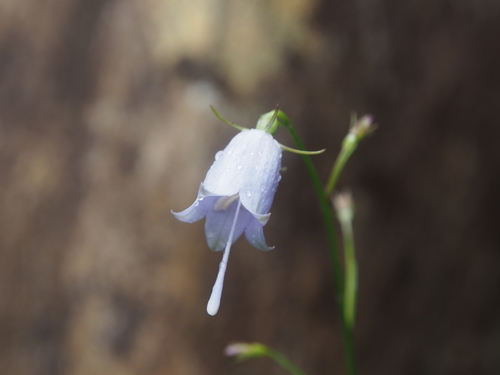
Adenophora triphylla (Thunb.) A.DC., commonly called Japanese lady bell, is a flowering plant species in the Adenophora genus, which contains 62 total species. It belongs to the Campanulaceae family. This is an erect perennial herb that reaches up to 100 centimetres (39 inches) in height. It has a thick, white carrot-shaped taproot that measures 7–16 centimetres (2.8–6.3 inches) long and 1.5–1.8 centimetres (0.59–0.71 inches) in diameter. Its stems are covered in white pilose hairs, and leaves are arranged alternately along the stems. Leaves are oval to nearly round with serrated edges, grow up to 10 centimetres (3.9 inches) long, are white, sharply pointed, and covered in pilose hairs. Flowers measure 13–22 millimetres (0.51–0.87 inches) long. This species is hermaphrodite, meaning each flower has both male and female reproductive organs: 5 stamens and one pistil, with the broad head of the pistil extending out over the rest of the flower. Insects pollinate the flowers of Adenophora triphylla. Seeds are yellow-brown, oblong, slightly compressed, and measure 1–1.5 millimetres (0.039–0.059 inches) long. This species grows naturally in grassy areas of lowlands and mountains, preferring loamy soils in these grassy habitats. Its confirmed distribution includes the Korean Peninsula, Japan, China, Laos, Vietnam, and Russia (Far East and Eastern Siberia). For cultivation, Adenophora triphylla grows best in warm locations with full sun or partial light shade; it cannot survive in full shade. It requires slightly moist alkaline soil, or alternatively peaty soil. Plants are hardy to temperatures around −20 °C (−4 °F). Slugs are known to damage or destroy young growth and even mature plants. In traditional Korean medicine, Adenophora triphylla is used to treat sputum, cough, and bronchial catarrh, and is also used to address obesity, cancer, and inflammation. It is thought to produce antifungal, expectorant, and cardiotonic effects. Additionally, water extracts of this plant are reported to restore estrogen levels in postmenopausal women.