About Adansonia rubrostipa Jum. & Perrier
Adansonia rubrostipa, commonly known as the fony baobab, is a deciduous tree belonging to the Malvaceae family. Out of the eight currently recognized baobab species, six are native to Madagascar, and the fony baobab is one of these. This species is endemic to western Madagascar, with populations ranging southward into Baie de Baly National Park. It grows on well-drained soils in dry and spiny forests, and can be found in the following protected areas: Amoron'i Onilahy, Baie de Baly, Menabe Antimena, Mikea, Namoroka, Ranobe PK 32, Tsimanampesotse, Tsimembo Manambolomaty, and Tsinjoriake (La Table/St Augustin).
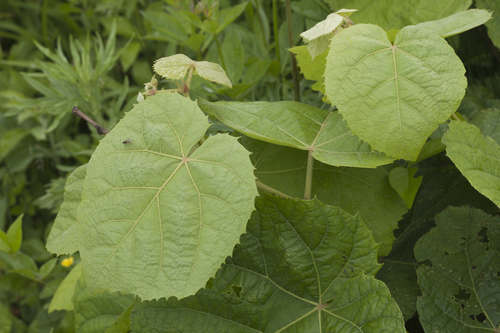
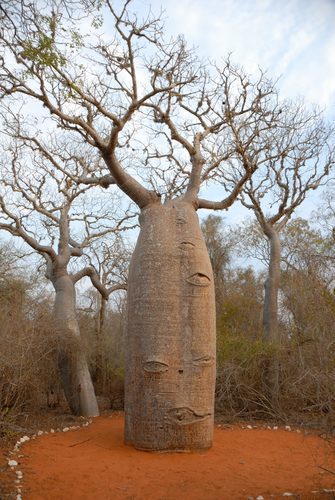
Fony baobab is the smallest of all baobabs, and is easily recognized by its distinctive reddish bark. It typically has a bottle-shaped trunk, toothed leaves, and round fruit. It was first formally described by H.Perrier de la Bathie in 1909.
Fony baobab grows in well-drained, dry habitats on calcareous soils. It occurs in dry deciduous forests and Madagascar spiny forests in western Madagascar, and is an important component of the southern Madagascar spiny thickets, also called "spiny desert", which is a globally distinctive ecoregion.
Reportedly, the roots, seeds, and fruits of this species are edible. Wood from trees killed by fire can be used as thatching material, and in some regions, living trees are cut to produce charcoal.