About Adalia bipunctata (Linnaeus, 1758)
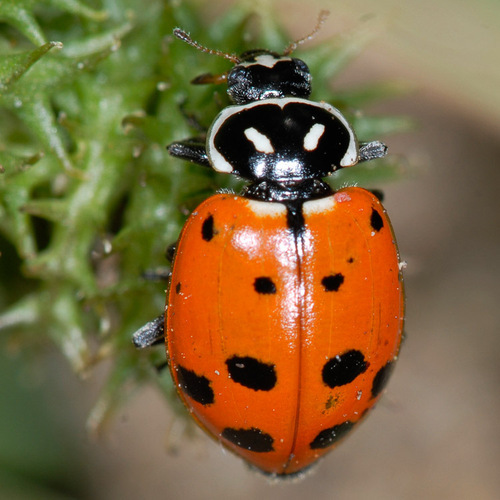
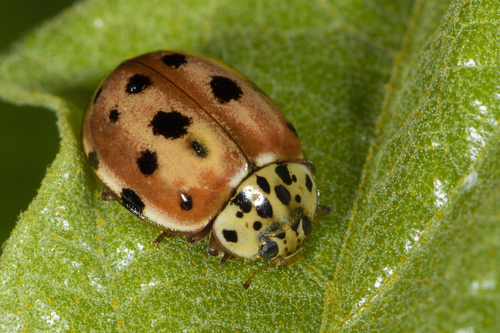
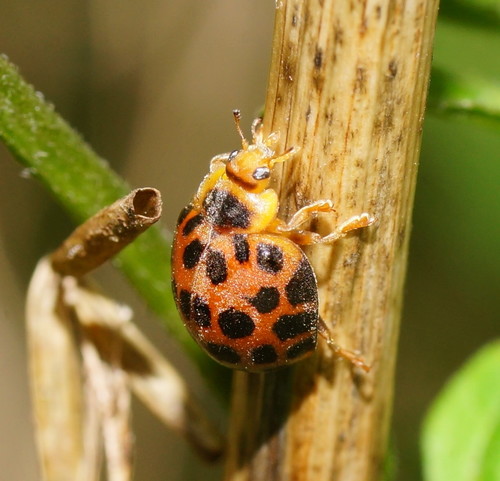
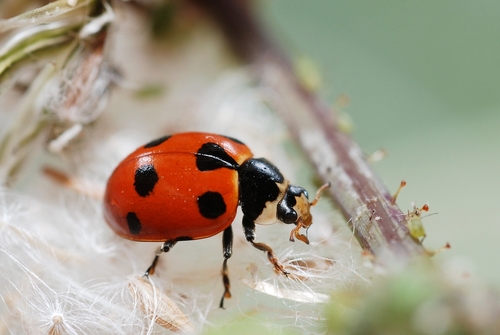
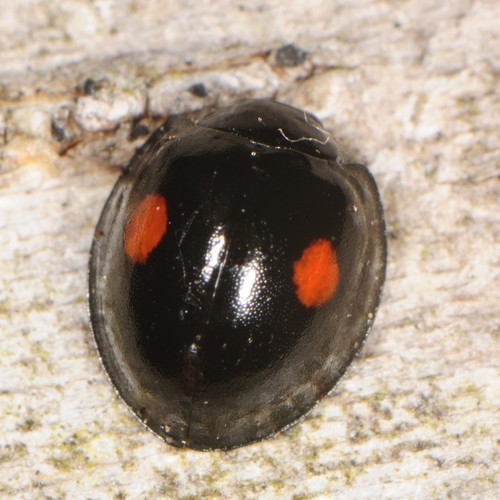
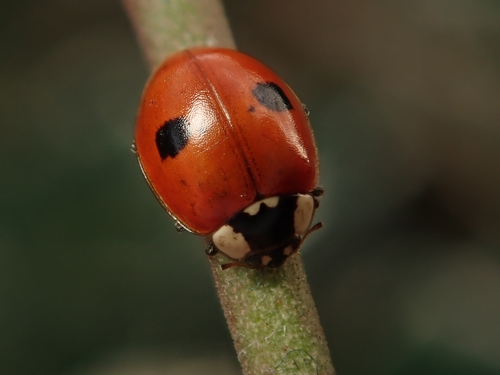
Adalia bipunctata, the two-spotted ladybird, is a small lady beetle that occurs in a wide variety of red and black color forms. While some forms resemble Mulsantina picta, Adalia bipunctata can be easily distinguished by the two white spots on its head, which contrasts with the large white region or more than two spots found on Mulsantina picta. It can also be separated from similar species by its entirely black ventral surface and black legs. This species is highly color-variable across much of its native range. The most well-known and common form across its range is the typical forma bipunctata, which has two black spots on a red background. A melanistic form that is black with four or six red spots is uncommon but not rare, while a fully truly melanistic form is exceedingly rare. North America hosts the highest variation in this species, with several forms not found anywhere else: a spotless form, a four-banded form, a nine to twelve spotted form, and a "cross-hatched" form. Intermediate forms such as form annulata also exist, but they are rarely encountered. The two-spotted lady beetle begins its life cycle in eggs, which are typically laid in groups. When hatching, the larva cuts a hole through the egg to emerge. The larva has a very different appearance from the adult: it has an elongated, soft, grey body with six legs and no wings, and larvae are cannibalistic. Larvae develop through four distinct larval stages: they grow through feeding, then shed their old skin to enter a new stage that allows for further growth. The final larval stage reaches roughly the same size as an adult two-spotted lady beetle. Once the larva has consumed enough food, it attaches itself to a surface, molts into a pupa, and the adult beetle develops inside the pupal case. When development is complete, the adult emerges from the pupa.