About Actinotia radiosa (Esper, 1804)
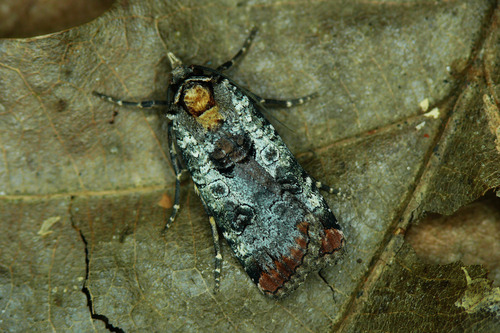
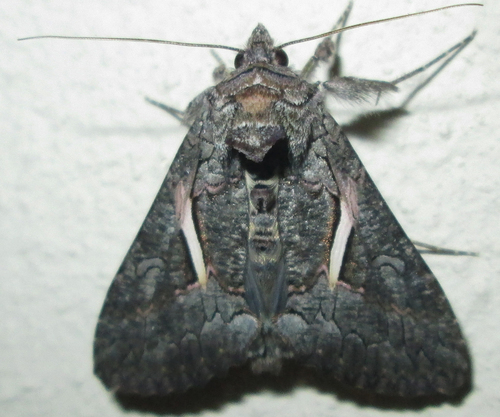
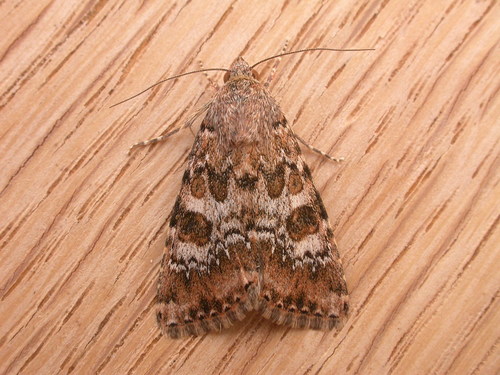
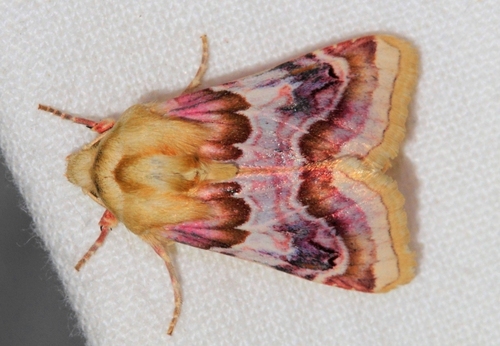
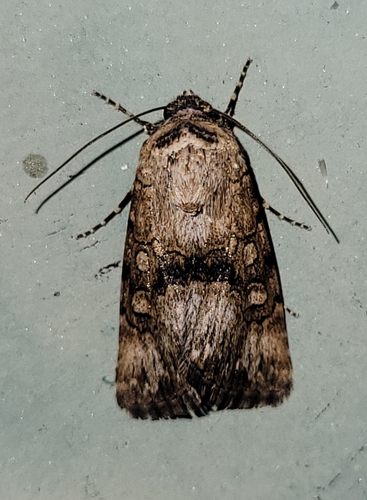
Actinotia radiosa (Esper, 1804), also referred to as lyncea Hbn., is described here from Seitz's work, referenced as plate 15 d. The forewings are olive brown, with several pale horizontal streaks extending from the base. The orbicular stigma is elongate, horizontal, narrow, and pale-edged. The reniform stigma is large, vertical, and brown, with a white linear center and white outline. Towards the wing margin, veins are black, outlined by pale olive and whitish tones. These veins form sharp wedge-shaped markings separated by dark intervals, and extend as fine white lines through the dark brown fringe. An interrupted pale outer fascia is present on the forewing. The hindwings are black, with a whitish outer fascia running from the costa to vein 2, which is crossed by black veins. The cell lunule is large and black, and the hindwing fringe is white. This species is found throughout southern Europe, as well as in Asia Minor and Armenia. The larva is reddish grey-brown. Its dorsal and subdorsal lines are dark, with oblique streaks between the lines. The lateral lines are pale yellow with a reddish tinge along their center, and each segment has an elongate blackish mark above the lateral line. The larva's thoracic and anal plates are brown, and the head is yellowish-brown. Larvae feed on Hypericum plants.