About Actaea pachypoda Elliott
Scientific Classification and Growth Form
Actaea pachypoda Elliott is a herbaceous perennial plant that reaches 46 to 76 centimeters (18 to 30 inches) or more in height.
Leaf Morphology
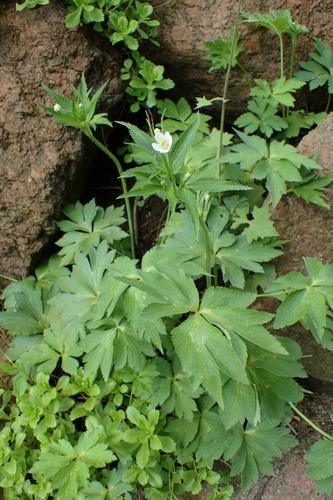
It bears toothed, bipinnate compound leaves that grow up to 40 centimeters (16 inches) long and 30 centimeters (12 inches) wide.
Flower Characteristics
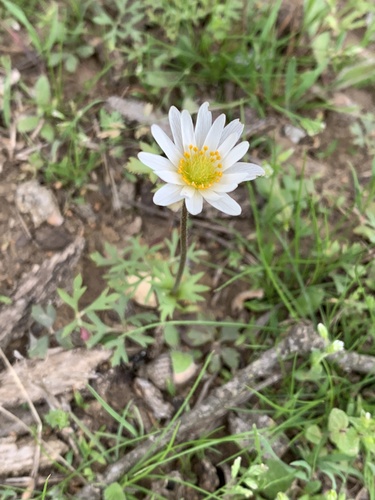
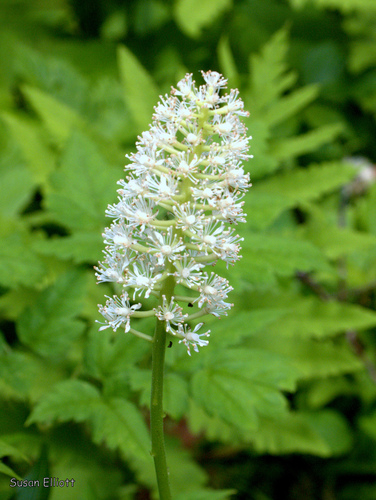
In spring, it produces small white flowers arranged in a dense, roughly 10 centimeter (3.9 inch) long raceme.
Fruit Structure
Its most notable feature is its fruit: a 1 centimeter (1/2 inch) diameter white berry. The berry’s size, shape, and the prominent black stigma scar at its tip give the species its common nickname "doll's eyes".
Pedicel Traits
As the berries develop, their supporting pedicels thicken and turn bright red.
Berry Development
Berries ripen through the summer and remain attached to the plant until frost.
Fruit Variants
Some individual plants produce pink or red berries, and have been classified as A. pachypoda forma rubrocarpa. However, some of these variants produce infertile seed, and may actually be hybrids between A. pachypoda and Actaea rubra.
Etymology of Epithet
The specific epithet pachypoda translates to "thick foot", derived from the Ancient Greek words pakhús (meaning thick) and poús (meaning foot).
Epithet Reference
This name may refer either to the plant’s large rhizome, or to the berry stalks, which are thicker than those of the closely related Actaea rubra.
Seed Dispersal
In ecological terms, several types of birds are unaffected by the plant’s toxins and eat its berries, helping to disperse the plant’s seeds.
Pollinator Interaction
Long-tongued bees collect pollen from this species’ flowers.
Cultivation Use
Actaea pachypoda is cultivated as an ornamental plant, used in both traditional gardens and wildlife gardens.
Cultivation Requirements
To grow successfully matching its native habitat requirements, it needs partial or full shade, rich loamy soil, regular watering, and good drainage.