About Acronicta strigosa (Denis & Schiffermüller), 1775
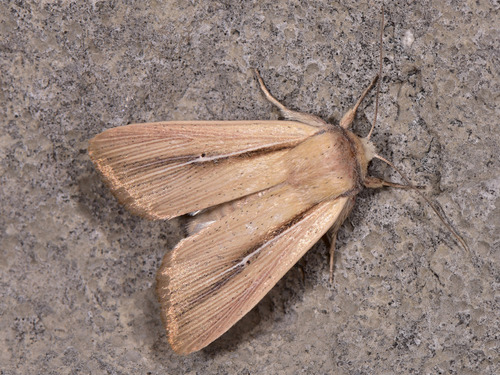
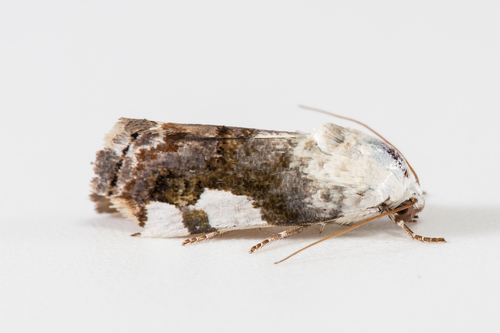
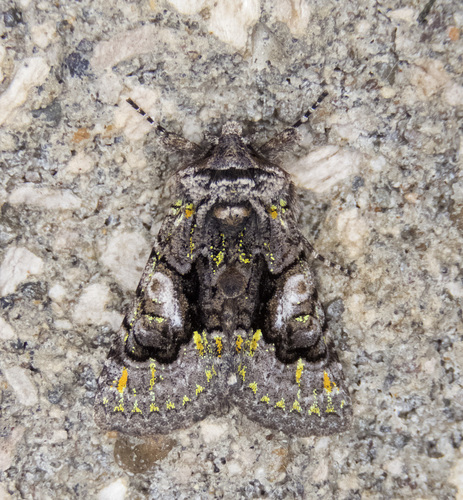
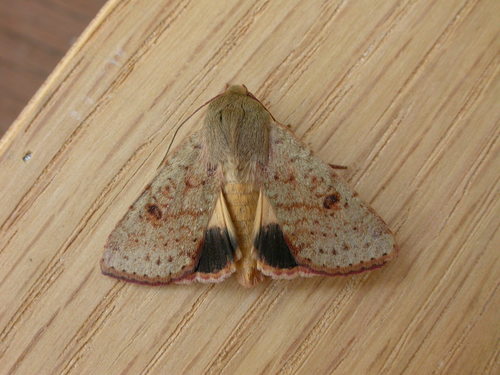
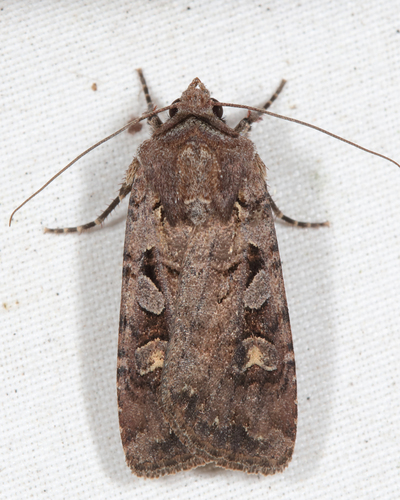
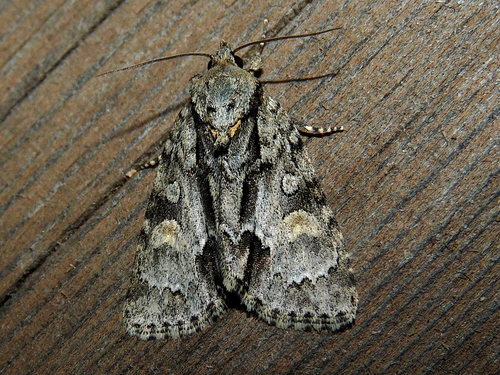
The scientific name of this moth is Acronicta strigosa (Denis & Schiffermüller), 1775. Technical description and variation: Forewings are pale grey with an ochreous tinge. The base of the inner margin is yellow, the reniform stigma is yellowish externally, and a broken black streak runs along the submedian fold. Wingspan is approximately 32 mm. The ab. bryophiloides Horm. (casparii Steinert) form is smaller, with entirely dark grey forewings. Specimens from Japan are considerably larger and much darker than European individuals; their stigmata are more strongly marked, and black dashes are thicker, and these are classified as the subspecies adaucta subsp. nov. Mature larvae are fullfed in autumn. Larvae are velvety green with a broad red-brown dorsal band, with scattered fine hairs, and have a humped dorsum on the 12th segment. They occur in two colour variants: green with a brown back, or completely brown. They have few short, fine hairs. Superficially resembling the larvae of Cerura in colour and ornamentation, they change from green to dull purplish before spinning their cocoon. In Britain, the only recorded foodplant for this species is hawthorn, while continental authors also list sloe and Rhamnus as food sources. The slender pupa is light brown, with a short cremaster that bears thorns.