About Acradenia euodiiformis (F.Muell.) T.G.Hartley
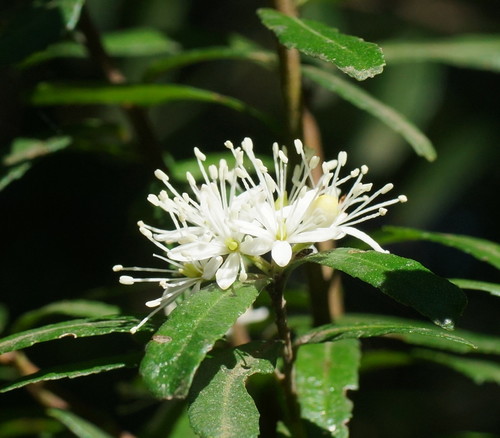
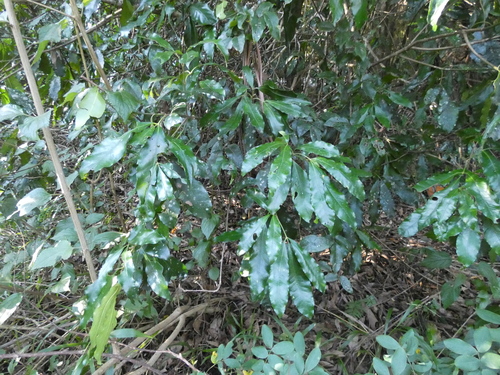
Acradenia euodiiformis is a tree that typically reaches 12–30 m (39–98 ft) in height, with stems up to 60 cm (24 in) in diameter. Its trunk is usually irregular in shape, rarely cylindrical, and sometimes the plant produces several separate trunks. The bark is creamy in general, usually smooth and somewhat corky, marked with vertical lines of pustules. The outer surface of living bark has a patterned mix of red and cream. Leaves are arranged in opposite pairs and are trifoliate, though they occasionally have two or five leaflets instead. Most leaflets are 50–180 mm (2–7 in) long and 15–50 mm (0.6–2 in) wide; the entire leaf is borne on a petiole 20–70 mm (0.8–3 in) long, and individual leaflets are borne on petiolules 3–10 mm (0.1–0.4 in) long. Leaflets are glabrous and bear prominent, large oil glands. Flowers are arranged in panicles 60–210 mm (2–8 in) long. Sepals are 1–1.5 mm (0.04–0.06 in) long and hairy; petals are white or cream-coloured, 3.5–5.5 mm (0.1–0.2 in) long and covered in woolly hairs. Flowering occurs from September to January, after which fruits develop that mature in January. The mature fruits are ribbed follicles 6–8 mm (0.2–0.3 in) long. This species grows in and on the margins of rainforest, with a natural distribution ranging from the McPherson Range in south-eastern Queensland to the Hunter River in New South Wales, occurring at altitudes between 60 and 1,200 m (200–3,940 ft). It is most often found as an understorey tree in rainforest, particularly on poorer sedimentary soils and along creeks, but it sometimes grows on more fertile basaltic soils and at relatively high altitudes.