About Acosmeryx sericeus Walker, 1856
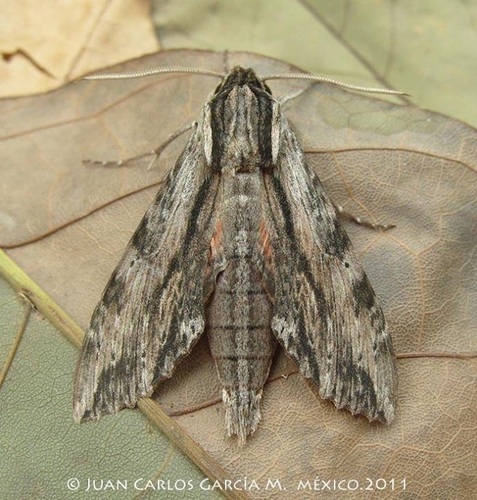
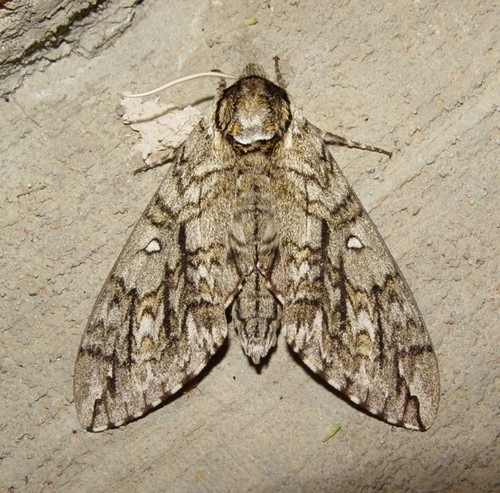
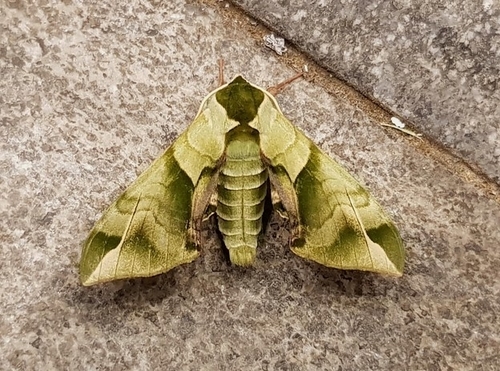
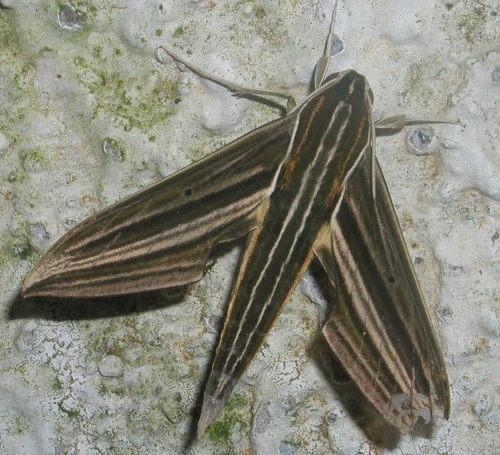
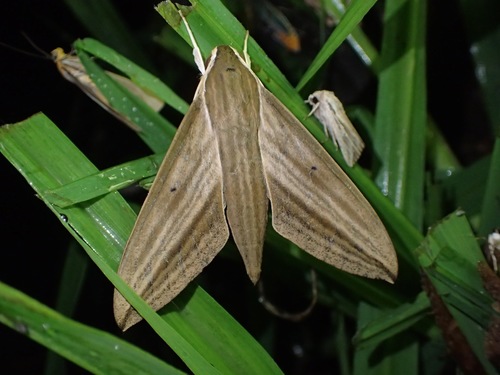
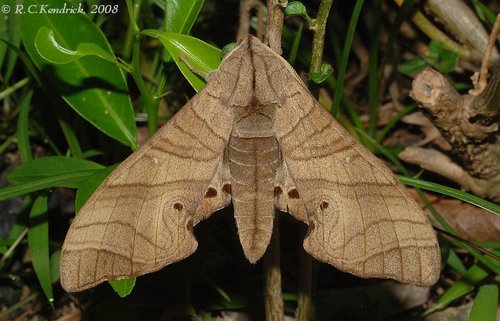
Acosmeryx sericeus Walker, 1856 has a wingspan ranging from 96 to 106 mm. The outer margin of its forewing is dentate. The general background color of the forewing upperside is violaceous-grey, and its brown lines are more prominent than those of other species in the same genus. The first discal line is well-marked, running straight from vein M3 to the hind margin, and merging anteriorly with an oblique line that reaches the outer margin just anterior to the hind angle. A grey submarginal band on the forewing ends at or just beyond vein M3. The hindwing upperside has an indistinct brown discal line; distal to this line is an equally indistinct, slightly tawny, paler band. The underside of the hindwing has conspicuous white scaling along the costal margins, between the lines. The sides of the metanotum are chocolate-tawny. On the abdomen upperside, the chestnut brown markings of the tergites are prominent. The underside of the abdomen, most of the hindwing, and the forewing disc along the marginal band are bright tawny. Male antennae are shorter than those of Acosmeryx naga naga. In male genitalia, the gnathos is widest at its middle. The harpe’s process is more rounded distally than that of Acosmeryx naga naga, with a higher ventral ridge that is not dentate. The left process of the aedeagus is broad. This species is known to occur in Nepal, north-eastern India, Bangladesh, Thailand, southern China, Vietnam, and Peninsular Malaysia.