About Acleris schalleriana (Linnaeus, 1761)
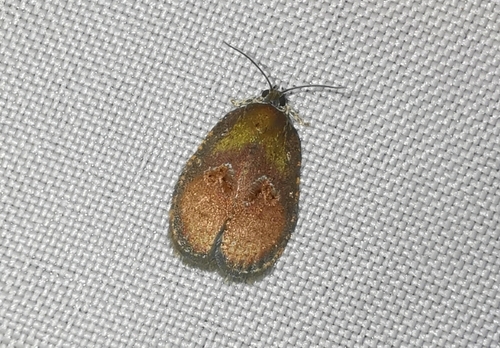
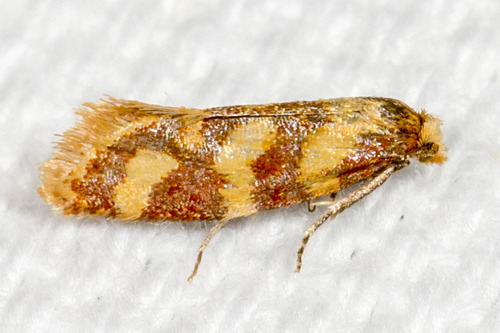
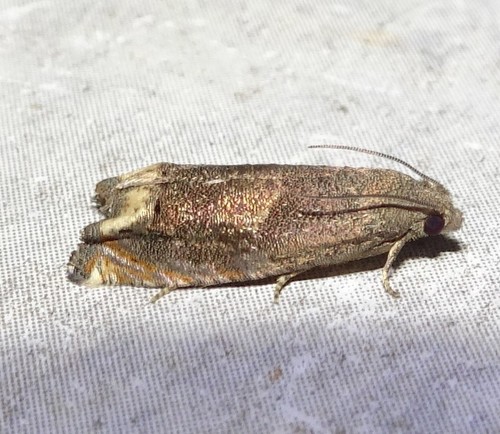
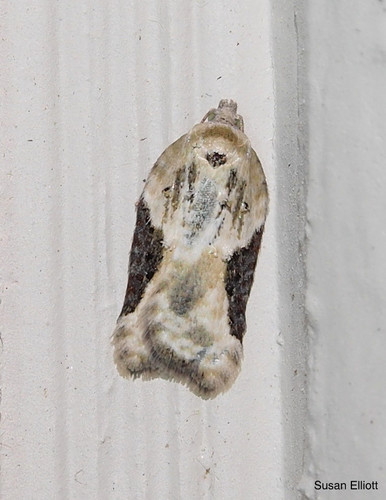
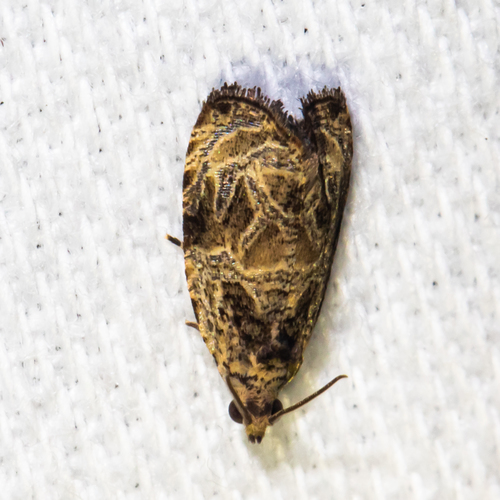
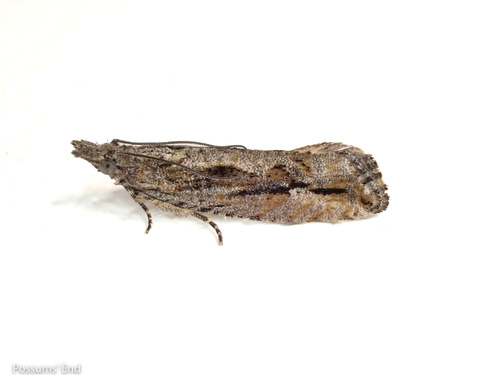
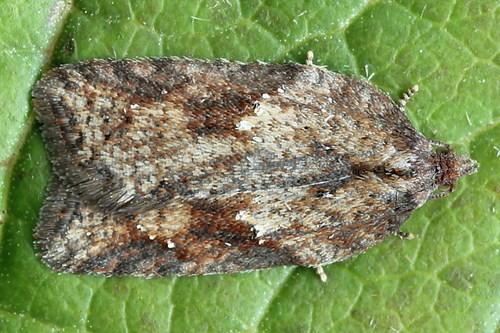
Acleris schalleriana, commonly known as the viburnum button or Schaller's acleris moth, is a species of moth in the family Tortricidae. It was first described by Carl Linnaeus in 1761. This moth is found across most of Europe, and also occurs in North America. Acleris viburnana is considered a possible synonym that refers to the North American populations of this species. The wingspan of Acleris schalleriana ranges from 15 to 20 mm. The forewings are oblong in shape, and range in color from ochreous-grey to ochreous-brown, and sometimes have darker strigulation. There is a moderately large tuft on the submedian fold before the middle of the forewing, another tuft in the middle of the disc, and scattered smaller tufts that are often black. The edge of the basal patch is sometimes darker along the dorsal side, and there is a large triangular red-brown or dark fuscous blotch on the costa, which is sometimes edged with white on its anterior side. The hindwings are grey. Full-grown larvae are green with brownish heads. Julius von Kennel provides a complete full description of this species. Adult Acleris schalleriana are active on the wing from August to October; they overwinter as adults and reappear again the following spring. The larvae feed on species of Viburnum, including Viburnum lantana and Viburnum opulus. They twist a leaf to form a pocket and feed from inside this structure.