About Acleris laterana (Fabricius, 1794)
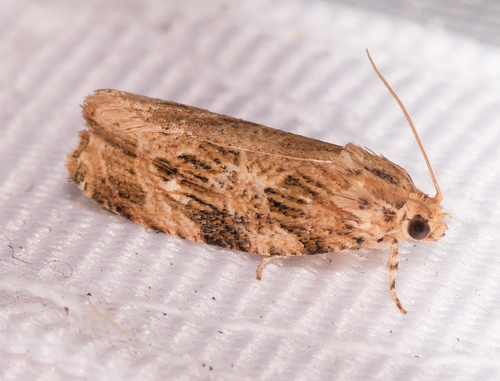
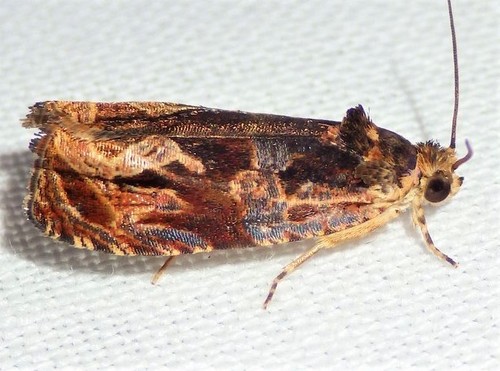
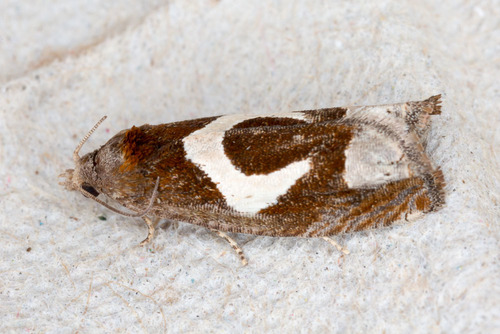
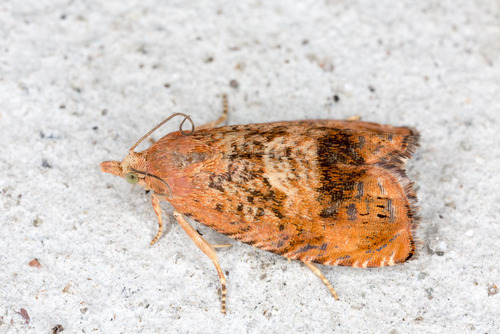
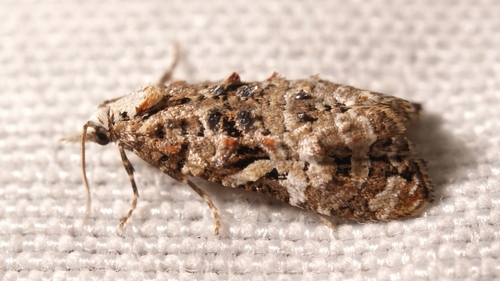
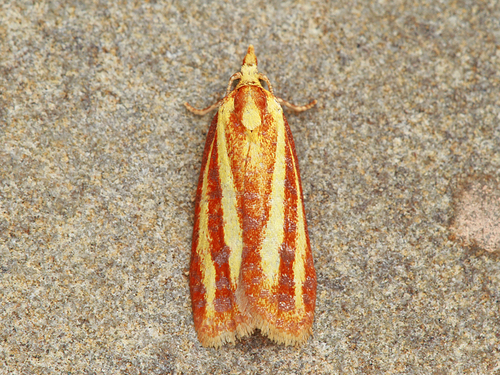
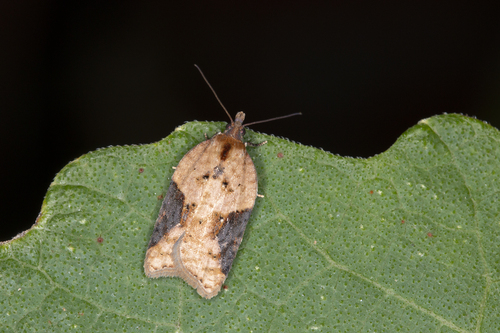
Acleris laterana is a species of moth belonging to the family Tortricidae. It is native to the Palearctic realm, and has been accidentally introduced into the United States. The wingspan of adult moths measures around 15 to 20 mm. The forewings are oblong in shape, and can be pale reddish-brown, fuscous, or dark fuscous, with darker strigulation. The tufts on the forewings are slight, with a larger tuft located in the middle of the disc. The edge of the basal patch is darker along the dorsal side. A large triangular red-brown or blackish-fuscous blotch sits on the costa, with a deep red-brown anterior edge; in some cases, the central fascia extends from this blotch to the dorsum. The hindwings are pale grey. Fully grown larvae are greenish-white, with a green dorsal line, and pale brown heads and second thoracic plates. This species is quite variable in appearance, but almost all individuals have a rather broad, reddish, triangular to trapezoidal spot on the leading edge of the forewing. Acleris laterana can be difficult to tell apart from the related species Acleris comariana. Examination of a prepared genitalic specimen is required to reliably distinguish between the two species. In Europe, adult moths are active on the wing from June to July, and again from August to September. The larvae feed on a range of host plants: Crataegus, Filipendula ulmaria, Populus, Prunus, Rosa, Rubus, Sorbus, Salix, Symphytum officinale and Vaccinium. Larvae can be found from May to June.