About Acleris forsskaleana (Linnaeus, 1758)
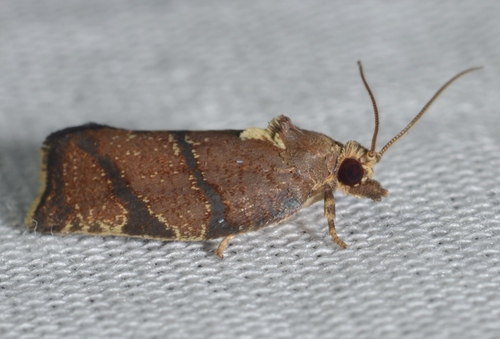
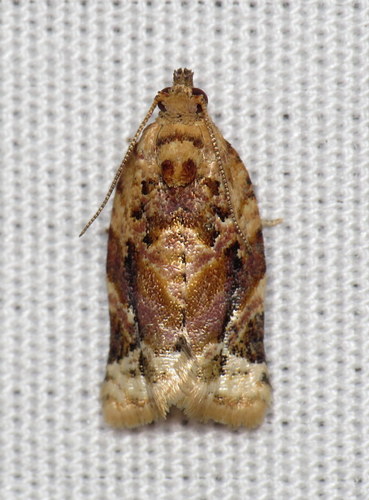
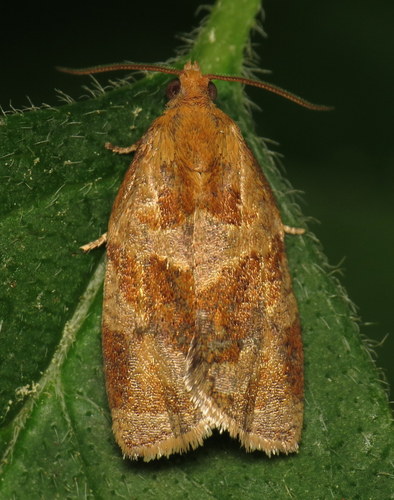
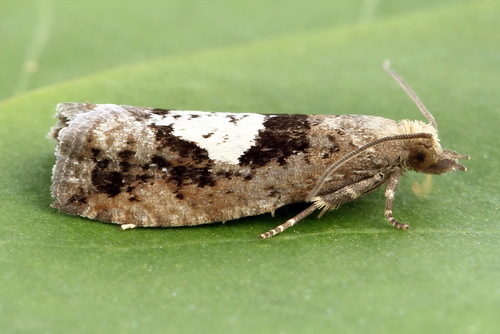
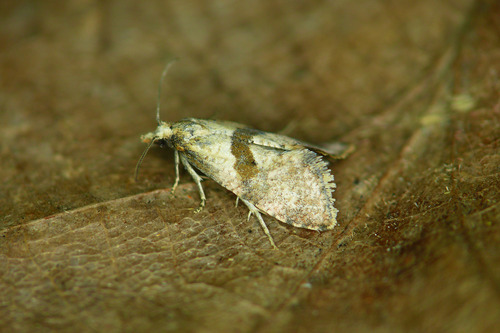
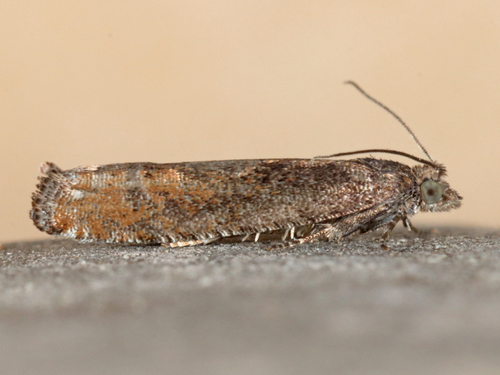
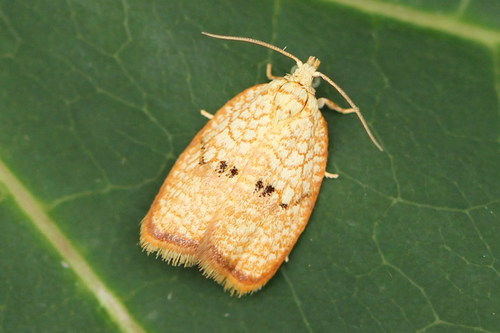
Acleris forsskaleana, commonly known as the maple leaftier moth, is a member of the moth family Tortricidae. It occurs in Europe and North America, where it inhabits woodlands and gardens. This species has a wingspan of 12–17 mm. The forewings have a yellowish base colour overlaid with a darker net-like reticulated pattern, plus a greyish suffusion across the disc. They feature a dark V-shaped transverse line, a dark outer edge, and many additional narrow brown transverse lines; these lines, combined with brownish wing veins, create the characteristic net pattern. The larva is yellowish and partially transparent, which allows the dark greenish intestines to show through. The larva's head capsule is only barely darker than the rest of its body. Julius von Kennel provides a full description of the species. Meyrick's description notes that forewings are suboblong, with vein 7 leading to the apex. They are pale yellowish, sharply reticulated with ferruginous orange that is somewhat mixed with dark fuscous. A dark fuscous oblique stria runs from the middle of the costa, meeting a variable, sometimes obsolete fuscous dorsal blotch that contains two small black scale tufts, and there is a dark fuscous terminal streak. Hindwings are whitish yellowish and more or less tinged with fuscous on the posterior portion. The larva is pale yellow, with the head and second segment plate tinged greenish. Adult moths fly from June to September, starting at dusk. In Europe, the main food plants for this species are field maple (Acer campestre) and sycamore (Acer pseudoplatanus); larvae can also be found feeding on Norway maple (Acer platanoides). The species name honours Peter Forsskål.