About Acleris cristana (Denis & Schiffermüller), 1775
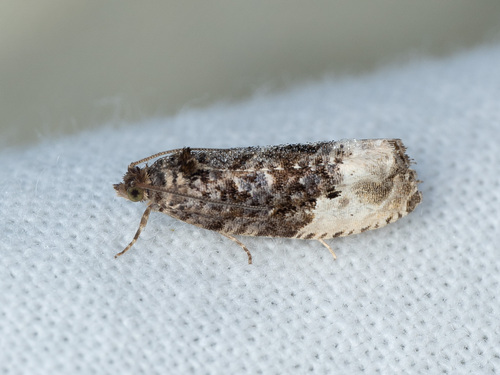
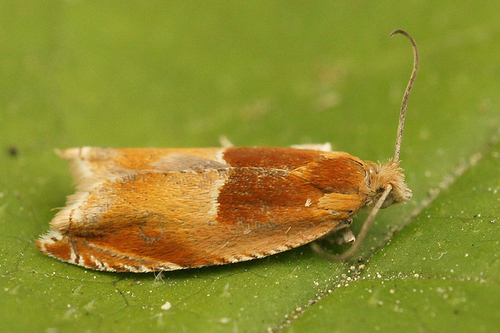
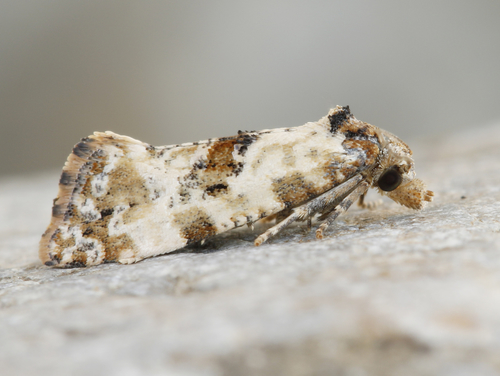
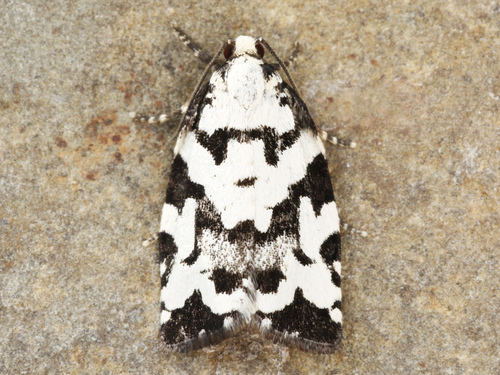
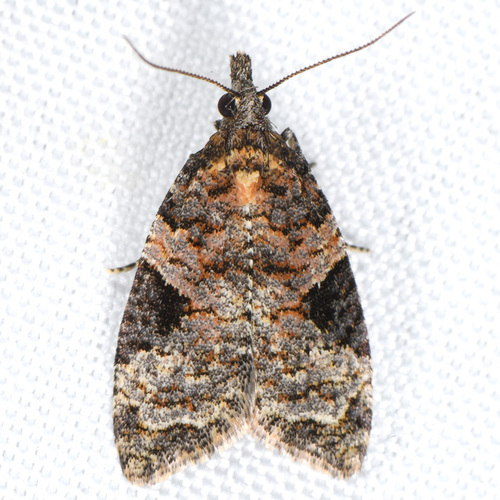
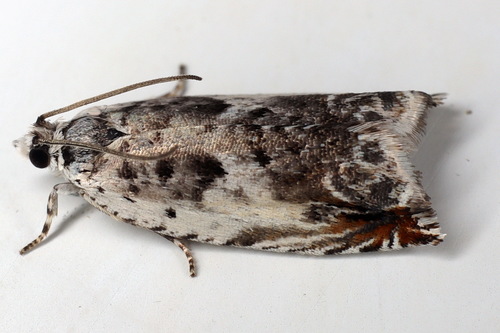
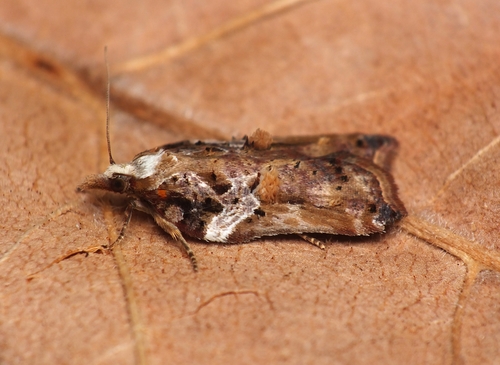
Acleris cristana, commonly known as the rufous-margined button moth, is a species of moth in the family Tortricidae. Its distribution ranges from Europe, through the Caucasus and Ussuri, to Japan. This moth has a wingspan of 18–22 mm. The thorax bears a prominent longitudinal crest. The forewings vary in color from reddish-ochreous to dark brown, and are sometimes bicolorous. A very large scale-tuft, which is occasionally white, sits in the middle of the disc. This species can also have a white or pale ochreous dorsal streak, or an orange central longitudinal streak; in some individuals, two whitish fascia-like streaks extend from the costa and converge toward the middle of the disc. The hindwings are grey, with a darker apex. Acleris cristana exhibits very wide variation in appearance, with 137 named forms and numerous existing synonyms. All these forms belong to the same species, and individuals from different forms are able to breed with one another. Julius von Kennel has published a full description of the species. Adult moths are active on the wing from August to November, and emerge again from March to May after hibernation. The larvae feed between spun leaves on a wide range of rosaceous trees and bushes, including Prunus spinosa and Crataegus species such as Crataegus maximowiczi. Additional food plant species recorded for the larvae are Carpinus betulus, Ulmus campestris, Rosa, Malus species (including Malus pumila), Salix caprea, Sorbus sambucifolia, Cerasus sachalinensis, Prunus salicina and Zelkova serrata.