About Achillea ptarmica L.
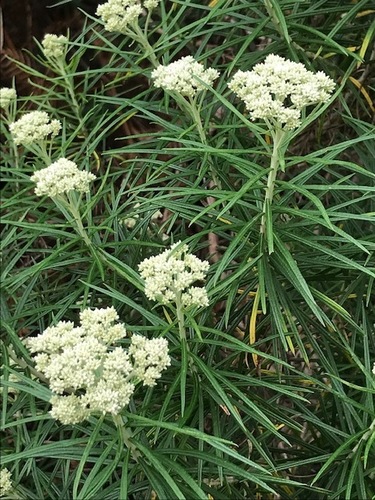
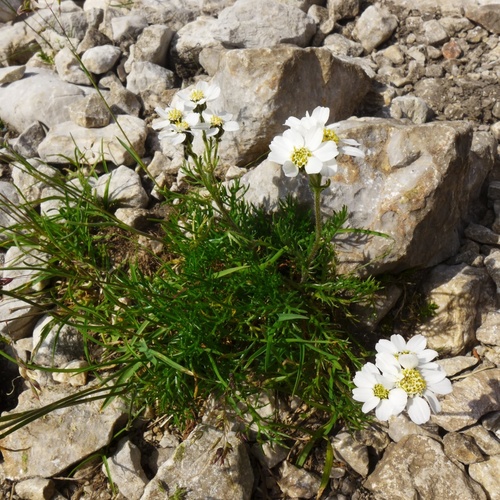
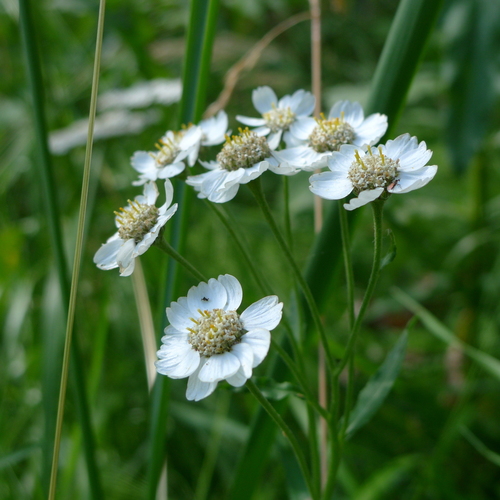
Achillea ptarmica L., commonly called sneezewort, produces loose clusters of showy white composite flower heads that bloom between June and August. Its dark green leaves have finely toothed margins. Like many other plants, sneezewort follows the Fibonacci sequence in its growth pattern. This species is native to Europe and western Asia, and is widespread across most of Europe. It has also become naturalized in scattered locations throughout North America. The leaves of Achillea ptarmica can be eaten either raw or cooked. They are also used as an insect repellent. The plant produces an essential oil that is used in herbal medicine. When chewed, the plant creates a numbing, tingling sensation in the mouth, similar to the effect of Sichuan pepper. For this property, it is sometimes used in herbal medicine to ease toothache or mouth ulcers, and is also employed as a culinary herb. In cultivation, Achillea ptarmica is a hardy, drought-tolerant plant. It grows best in full sun and moist, well-drained soil, and can tolerate hot, humid summers as well as drought. It can be propagated by sowing seeds or dividing plants in spring.