About Acer cappadocicum Gled.
Scientific name: Acer cappadocicum Gled.
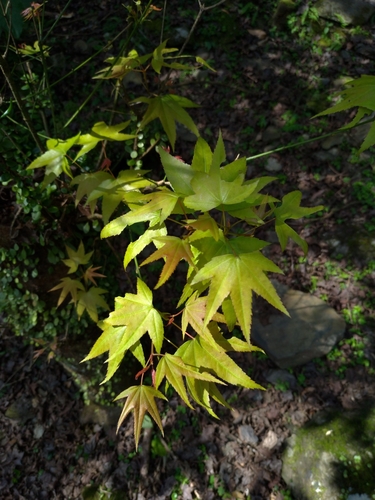
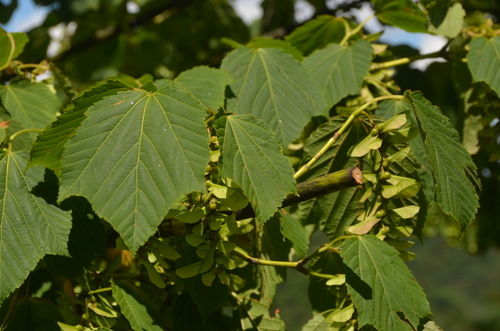
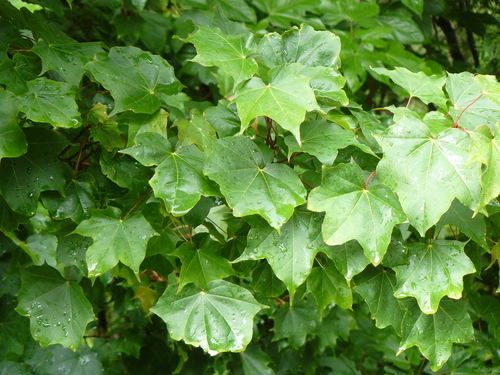
Description: This is a medium-sized deciduous tree that reaches 20–30 m in height, with a broad, rounded crown. Its leaves are arranged oppositely, palmately lobed with 5 to 7 lobes, and measure 6–15 cm across. When broken, leaf stems release milky latex. Flowers are borne in corymbs containing 15 to 30 flowers each; they are yellow-green with five petals 3–4 mm long, and flowering occurs in early spring. The fruit is a double samara with two winged seeds. The seeds are disc-shaped, strongly flattened, 6–11 mm across and 2–3 mm thick. The wings are 2.5–3 cm long, spread widely, and approach a 180° angle. The bark is greenish-grey; it is smooth on young trees, and becomes shallowly grooved as the tree matures.
Cultivation and uses: Cappadocian maple is grown as an ornamental tree in Europe. Many cultivated individuals have a strong tendency to produce numerous root sprouts, a trait that is rare among maples. The hybrid maple Acer × zoeschense shares this trait, and likely has Acer cappadocicum as one of its parent species. Two cultivars of A. cappadocicum have received the Royal Horticultural Society's Award of Garden Merit: A. cappadocicum 'Aureum', which has yellow leaves, and A. cappadocicum 'Rubrum', which has red leaves.