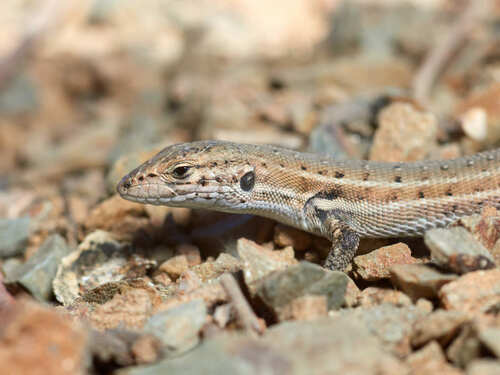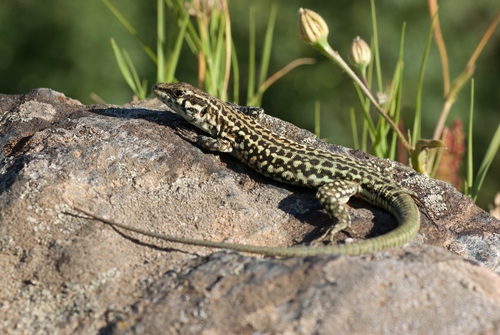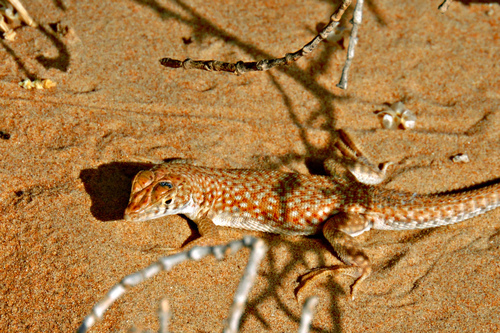
About Acanthodactylus schmidti Haas, 1957
Dorsal Scale Diagnosis
Acanthodactylus schmidti can be distinguished from all other species in the "cantoris group" by the arrangement of its dorsal scales: the scales on the sides of the posterior back are larger than the scales in the middle of the back.
Size
The largest known specimen of this species is a male that measures 10.3 cm (4.1 in) in snout-to-vent length (SVL).
Geographic Range
This lizard is found in Iran, Iraq, Jordan, Kuwait, Oman, Qatar, Saudi Arabia, and the United Arab Emirates.
Habitat and Altitude
Its preferred natural habitat is desert, and it occurs at altitudes up to 1,000 m (3,300 ft).
Reproduction
Acanthodactylus schmidti reproduces by laying eggs, meaning it is oviparous.