About Acacia verticillata (L'Her.) Willd.
Scientific name: Acacia verticillata (L'Her.) Willd.
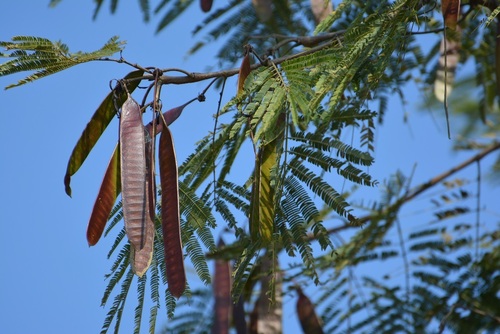
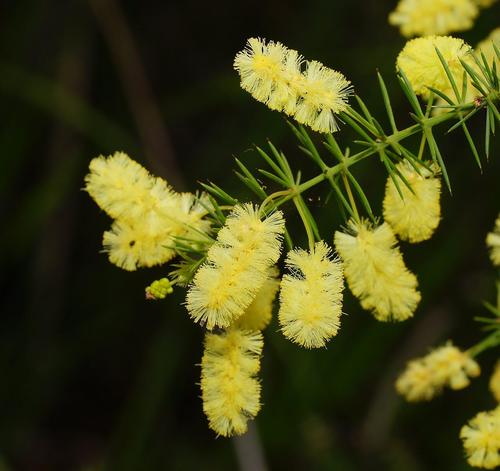
Description: This species grows as a shrub or tree reaching a maximum height of around 10 m (33 ft), with a spreading growth habit. Its branchlets bear bristly, prickling stipules that measure 0.5 to 2 mm (0.020 to 0.079 in) long. Like most Acacia species, it has phyllodes rather than true leaves. The evergreen phyllodes grow in crowded, clustered whorls, and have a linear or lanceolate shape, 5 to 25 mm (0.20 to 0.98 in) long and 1 to 7 mm (0.039 to 0.276 in) wide. The phyllodes are glabrous, pungent, rigid, and marked by one clearly visible main vein. It blooms between July and December, producing simple inflorescences on glabrous stalks that are 2 to 5 mm (0.079 to 0.197 in) long. The ovoid to spherical flower spikes can reach up to 4.5 cm (1.8 in) in length, and hold densely packed light yellow flowers. After flowering, it produces compressed linear seed pods that are barely constricted between individual seeds. The pods are 2 to 8 cm (0.79 to 3.15 in) long, 3 to 5 mm (0.12 to 0.20 in) wide, and have relatively thin valves. The elliptic seeds are around 3 to 4 mm (0.12 to 0.16 in) long, with a filamentous funicle that folds and thickens into a turbinate aril.
Distribution: A. verticillata is endemic to New South Wales, Victoria, South Australia and Tasmania. It is a common understorey shrub in wet and dry sclerophyll forests, scrub, and heath. Coastal specimens of the species typically have much wider leaves than the usual needle-like leaves found on inland specimens. Its distribution range extends from Gulf St Vincent in South Australia through south-eastern South Australia, into southern and south-eastern Victoria, far south-eastern New South Wales, and Tasmania (including the islands of Bass Strait). It grows in saline, riparian, and submontane habitats.
Uses: Commonly called Prickly Moses, this species is sold commercially for cultivation. It can grow in full sun or part shade in a range of locations including plains, hills, and footslopes inland of the immediate coast. It tolerates clay or loam soils of alkaline, neutral, or acidic pH, and can withstand drought, waterlogging, and moderate frost. It is considered excellent habitat for birds, but is highly flammable and not recommended for planting near houses in bushfire-prone areas. Indigenous Australians historically used fibre from this plant to make fishing lines.