About Acacia redolens Maslin
Taxon Identity
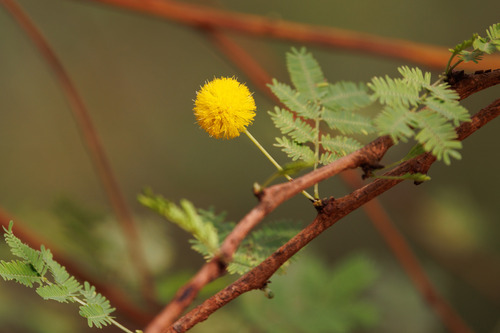
Acacia redolens Maslin is a dense, small to medium-sized spreading fragrant shrub.
Growth Habit and Size
It typically grows 0.5 to 3 meters (2 to 10 ft) tall, rarely reaching heights of up to 5 or even 7 meters.
Scent Characteristics
Vegetative parts of the plant, and especially its yellow flowers, produce an intense vanilla scent.
Native Flowering Period
In its native range, it blooms from August to October and produces yellow flowers.
Introduced Range Flowering Period
In California, it blooms from February through May (late winter to late spring).
Flower Morphology and Arrangement
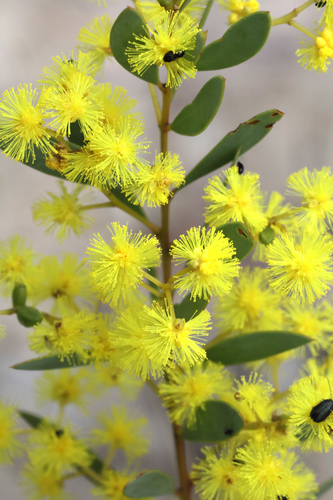
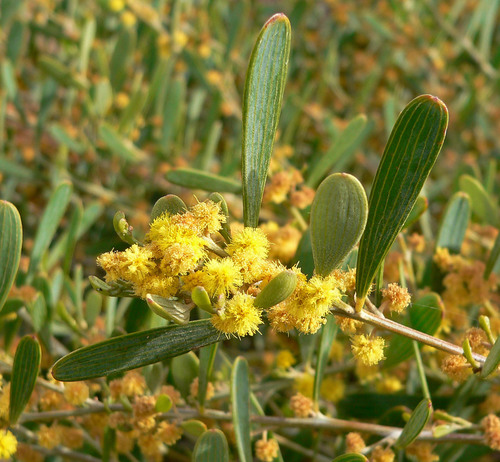
The small flowers, whose visual appearance comes from yellow stamens, are borne in leaf axils.
Fruit Characteristics
The brownish legumes produced by the shrub are approximately 25 millimeters long and 6 millimeters wide.
Native Distribution
This species is native to coastal areas of the Great Southern and Goldfields-Esperance regions of Western Australia.
Native Habitat and Soil Preferences
It grows naturally on the edges of salt lakes or in salty depressions, and thrives in salty or alkaline loamy, clayey, clayey-loamy, or sandy soils.
Cold Tolerance and Horticultural Use
It can withstand frost temperatures as low as −7 °C, and can be used as a groundcover.
Invasive Status in California
The species was planted as a fast-growing groundcover along freeways in California, and is now commonly found throughout Southern California and parts of the Bay Area, where it is considered an invasive weed.
Invasion Hotspots in California
It is especially problematic in the San Gabriel Valley and Mission Valley, and is commonly planted along freeways.