About Acacia boormanii Maiden
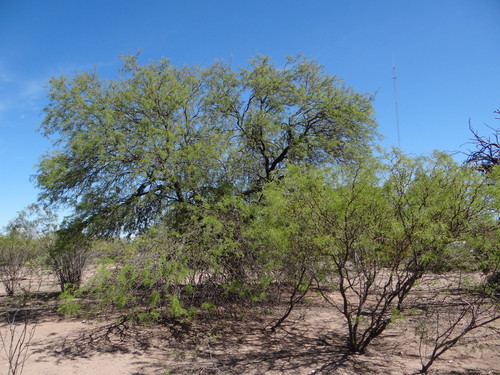
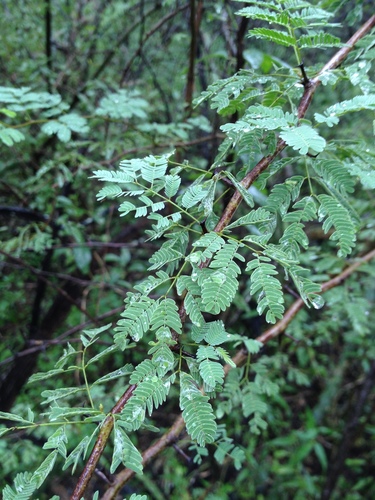
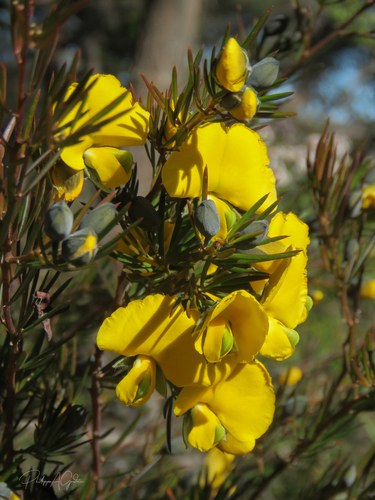
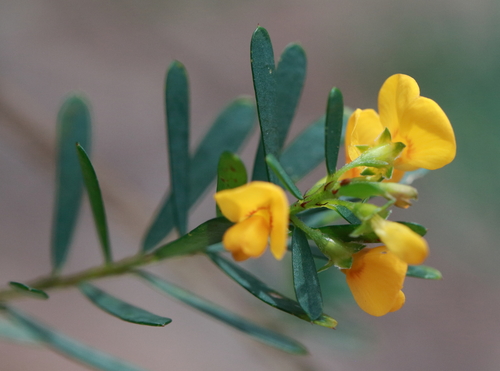
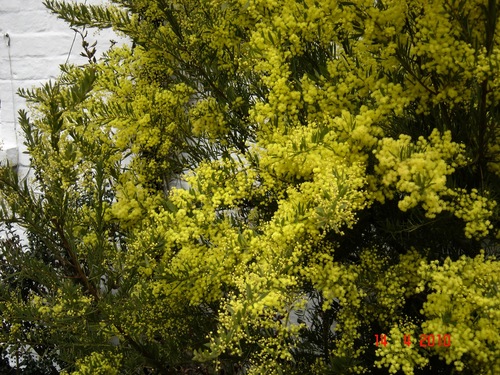
Acacia boormanii is a bushy shrub that usually reaches 4 metres (13 feet) in height. It has hairless branchlets, and the ends of the branchlets often have a white, powdery bloom. Its phyllodes are flat, and shaped either narrowly linear, narrowly lance-shaped with the narrower end at the base, or oblong to narrowly elliptic. Most phyllodes are 30–65 millimetres (1.2–2.6 inches) long and 1–5 millimetres (0.039–0.197 inches) wide, with indistinct veins and a gland 2–16 millimetres (0.079–0.630 inches) above the base. Flowers form in five to ten spherical heads arranged on a raceme 10–40 millimetres (0.39–1.57 inches) long, growing from flower stalks that are 2–4 millimetres (0.079–0.157 inches) long. Each flower head is 5–8 millimetres (0.20–0.31 inches) in diameter, and holds five to ten golden-yellow, sweetly-scented flowers. Flowering time for this species varies by subspecies. After flowering, this species produces firmly papery, hairless seed pods that are up to 90 millimetres (3.5 inches) long and 4–6.5 millimetres (0.16–0.26 inches) wide. The seeds inside the pods are oblong to elliptic, shiny black, 4.5–5 millimetres (0.18–0.20 inches) long, and have a relatively large aril. This species, commonly called Snowy River wattle, grows in woodland and forest, and occurs from the Cooma district in New South Wales to the rocky slopes and banks of the Snowy River in Victoria. The subspecies Acacia boormanii subsp. gibba is restricted to Mount Typo and areas near the Rose River in Victoria, where it grows in montane to subalpine forest, mostly on shallow soils. This species has also been recorded as naturalised in the Australian Capital Territory and in some parts of Victoria. This wattle is very popular in cultivation.