About Abies nordmanniana (Steven) Spach
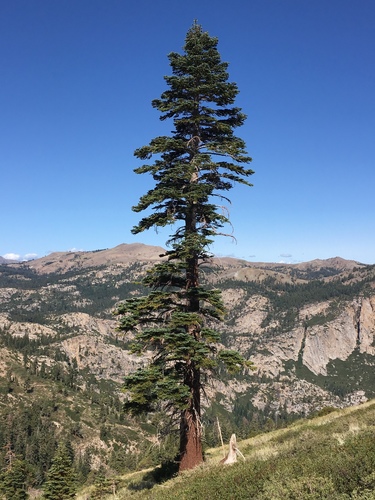
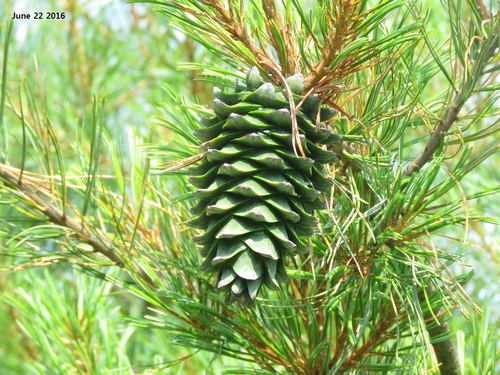
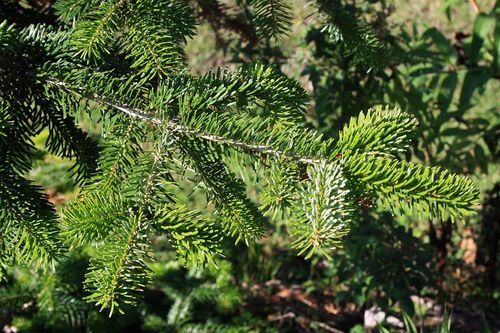
Abies nordmanniana (Steven) Spach, commonly known as Nordmann fir, is a large evergreen coniferous tree. It typically grows 55 to 61 meters tall, with a trunk diameter that can reach up to 2 meters. Within the Western Caucasus Reserve, some individual trees have been recorded reaching heights of 78 meters (256 feet) and even 85 meters (279 feet), making these the tallest trees found in the Caucasus, Anatolia, the Russian Federation, and the entire European continent. Its leaves are needle-like and flattened, measuring 1.8 to 3.5 centimeters long, 2 millimeters wide, and 0.5 millimeters thick. The upper surface of the leaf is glossy dark green, while the lower surface has two blue-white bands of stomata. The leaf tip is usually blunt, often slightly notched, but may be pointed, especially on fast-growing shoots on young trees. The tree produces cones that are 10 to 20 centimeters long and 4 to 5 centimeters broad, holding around 150 to 200 scales. Each scale has an exserted bract and two winged seeds, and the cones break apart when mature to release their seeds. Nordmann fir is one of the most important species grown for use as Christmas trees, favored for its attractive foliage, non-sharp needles, and low tendency for needles to drop when the tree dries out. It is also a popular ornamental tree planted in parks and large gardens. The species, along with its cultivar 'Golden Spreader', has received the Royal Horticultural Society's Award of Garden Merit. In Europe, this tree has also been used in reforestation projects to help mitigate projected forest decline caused by climate change. Its wood is soft and white, and is used for general construction, paper production, and similar applications.