About Abies nephrolepis (Trautv. ex Maxim.) Maxim.
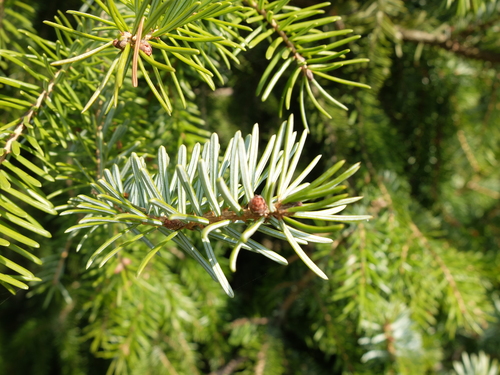
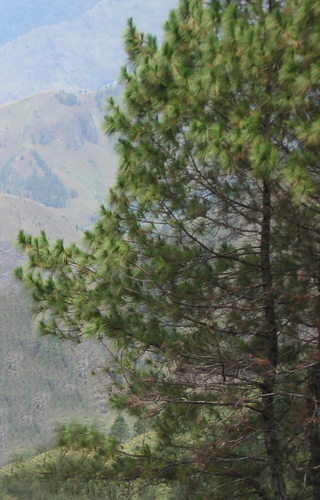
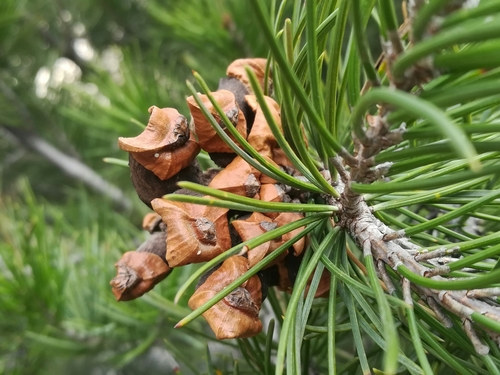
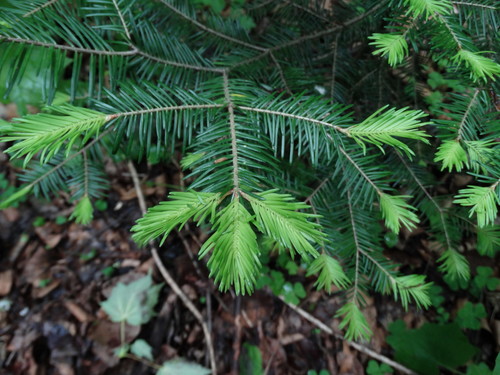
Abies nephrolepis, known as Khingan fir, is a fir species found in northeastern China, including Hebei, Heilongjiang, Jilin, Liaoning, and Shaanxi, as well as in North Korea, South Korea, and southeastern Russia, such as Amur Oblast, Jewish Autonomous Oblast, Primorsky Krai, and southern Khabarovsk Krai. This medium-sized evergreen conifer can grow up to 30 meters tall, with a trunk diameter reaching 1.2 meters and a crown that is narrow conic to columnar in shape. The young trees have smooth grey-brown bark that becomes fissured with age. Its leaves are flat, needle-like, measuring 10 to 30 mm in length and 1.5 to 2 mm in width, green on the upper side, and featuring two dull greenish-white stomatal bands below. The leaves are arranged spirally but are twisted at the base, lying flat against the top of the shoots. The cones of this species, measuring 4.5 to 7 cm long (sometimes up to 9.5 cm), are green or purplish and turn grey-brown at maturity, often with a resinous quality; the tips of the bract scales slightly protrude between the seed scales. Each seed scale carries two winged seeds, which are released when the cones break apart in autumn. Abies nephrolepis is closely related to Abies sachalinensis, Abies koreana, Abies veitchii, and Abies sibirica, which are found to the east, south, southeast, and west respectively. Its range meets that of A. sibirica, where hybrids known as Abies × sibirico-nephrolepis Taken. & J.J.Chien occur. During the Japanese occupation of Korea in the 1920s, the wood of this tree was utilized for pulp production.