About Abelmoschus esculentus (L.) Moench
Scientific name: Abelmoschus esculentus (L.) Moench
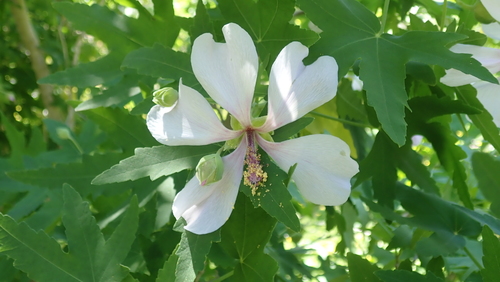
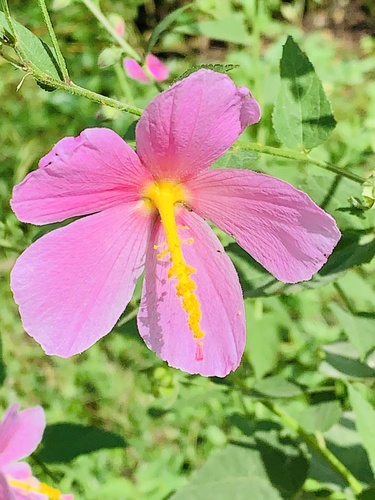
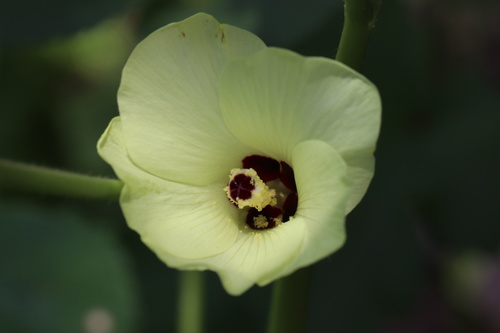
Description This species is a perennial plant, often grown as an annual in temperate climates. It typically reaches around 2 metres (6 ft 7 in) in height. As a member of the Malvaceae family, it is related to cotton, cocoa, and hibiscus. Its leaves are 10–20 centimetres (4–8 in) long and broad, with 5–7 palmately arranged lobes. The flowers measure 4–8 cm (1+5⁄8–3+1⁄8 in) across, have five white to yellow petals, and often bear a red or purple spot at the petal base. Pollen grains are spherical and roughly 188 microns in diameter. The fruit is an elongated capsule up to 18 cm (7 in) long, with a pentagonal cross-section, that holds numerous seeds.
Origin and distribution Okra is an allopolyploid with uncertain parentage; proposed parent species include Abelmoschus ficulneus, A. tuberculatus, and a reported diploid form of okra. No definitively confirmed truly wild (as opposed to naturalised) populations are known, and the West African okra variety is classified as a cultigen. Okra originated in East Africa, specifically Ethiopia, Eritrea and eastern Sudan. It spread from Arabia to the shores of the Mediterranean Sea and further eastwards. It was introduced to Europe by the Umayyad conquest of Hispania. One of the earliest written records of okra comes from Abu al-Abbas al-Nabati, who visited Ayyubid Egypt in 1216 and documented the plant being cultivated by local people, who ate its tender young pods with meal. Okra was introduced to the Americas by ships involved in the Atlantic slave trade, with its presence first recorded in Brazil by 1658; it was later documented in Suriname in 1686. It may have been introduced to southeastern North America from Africa in the early 18th century. By 1748, it was grown as far north as Philadelphia. Thomas Jefferson noted that okra was well established in Virginia by 1781. It was a common crop across the Southern United States by 1800, and the first record of distinct okra cultivars dates to 1806.
Cultivation Abelmoschus esculentus is grown across tropical and warm temperate regions worldwide for its fibrous fruits (called pods), which contain round, white seeds. It is one of the most heat- and drought-tolerant vegetable species globally. It can grow in heavy clay soils with intermittent moisture, but frost damages its pods. For cultivation, seeds are soaked overnight before planting at a depth of 1–2 cm (3⁄8–13⁄16 in). Germination requires a soil temperature of at least 20 °C (68 °F), and takes between six days (for pre-soaked seeds) and three weeks. As a tropical plant, it needs abundant sunlight, and grows best in soil with a pH between 5.8 and 7, ideally slightly acidic. Seedlings require regular plentiful water. Seed pods quickly become fibrous and woody; to be edible as a vegetable, they must be harvested when immature, usually within one week after pollination. The first harvest is typically ready around two months after planting, when pods are approximately 2–3 inches (51–76 mm) long. The most common disease affecting okra plants is verticillium wilt, which often causes leaf yellowing and wilting. Other issues include powdery mildew in dry tropical regions, leaf spots, yellow mosaic virus, and root-knot nematodes. Resistance to yellow mosaic virus was introgressed into A. esculentus via crossing with Abelmoschus manihot, producing a new resistant variety called Parbhani kranti. In the United States, most of the country's okra supply is grown in Florida, especially around Dade in southern Florida. Okra is grown to some degree across the whole state, making okra available for ten months of the year. Yields range from under 18,000 pounds per acre (20,000 kg/ha) to over 30,000 pounds per acre (34,000 kg/ha). Wholesale prices can reach up to $18 per bushel, equal to $0.60 per pound ($1.3/kg). The Regional IPM Centers provide integrated pest management plans for okra cultivation in Florida.