Key Identification Features
- This tree grows to 10 meters (33 feet) tall and typically has a narrow form.
For instant identification in the field, use the iNature app — AI-powered, works offline.
Zygophyllaceae is a plant family in the Plantae kingdom, order Zygophyllales, class Magnoliopsida. The family contains 62 accepted species worldwide. Some species in this family are toxic — exercise caution when handling unknown specimens.
For instant identification in the field, use the iNature app — AI-powered, works offline.
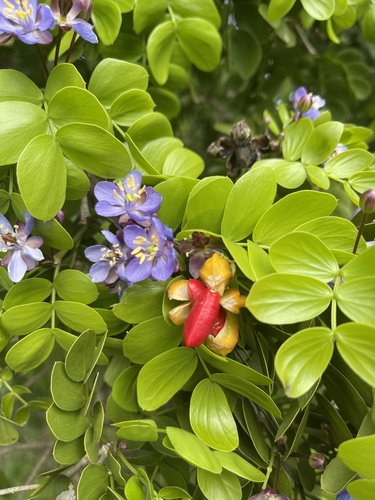
Guaiacum sanctum L.
Guaiacum sanctum is a near threatened neotropical flowering tree valued for its …
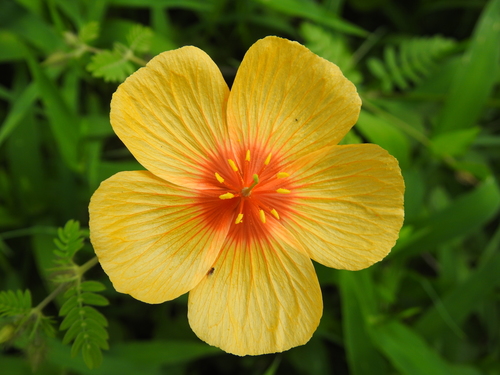
Kallstroemia grandiflora Torr. ex A.Gray
Arizona poppy (Kallstroemia grandiflora) is an unrelated summer annual desert he…
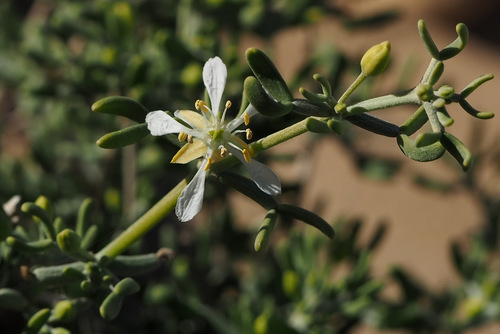
Tetraena dumosa (Boiss.) Beier & Thulin
Tetraena dumosa is a bushy bean-caper flowering shrub native to parts of North A…
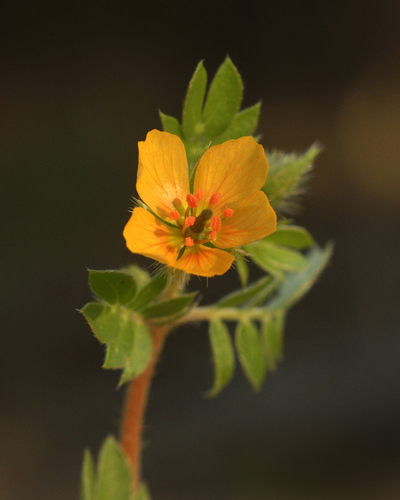
Kallstroemia parviflora Norton
Kallstroemia parviflora is a small-flowered annual Zygophyllaceae plant found fr…
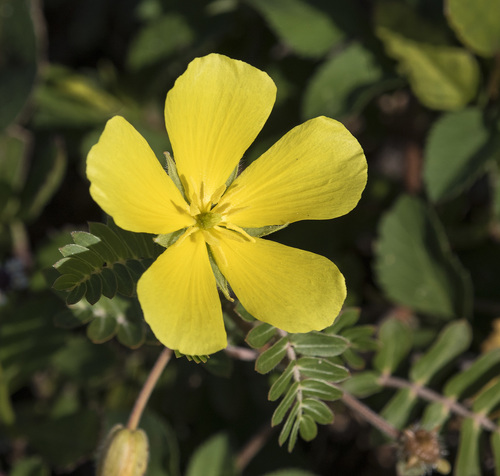
Tribulus cistoides L.
Tribulus cistoides L. is a widely distributed Zygophyllaceae flowering plant tha…
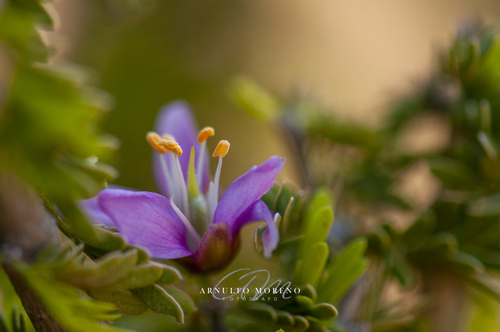
Porlieria angustifolia (Engelm.) A.Gray
Porlieria angustifolia (Texas lignum-vitae) is an evergreen shrub/tree native to…
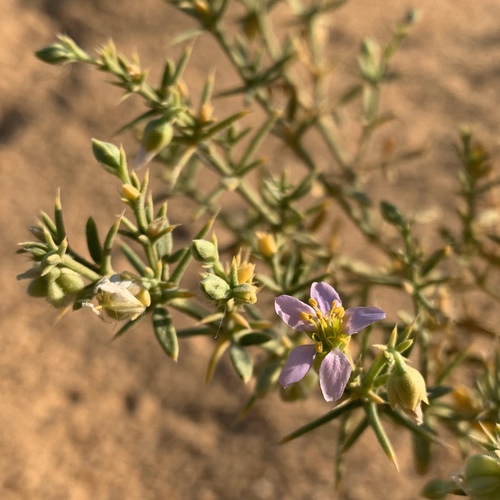
Fagonia arabica L.
Fagonia spinosa has convex, linear leaflets, while Fagonia arabica is armed with…
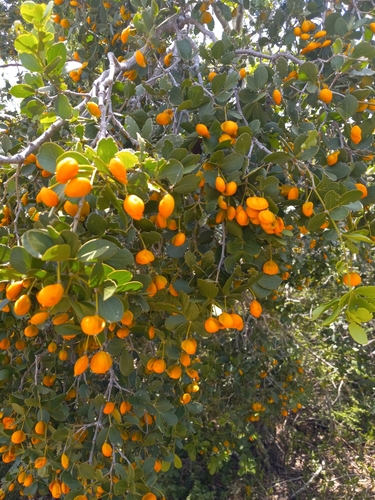
Guaiacum officinale L.
Guaiacum officinale L. is a slow-growing small evergreen tree whose resin guaiac…
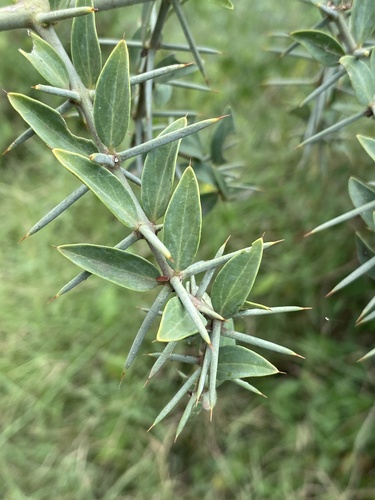
Balanites aegyptiaca (L.) Delile
Balanites aegyptiaca is a dry-region tree with edible parts, traditional medicin…
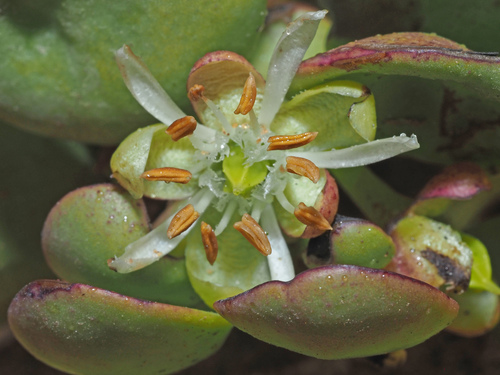
Tetraena stapfii (Schinz) Beier & Thulin
Tetraena stapfii is an endemic Namibian flowering bush named for its round, coin…
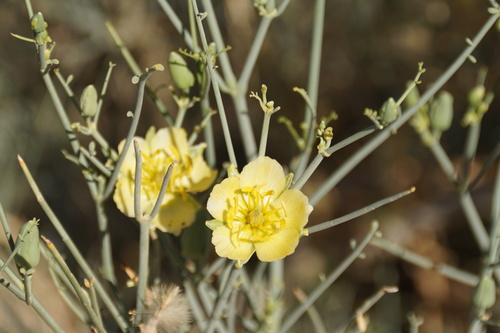
Sisyndite spartea E.Mey. ex Sond.
Sisyndite spartea is the only species in the Zygophyllaceae genus Sisyndite, a s…
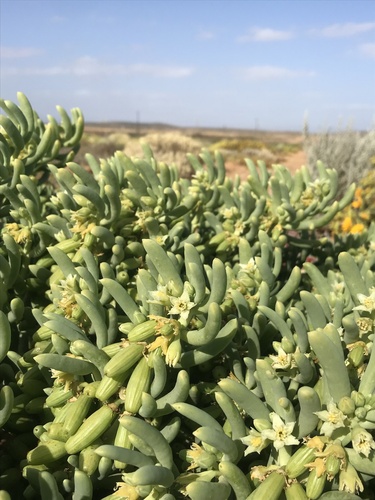
Augea capensis Thunb.
Zygophyllum augea, formerly Augea capensis, is a Zygophyllaceae flowering plant …
Zygophyllaceae plants belong to the Zygophyllales order in the Plantae kingdom. This tree grows to 10 meters (33 feet) tall and typically has a narrow form. For instant identification, use the iNature app — AI-powered and works offline.
Zygophyllaceae is classified in the order Zygophyllales, class Magnoliopsida, phylum Tracheophyta. The family contains 62 accepted species worldwide.
Yes, some Zygophyllaceae species are toxic or poisonous. Always exercise caution with unknown specimens. View poisonous Zygophyllaceae species or browse the full poisonous species guide.
Sources: GBIF, iNaturalist, Wikipedia · Disclaimer
Download iNature for free. 10 identifications on us. No account needed. No credit card required.
Download Free on App Store
