How to Identify Vitaceae

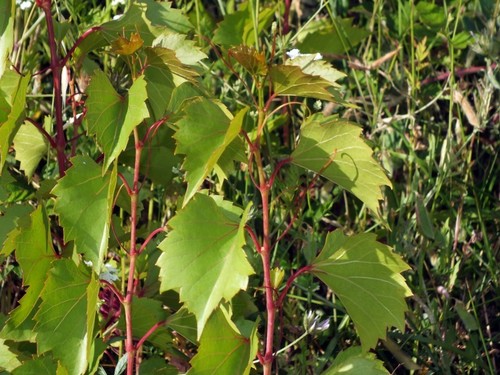
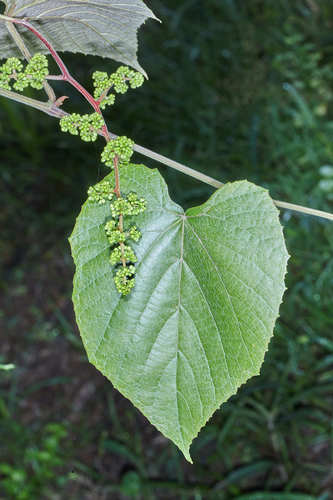
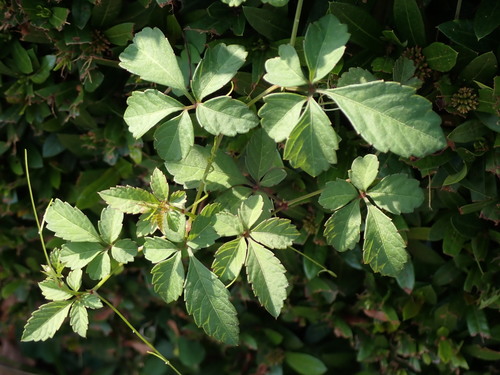
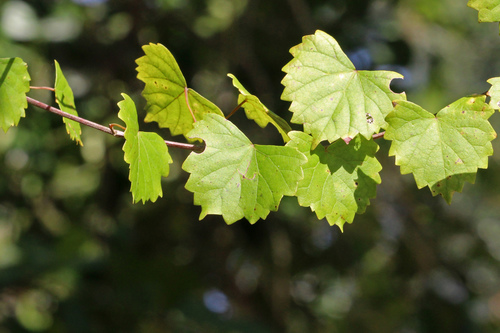
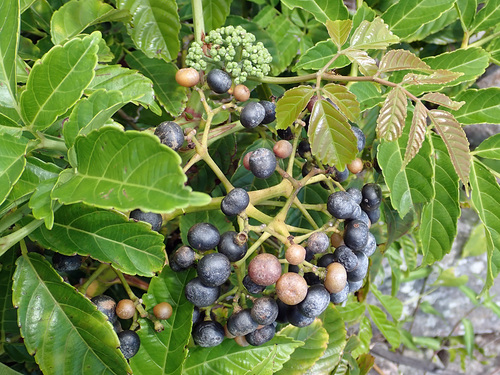
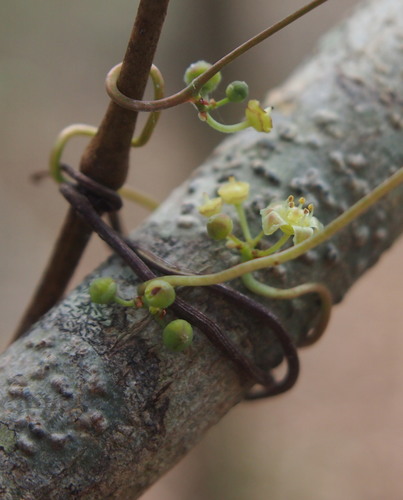
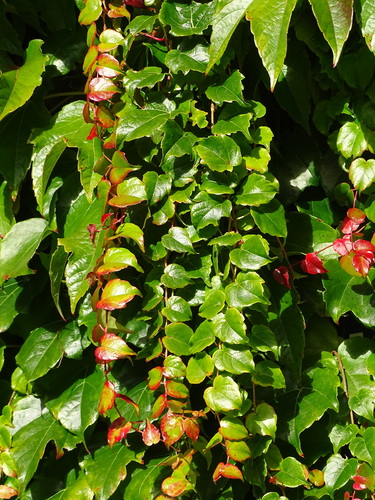
Vitaceae is a plant family in the Plantae kingdom, order Vitales, class Magnoliopsida. The family contains 80 accepted species worldwide. Some species in this family are toxic — exercise caution when handling unknown specimens.

Key Identification Features

For instant identification in the field, use the iNature app — AI-powered, works offline.
Representative Vitaceae Species

How to identify Rhoicissus tomentosa (Lam.) Wild & R.B.Drumm.

Rhoicissus tomentosa (Lam.) Wild & R.B.Drumm.

Rhoicissus tomentosa (Lam.) Wild & R.B.Drumm.

Rhoicissus tomentosa, the Cape grape, is a southern African evergreen vine used …

How to identify Vitis shuttleworthii House

Vitis shuttleworthii House

Vitis shuttleworthii House

Vitis shuttleworthii is a North American grape-family liana native to Florida an…

How to identify Cissus erosa (L.) Rich.

Cissus erosa (L.) Rich.

Cissus erosa (L.) Rich.

Cissus erosa (L.) Rich. is widely distributed in Mexico, Central America, South …

How to identify Vitis heyneana Roem. & Schult.

Vitis heyneana Roem. & Schult.

Vitis heyneana Roem. & Schult.

Vitis heyneana is an Asian-endemic climbing grape vine that grows up to 3200m, b…

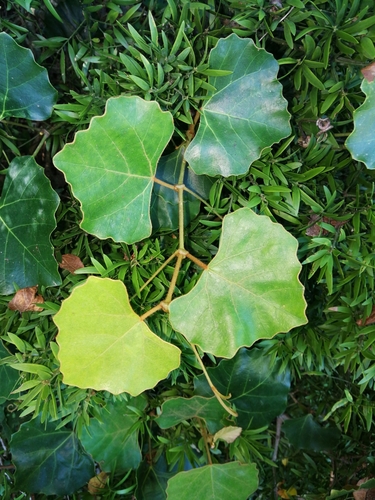
How to identify Cissus rotundifolia (Forssk.) Vahl

Cissus rotundifolia (Forssk.) Vahl

Cissus rotundifolia (Forssk.) Vahl

Cissus rotundifolia is a perennial evergreen climbing Vitaceae plant native to e…

How to identify Vitis rupestris Scheele

Vitis rupestris Scheele

Vitis rupestris Scheele

Vitis rupestris Scheele is a bushy North American wild grape listed threatened i…

How to identify Vitis tiliifolia Humb. & Bonpl. ex Roem. & Schult.

Vitis tiliifolia Humb. & Bonpl. ex Roem. & Schult.

Vitis tiliifolia Humb. & Bonpl. ex Roem. & Schult.

Vitis tiliifolia, the Caribbean grape, is a New World grape family liana grown f…

How to identify Causonis japonica (Thunb. ex Murray) Raf.

Causonis japonica (Thunb. ex Murray) Raf.

Causonis japonica (Thunb. ex Murray) Raf.

Causonis japonica is a perennial herbaceous vine with 5-foliate semi-palmate lea…

How to identify Vitis rotundifolia Michx.

Vitis rotundifolia Michx.

Vitis rotundifolia Michx.

Vitis rotundifolia, or muscadine, is a cultivated North American grapevine used …

How to identify Leea indica (Burm.fil.) Merr.

Leea indica (Burm.fil.) Merr.

Leea indica (Burm.fil.) Merr.

Leea indica is a large Vitaceae shrub found across parts of South and Southeast …

How to identify Clematicissus opaca (F.Muell.) Jackes & Rossetto

Clematicissus opaca (F.Muell.) Jackes & Rossetto

Clematicissus opaca (F.Muell.) Jackes & Rossetto

Clematicissus opaca is a small edible endemic Australian vine sometimes grown as…

How to identify Parthenocissus tricuspidata (Siebold & Zucc.) Planch.

Parthenocissus tricuspidata (Siebold & Zucc.) Planch.

Parthenocissus tricuspidata (Siebold & Zucc.) Planch.

Parthenocissus tricuspidata is a deciduous climbing woody vine widely used as an…

Browse all 80 Vitaceae species →

Frequently Asked Questions

How do you identify Vitaceae?

Vitaceae plants belong to the Vitales order in the Plantae kingdom. Leaf blades are distinctly striated and nearly always smooth, usually measuring 3 to 4 inches wide, and sometimes reaching 5 inches wide. For instant identification, use the iNature app — AI-powered and works offline.

What are the key characteristics of Vitaceae?

Vitaceae is classified in the order Vitales, class Magnoliopsida, phylum Tracheophyta. Populations previously identified as this species from Malesia, New Guinea, Australia, and southwestern Pacific islands are now classified as the separate distinct species Leea nova-guineensis.

⚠️ Are any Vitaceae species poisonous?

Yes, some Vitaceae species are toxic or poisonous. Always exercise caution with unknown specimens. View poisonous Vitaceae species or browse the full poisonous species guide.

Sources: GBIF, iNaturalist, Wikipedia · Disclaimer

Start Exploring Nature Today

Download iNature for free. 10 identifications on us. No account needed. No credit card required.

Download Free on App Store