How to Identify Teloschistaceae

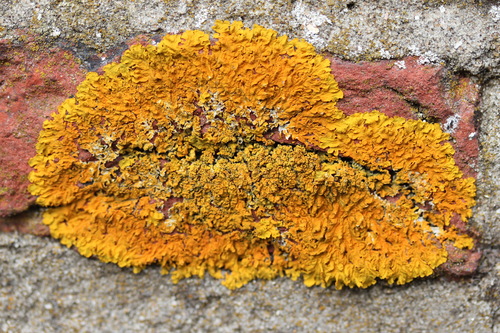
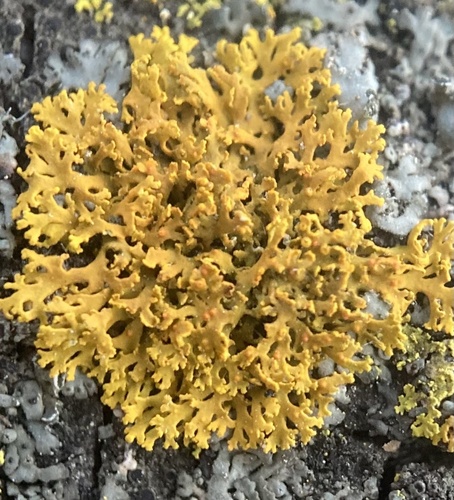
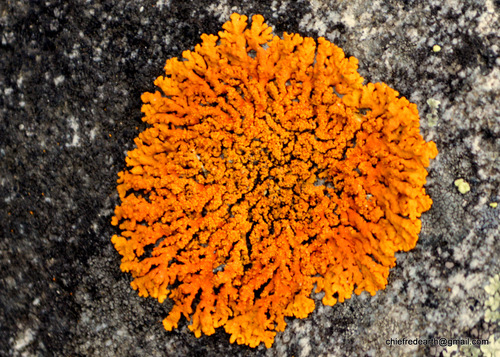
Teloschistaceae is a fungus family in the Fungi kingdom, order Teloschistales, class Lecanoromycetes. The family contains 45 accepted species worldwide.

Key Identification Features

For instant identification in the field, use the iNature app — AI-powered, works offline.
Representative Teloschistaceae Species

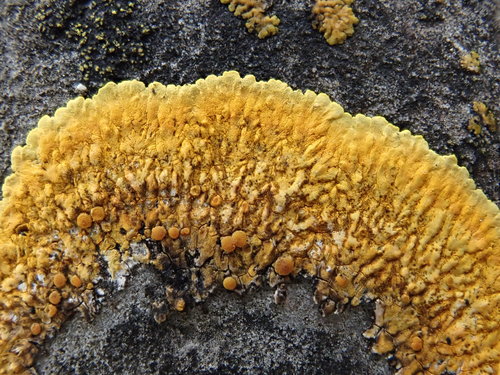
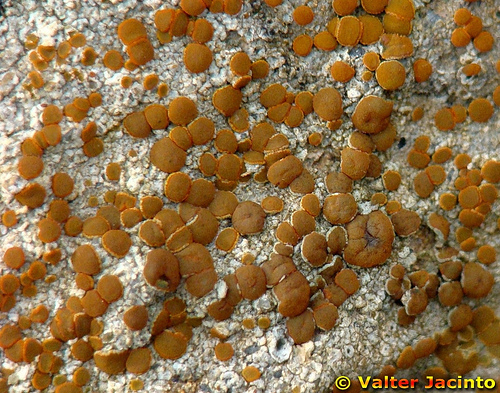
How to identify Leproplaca cirrochroa (Ach.) Arup, Frödén & Søchting

Leproplaca cirrochroa (Ach.) Arup, Frödén & Søchting

Leproplaca cirrochroa (Ach.) Arup, Frödén & Søchting

Leproplaca cirrochroa is a distinctive widely distributed orange lichen species …

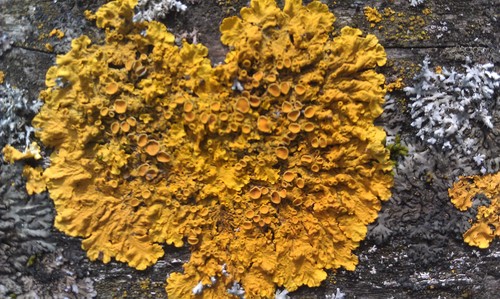
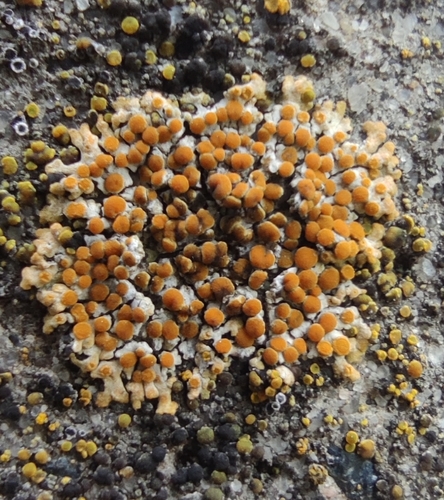
How to identify Xanthoria parietina (L.) Th.Fr.

Xanthoria parietina (L.) Th.Fr.

Xanthoria parietina (L.) Th.Fr.

Xanthoria parietina is a widespread, resilient foliose lichen with a history of …

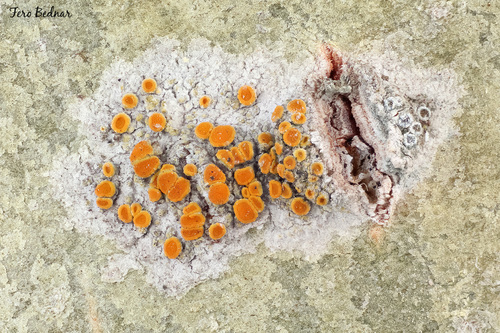
How to identify Variospora aurantia (Pers.) Arup, Frödén & Søchting

Variospora aurantia (Pers.) Arup, Frödén & Søchting

Variospora aurantia (Pers.) Arup, Frödén & Søchting

Variospora aurantia is a Teloschistaceae lichen, recorded as a host for the lich…

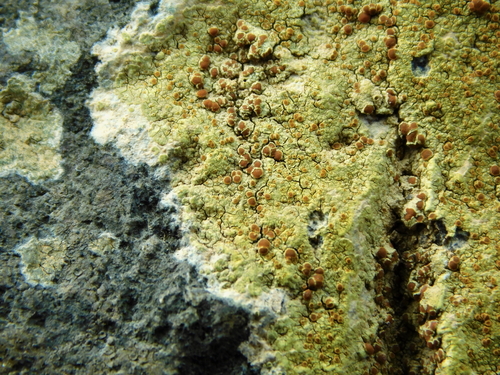
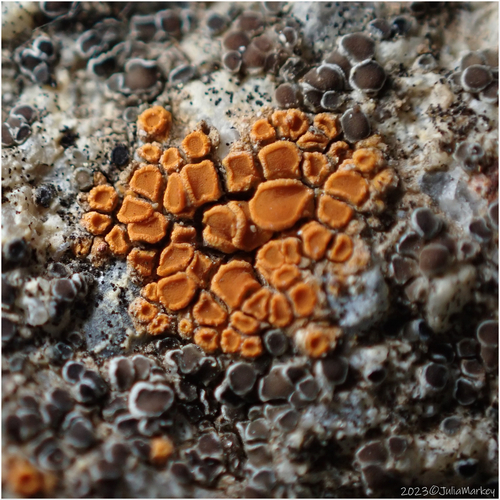
How to identify Gyalolechia flavovirescens (Wulfen) Søchting, Frödén & Arup

Gyalolechia flavovirescens (Wulfen) Søchting, Frödén & Arup

Gyalolechia flavovirescens (Wulfen) Søchting, Frödén & Arup

Gyalolechia flavovirescens is a saxicolous crustose lichen from the Teloschistac…

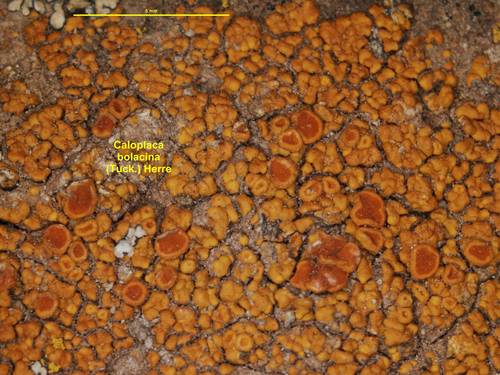
How to identify Polycauliona bolacina (Tuck.) Arup, Frödén & Søchting

Polycauliona bolacina (Tuck.) Arup, Frödén & Søchting

Polycauliona bolacina (Tuck.) Arup, Frödén & Søchting

Polycauliona bolacina is a lichen with a yellow-orange waxy thallus and distinct…

How to identify Athallia holocarpa (Hoffm.) Arup, Frödén & Søchting

Athallia holocarpa (Hoffm.) Arup, Frödén & Søchting

Athallia holocarpa (Hoffm.) Arup, Frödén & Søchting

Athallia holocarpa is a lichenised fungus in the Teloschistaceae family, formall…

How to identify Calogaya pusilla (A.Massal.) Arup, Frödén & Søchting

Calogaya pusilla (A.Massal.) Arup, Frödén & Søchting

Calogaya pusilla (A.Massal.) Arup, Frödén & Søchting

Calogaya pusilla is a small, rosette-shaped yellow-orange lichen with distinct m…

How to identify Athallia pyracea (Ach.) Arup, Frödén & Søchting

Athallia pyracea (Ach.) Arup, Frödén & Søchting

Athallia pyracea (Ach.) Arup, Frödén & Søchting

Athallia pyracea is a common crustose nitrophilous epiphytic lichen found in tem…

How to identify Squamulea subsoluta (Nyl.) Arup, Søchting & Frödén

Squamulea subsoluta (Nyl.) Arup, Søchting & Frödén

Squamulea subsoluta (Nyl.) Arup, Søchting & Frödén

Squamulea subsoluta is a rock-dwelling squamulose lichen in the Teloschistaceae …

How to identify Xanthoria calcicola Oxner

Xanthoria calcicola Oxner

Xanthoria calcicola Oxner

Xanthoria calcicola is a crustose rock- and bark-dwelling lichen in Teloschistac…

How to identify Gallowayella weberi (S.Y.Kondr. & Kärnefelt) S.Y.Kondr., Fedorenko, S.Stenroos, Kärnefelt, Elix, Hur & A.Thell

Gallowayella weberi (S.Y.Kondr. & Kärnefelt) S.Y.Kondr., Fedorenko, S.Stenroos, Kärnefelt, Elix, Hur & A.Thell

Gallowayella weberi (S.Y.Kondr. & Kärnefelt) S.Y.Kondr., Fedorenko, S.Stenroos, Kärnefelt, Elix, Hur & A.Thell

Gallowayella weberi is a foliose lichen native to central and eastern North Amer…

How to identify Rusavskia sorediata (Vain.) S.Y.Kondr. & Kärnefelt

Rusavskia sorediata (Vain.) S.Y.Kondr. & Kärnefelt

Rusavskia sorediata (Vain.) S.Y.Kondr. & Kärnefelt

Rusavskia sorediata is a widely distributed Northern Hemisphere rock-dwelling cr…

Browse all 45 Teloschistaceae species →

Frequently Asked Questions

How do you identify Teloschistaceae?

Teloschistaceae funguss belong to the Teloschistales order in the Fungi kingdom. Leproplaca cirrochroa is a distinctive lichen species that can grow up to 5 cm (2 in) across. For instant identification, use the iNature app — AI-powered and works offline.

What are the key characteristics of Teloschistaceae?

Teloschistaceae is classified in the order Teloschistales, class Lecanoromycetes, phylum Ascomycota. On rocky seashores, it typically forms a distinct band in the supralittoral zone, between more halophilic species below and terrestrial species above.

Sources: GBIF, iNaturalist, Wikipedia · Disclaimer

Start Exploring Nature Today

Download iNature for free. 10 identifications on us. No account needed. No credit card required.

Download Free on App Store