Key Identification Features
- It typically has smaller leaves than its eastern relatives; this difference is associated with growing in drier environments.
For instant identification in the field, use the iNature app — AI-powered, works offline.
Rutaceae is a plant family in the Plantae kingdom, order Sapindales, class Magnoliopsida. The family contains 246 accepted species worldwide. Some species in this family are toxic — exercise caution when handling unknown specimens.
For instant identification in the field, use the iNature app — AI-powered, works offline.
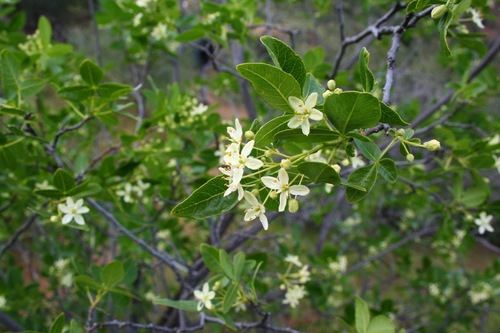
Ptelea crenulata Greene
Ptelea crenulata (California hoptree) is a tree endemic to California, adapted t…
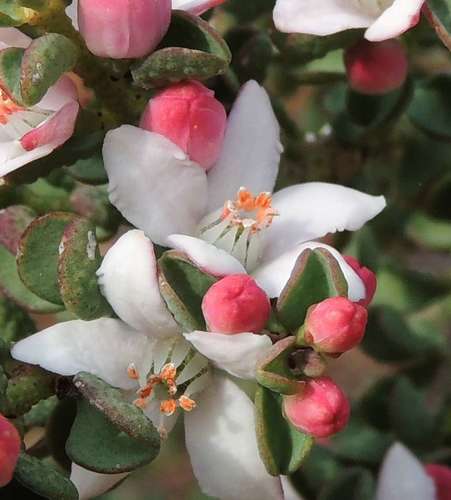
Philotheca verrucosa (A.Rich.) Paul G.Wilson
Philotheca verrucosa is a small warty-branched shrub native to south-eastern Aus…
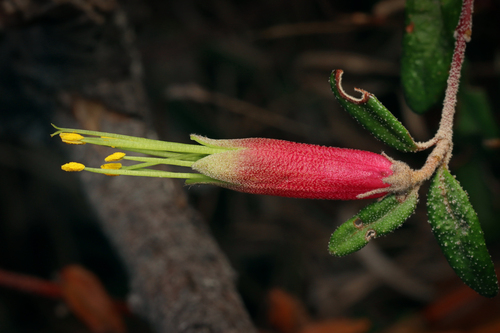
Correa decumbens F.Muell.
Correa decumbens (spreading correa) is a low Australian shrub with pink to red f…
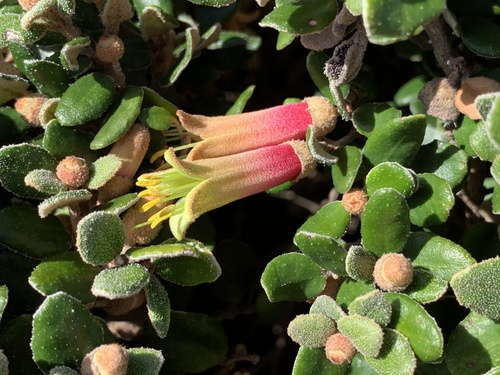
Correa backhouseana Hook.
Correa backhouseana is a hardy rounded shrub with varied cultivars grown widely …
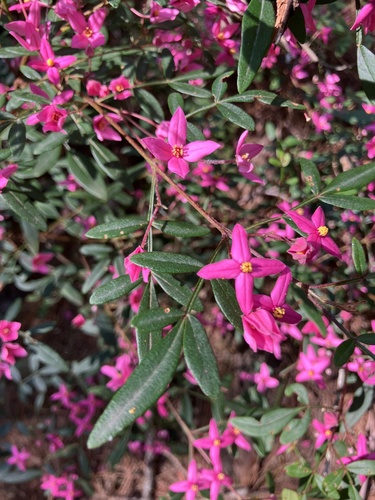
Boronia fraseri Hook.
Boronia fraseri is a branched pink-flowered shrub native to parts of New South W…
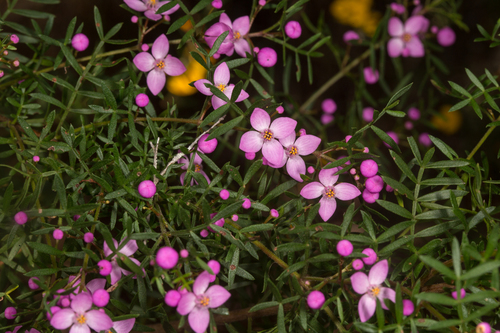
Boronia safrolifera Cheel
Boronia safrolifera, or safrole boronia, is an erect woody shrub found in near-c…
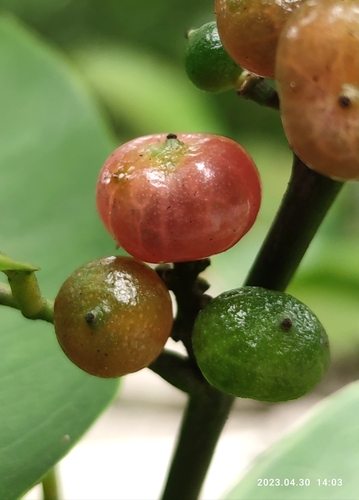
Glycosmis parviflora (Sims) Kurz
Glycosmis parviflora is a rutaceous flowering plant native to East and Southeast…
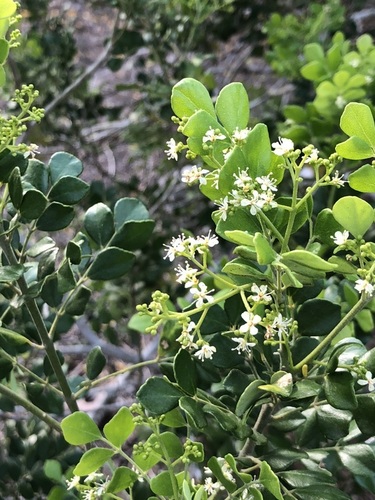
Amyris madrensis S.Watson
Amyris madrensis, the Sierra Madre torchwood, is a Rutaceae perennial shrub nati…
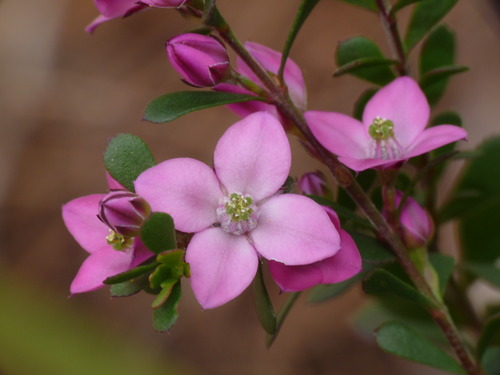
Boronia crenulata Sm.
Boronia crenulata is a variable-leaved pink to reddish-flowered shrub endemic to…
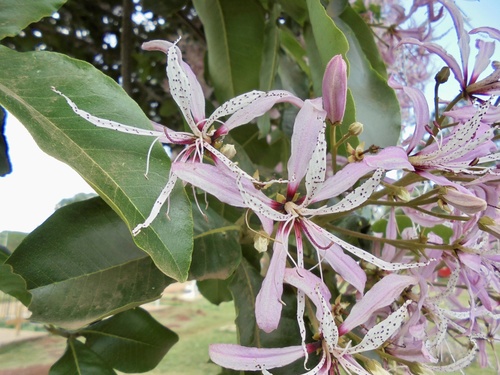
Calodendrum capense (L.fil.) Thunb.
Calodendrum capense, or Cape chestnut, is a widely cultivated African tree grown…
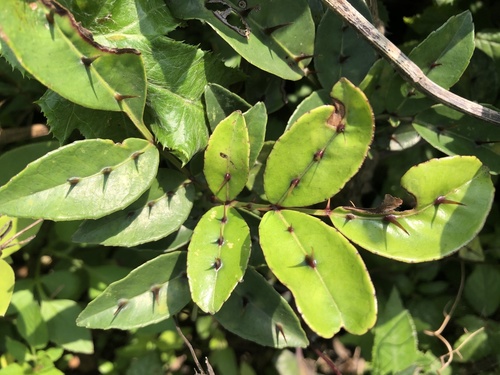
Zanthoxylum nitidum (Roxb.) DC.
Zanthoxylum nitidum is a poisonous woody climber used as an insecticide, piscici…
⚠️ Poisonous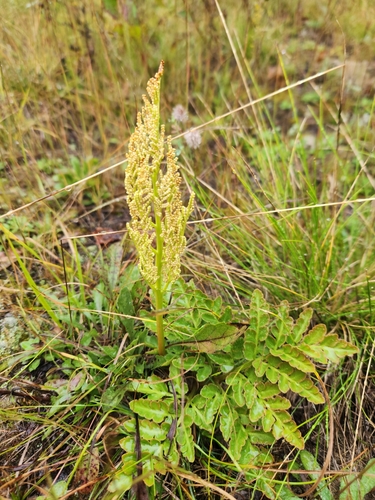
Ruta L.
This fleshy leathery fern species is native to Europe, Asia, North America, and …
Rutaceae plants belong to the Sapindales order in the Plantae kingdom. It typically has smaller leaves than its eastern relatives; this difference is associated with growing in drier environments. For instant identification, use the iNature app — AI-powered and works offline.
Rutaceae is classified in the order Sapindales, class Magnoliopsida, phylum Tracheophyta. The family contains 246 accepted species worldwide.
Yes, some Rutaceae species are toxic or poisonous. Always exercise caution with unknown specimens. View poisonous Rutaceae species or browse the full poisonous species guide.
Sources: GBIF, iNaturalist, Wikipedia · Disclaimer
Download iNature for free. 10 identifications on us. No account needed. No credit card required.
Download Free on App Store
