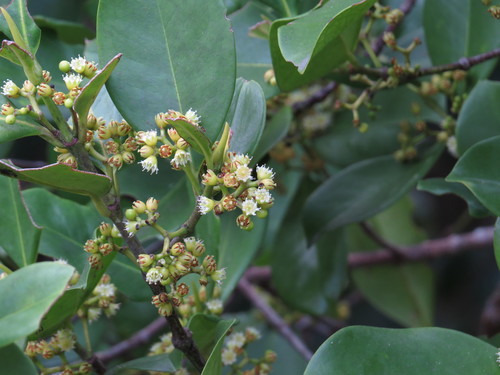
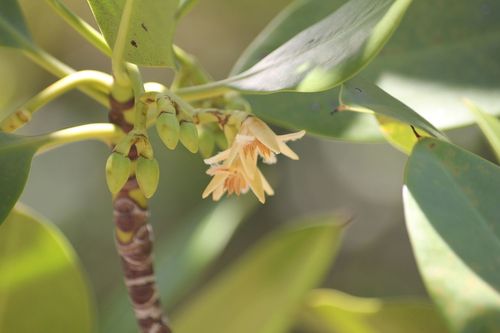
How to Identify Rhizophoraceae

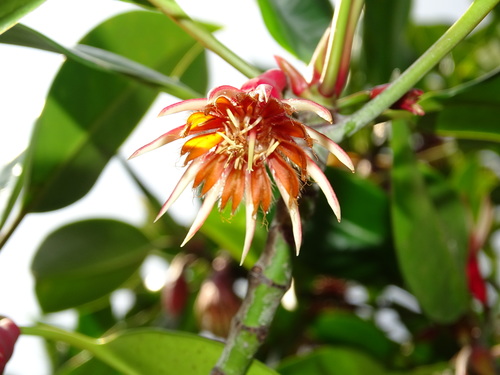
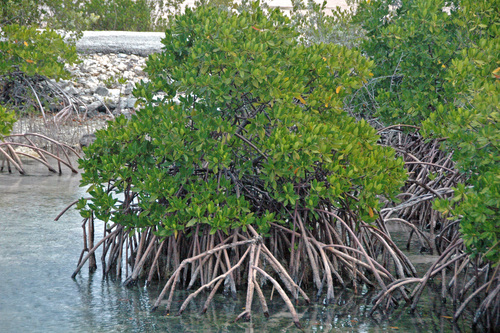
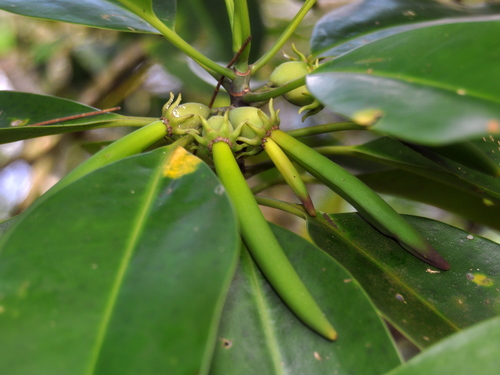
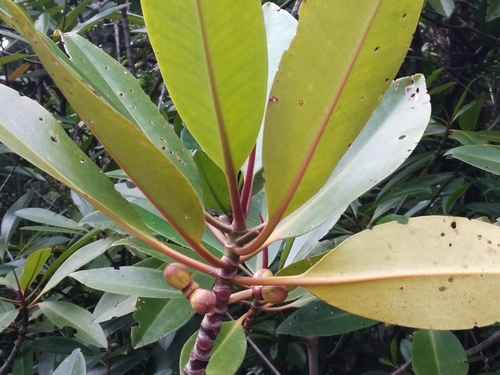
Rhizophoraceae is a plant family in the Plantae kingdom, order Malpighiales, class Magnoliopsida. The family contains 14 accepted species worldwide. Some species in this family are toxic — exercise caution when handling unknown specimens.

Key Identification Features

For instant identification in the field, use the iNature app — AI-powered, works offline.
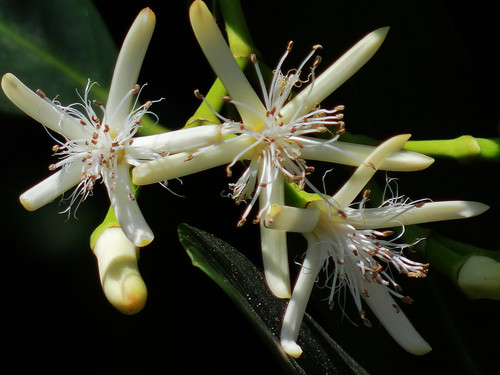
Representative Rhizophoraceae Species

How to identify Kandelia obovata Sheue, H.Y.Liu & J.W.H.Yong

Kandelia obovata Sheue, H.Y.Liu & J.W.H.Yong

Kandelia obovata Sheue, H.Y.Liu & J.W.H.Yong

Kandelia obovata is a widely planted East Asian mangrove species with characteri…

How to identify Rhizophora stylosa Griffith

Rhizophora stylosa Griffith

Rhizophora stylosa Griffith

Rhizophora stylosa Griffith is a tree that grows in coastal Asian, Australian an…

How to identify Bruguiera gymnorhiza (L.) Lam.

Bruguiera gymnorhiza (L.) Lam.

Bruguiera gymnorhiza (L.) Lam.

Bruguiera gymnorhiza is a coastal mangrove tree with a wide native Indo-Pacific …

⚠️ Poisonous
How to identify Rhizophora mangle L.

Rhizophora mangle L.

Rhizophora mangle L.

Rhizophora mangle L. (red mangrove) is a salt-tolerant viviparous coastal tree w…

How to identify Bruguiera cylindrica (L.) Blume

Bruguiera cylindrica (L.) Blume

Bruguiera cylindrica (L.) Blume

Bruguiera cylindrica is a common Asian mangrove tree with many edible and useful…

How to identify Rhizophora apiculata Blume

Rhizophora apiculata Blume

Rhizophora apiculata Blume

Rhizophora apiculata Blume is a variable-height mangrove species with commercial…

How to identify Ceriops australis (C.T.White) Ballment, T.J.Sm. & J.A.Stoddart

Ceriops australis (C.T.White) Ballment, T.J.Sm. & J.A.Stoddart

Ceriops australis (C.T.White) Ballment, T.J.Sm. & J.A.Stoddart

Ceriops australis is a genetically distinct viviparous northern Australian mangr…

How to identify Ceriops tagal (Perr.) C.B.Rob.

Ceriops tagal (Perr.) C.B.Rob.

Ceriops tagal (Perr.) C.B.Rob.

Ceriops tagal is a medium-sized mangrove tree with ribbed hypocotyls, found in t…

How to identify Bruguiera exaristata Ding Hou

Bruguiera exaristata Ding Hou

Bruguiera exaristata Ding Hou

Bruguiera exaristata Ding Hou is a mangrove native to parts of Australia, New Gu…

How to identify Rhizophora racemosa G.Mey.

Rhizophora racemosa G.Mey.

Rhizophora racemosa G.Mey.

Rhizophora racemosa is a pioneering mangrove species native mainly to West Afric…

How to identify Carallia brachiata (Lour.) Merr.

Carallia brachiata (Lour.) Merr.

Carallia brachiata (Lour.) Merr.

Carallia brachiata is a large flowering tree in Rhizophoraceae, native to a broa…

How to identify Rhizophora mucronata Lam.

Rhizophora mucronata Lam.

Rhizophora mucronata Lam.

Rhizophora mucronata is an Indo-Pacific mangrove evergreen tree with multiple ec…

Browse all 14 Rhizophoraceae species →

Frequently Asked Questions

How do you identify Rhizophoraceae?

Rhizophoraceae plants belong to the Malpighiales order in the Plantae kingdom. Previously the two were considered the same species, but genetic evidence has now confirmed they are distinct. For instant identification, use the iNature app — AI-powered and works offline.

What are the key characteristics of Rhizophoraceae?

Rhizophoraceae is classified in the order Malpighiales, class Magnoliopsida, phylum Tracheophyta. It is most easily identified by its axillary flower stems, which branch up to six times to produce clusters that can hold a maximum of 128 flowers.

⚠️ Are any Rhizophoraceae species poisonous?

Yes, some Rhizophoraceae species are toxic or poisonous. Always exercise caution with unknown specimens. View poisonous Rhizophoraceae species or browse the full poisonous species guide.

Sources: GBIF, iNaturalist, Wikipedia · Disclaimer

Start Exploring Nature Today

Download iNature for free. 10 identifications on us. No account needed. No credit card required.

Download Free on App Store